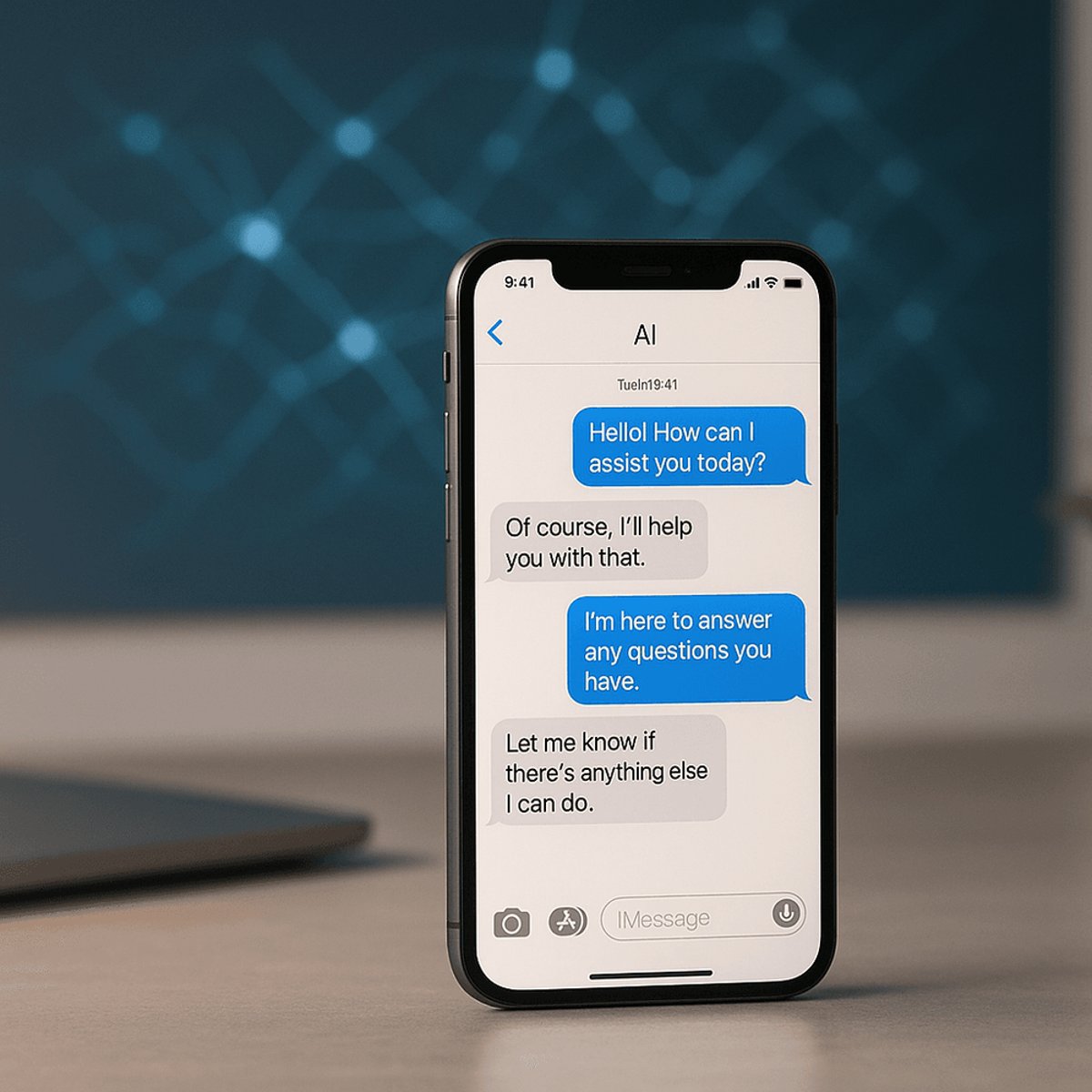
A Birmingham, Alabama startup just cracked the code on making AI assistants feel less like bots and more like friends. Linq closed a $20 million Series A led by TQ Ventures to power AI agents that live natively inside iMessage, RCS, and SMS - sending blue bubbles instead of corporate gray ones. The pivot came after AI assistant Poke went viral last September using Linq's infrastructure, triggering a flood of requests from AI companies wanting to ditch standalone apps. Now the former digital business card company is betting everything on becoming the infrastructure layer for conversational AI, and the numbers suggest they're onto something big.
Linq didn't set out to revolutionize AI distribution. The Birmingham startup launched as a digital business card and lead capture tool for sales teams, pivoting multiple times before stumbling into product-market fit in February 2025 with a deceptively simple idea - help businesses send blue bubble iMessage texts instead of the gray ones that scream "corporate automation."
Within eight months, the company doubled the annual recurring revenue it had painstakingly built over four years. Then Poke changed everything.
Last spring, the Interaction Company of California approached Linq with an unusual request. They were building an AI assistant called Poke that could handle tasks, answer questions, and manage calendars entirely within iMessage - but they didn't have a CRM and desperately needed Linq's API. "They were like, 'Hey, we don't have a CRM, but we really want to use your API,'" CEO Elliott Potter told TechCrunch.
When Poke went viral at launch last September, Linq's team got slammed with similar requests. AI companies wanted to offer chatbots and assistants directly through iMessage, RCS, and SMS - no app downloads required. The startup faced a fork in the road: stick with steady B2B sales revenue or pivot again to become infrastructure for a nascent AI category.
"We still love our sales customers, and we love that use case, but our choices were, do we stay a spoke of this wheel, or do we build the hub?" Potter said. "Do we focus on being the infrastructure layer for all these different applications of programmatic messaging?"
They chose the hub. The decision is paying off in hard numbers. Linq's customer base expanded 132% from the previous quarter, while individual customer accounts grew an average of 34%. The platform now facilitates over 30 million messages per month, reaching 134,000 monthly active users. Net revenue retention hit 295% with zero churn - metrics that caught the attention of TQ Ventures, which led Linq's $20 million Series A announced Monday. Mucker Capital and angel investors joined the round.
The thesis is straightforward but ambitious: consumers are drowning in app fatigue, and developers are tired of building them. "Poke.com, along with others, have proved that AI has gotten good enough," Potter explained. "You don't need a traditional app anymore to do things. Really, you just need an interface that will let you talk to an intelligent enough AI, maybe connect it to some of your systems, and just tell it what to do."
Linq's technology lets companies message customers natively within iMessage, tapping all the capabilities Apple built into the platform - group chats, emojis, threaded replies, images, voice notes. But instead of the gray bubbles that identify business messages, Linq's clients can send blue ones that feel personal and authentic.
That matters because Apple already offers Messages for Business, and Twilio built an $18.26 billion empire helping companies text customers. Users can always spot corporate messages though - the gray bubbles and obvious branding create friction. Linq removes that friction by making AI-to-human communication look identical to texting a friend.
The approach carries platform risk. Linq is building on top of Apple's infrastructure, and there's no guarantee the iPhone maker won't eventually pull a Meta and ban third-party AI chatbots like WhatsApp recently did. iMessage also dominates in the U.S. but barely registers in markets where WhatsApp, WeChat, Telegram, and Signal rule.
Potter isn't worried. The long-term vision extends far beyond messaging channels. "Our vision for the platform is everything you need to build conversational tech, and that's not limited to a few channels," he said. "Right now, we have programmatic voice, we have iMessage, RCS, SMS. That's just the beginning. Our ambition is, wherever your customers are, you should be able to talk to them, be it Slack, be it email, be it Telegram, WhatsApp, Discord, Signal."
The founding team - Potter (CEO), Patrick Sullivan (CTO), and Jared Mattsson (President), all former Shipt executives - will use the fresh capital to expand headcount, develop new go-to-market strategies, and keep building. They declined to disclose valuation.
"By making AI-to-human communication as frictionless as texting a friend, Linq is enabling an entirely new category of companies," Andrew Marks, co-founding partner of TQ Ventures, said in a statement. "Linq's founding team is extraordinary, and we have no doubt in their ability to execute on this massive opportunity."
The pivot from digital business cards to AI infrastructure shows how quickly the market is evolving. What started as a tool to help sales teams capture leads transformed into a platform that could reshape how millions interact with AI agents - all because one viral AI assistant needed blue bubbles instead of gray ones.
Linq's $20 million bet on messaging-native AI represents a broader shift in how we'll interact with intelligent systems. If Potter and his team are right about app fatigue, we're looking at a future where AI agents live in the places we already spend our time - text messages, Slack channels, email inboxes - instead of demanding yet another download. The challenge isn't just technical but strategic: can Linq expand beyond Apple's ecosystem fast enough to become true infrastructure before larger players wake up to the opportunity? With 295% net revenue retention and customers lining up post-Poke, they've got momentum and capital to find out. The bigger question is whether consumers are ready to trust AI assistants that look exactly like messages from friends.