Lucid Motors is recalling more than 4,000 Gravity SUVs over improperly welded seat belts, marking another quality setback for the struggling EV maker. The recall affects nearly the entire production run since the luxury SUV launched last year, raising fresh questions about manufacturing standards at the Saudi-backed startup as it fights to gain traction against rivals like Tesla and legacy automakers. The defect underscores ongoing production challenges that have plagued Lucid since it began deliveries.
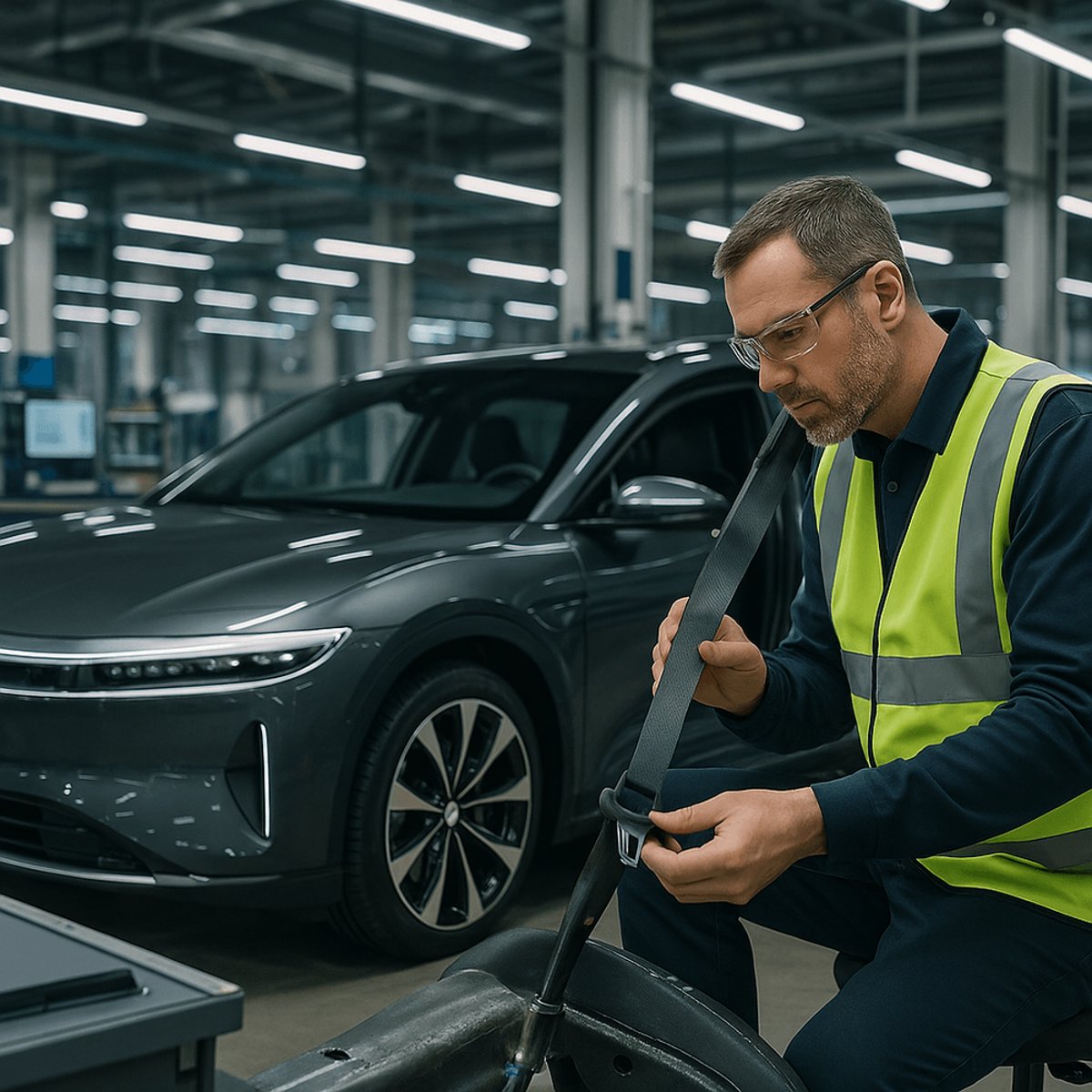
Lucid Motors just hit another manufacturing roadblock. The California-based EV startup is recalling more than 4,000 Gravity SUVs over a seat belt welding defect, a problem that essentially impacts the bulk of vehicles produced since the luxury SUV started rolling off assembly lines last year.
The recall centers on improperly welded seat belt components that could fail to restrain occupants during a crash. For a company that's positioned itself as a premium alternative to Tesla and traditional luxury brands, a safety defect of this magnitude is particularly damaging. Lucid has built its brand on engineering excellence and attention to detail, making this recall all the more embarrassing.
This isn't Lucid's first dance with quality problems. When Gravity production ramped up in 2025, the company faced a cascade of manufacturing issues that slowed deliveries and frustrated early adopters who'd put down hefty deposits. Those problems ranged from software glitches to fit-and-finish inconsistencies, the kind of teething troubles that have become almost standard for EV startups trying to scale production.
But seat belt defects hit different. Unlike a misaligned door panel or buggy infotainment system, faulty safety restraints trigger federal scrutiny and shake customer confidence in ways that take years to rebuild. The timing couldn't be worse for Lucid, which is burning through cash and relying on continued backing from Saudi Arabia's Public Investment Fund to stay afloat.
The Gravity SUV was supposed to be Lucid's breakthrough into higher-volume production. The company's first vehicle, the Air sedan, won rave reviews for its range and performance but never achieved meaningful sales numbers. Starting around $80,000, the Gravity targets the luxury SUV segment where buyers actually exist in large numbers, unlike the ultra-premium sedan market where the Air competes.
Now that expansion strategy faces questions. If Lucid can't nail basic manufacturing quality on a vehicle that's been in production for over a year, how will investors and customers trust the company to scale further? The EV startup game has gotten brutal, with cash-rich players like Tesla dropping prices and legacy automakers like Ford and GM flooding the market with electric SUVs.
Lucid will need to inspect and repair the affected Gravity SUVs, a process that will likely take months and cost millions. Owners will receive notifications and instructions to bring their vehicles to service centers for the fix. The company hasn't reported any injuries related to the defect, which should limit the damage, but the recall still stings.
The broader context makes this recall more than just a isolated quality hiccup. EV startups face immense pressure to prove they can manufacture at scale without the decades of production experience that traditional automakers possess. Rivian has weathered its own quality struggles. Fisker essentially collapsed under the weight of production problems and cash shortages.
For Lucid, backed by effectively unlimited Saudi funding, the question isn't survival but credibility. Can a company that positions itself as the pinnacle of EV engineering deliver vehicles that don't require massive recalls? The answer to that question will determine whether Lucid becomes a legitimate Tesla alternative or just another cautionary tale about the difficulty of building cars.
This recall crystallizes the challenge facing every EV startup trying to break into a market dominated by Tesla and legacy automakers with century-old manufacturing expertise. Lucid has the funding and the engineering talent, but translating that into consistent, high-quality production at scale remains elusive. The company needs to fix more than just seat belt welds - it needs to prove it can manufacture vehicles that live up to its premium positioning without constant quality issues eroding customer trust. With the EV market cooling and competition intensifying, Lucid's window to get this right is closing fast.