Lucid Group hit a speed bump in Q1 2026, with the luxury EV maker revealing that a seat supplier issue crimped first-quarter sales numbers. The company disclosed the setback Friday evening, though it maintains the problem's been resolved and isn't touching its full-year production guidance. It's the latest supply chain hiccup to rattle the EV sector, where even minor component shortages can stall six-figure vehicles on factory floors.
Lucid Group just gave Wall Street a reminder that even luxury EVs can be undone by unglamorous parts. The Newark, California-based automaker confirmed Friday that a seat supplier disruption dragged down its first-quarter 2026 delivery numbers, marking an unwelcome stumble for a company that's been fighting to prove it can scale production of its high-end Air sedans.
The timing stings. Lucid has spent the past year trying to demonstrate operational consistency after earlier production struggles, and Q1 was supposed to show momentum coming out of a strong 2025 finish. Instead, the company found itself at the mercy of a supplier that couldn't deliver seats fast enough to match its assembly line pace.
Lucid hasn't disclosed specific Q1 delivery figures yet, but the company was quick to emphasize that the seat problem is behind it. More importantly, executives aren't backing off their 2026 production guidance, suggesting the disruption was measured in weeks, not months. That's crucial for a company that's still burning through cash and needs to hit volume targets to satisfy investors and its deep-pocketed backer, Saudi Arabia's Public Investment Fund.
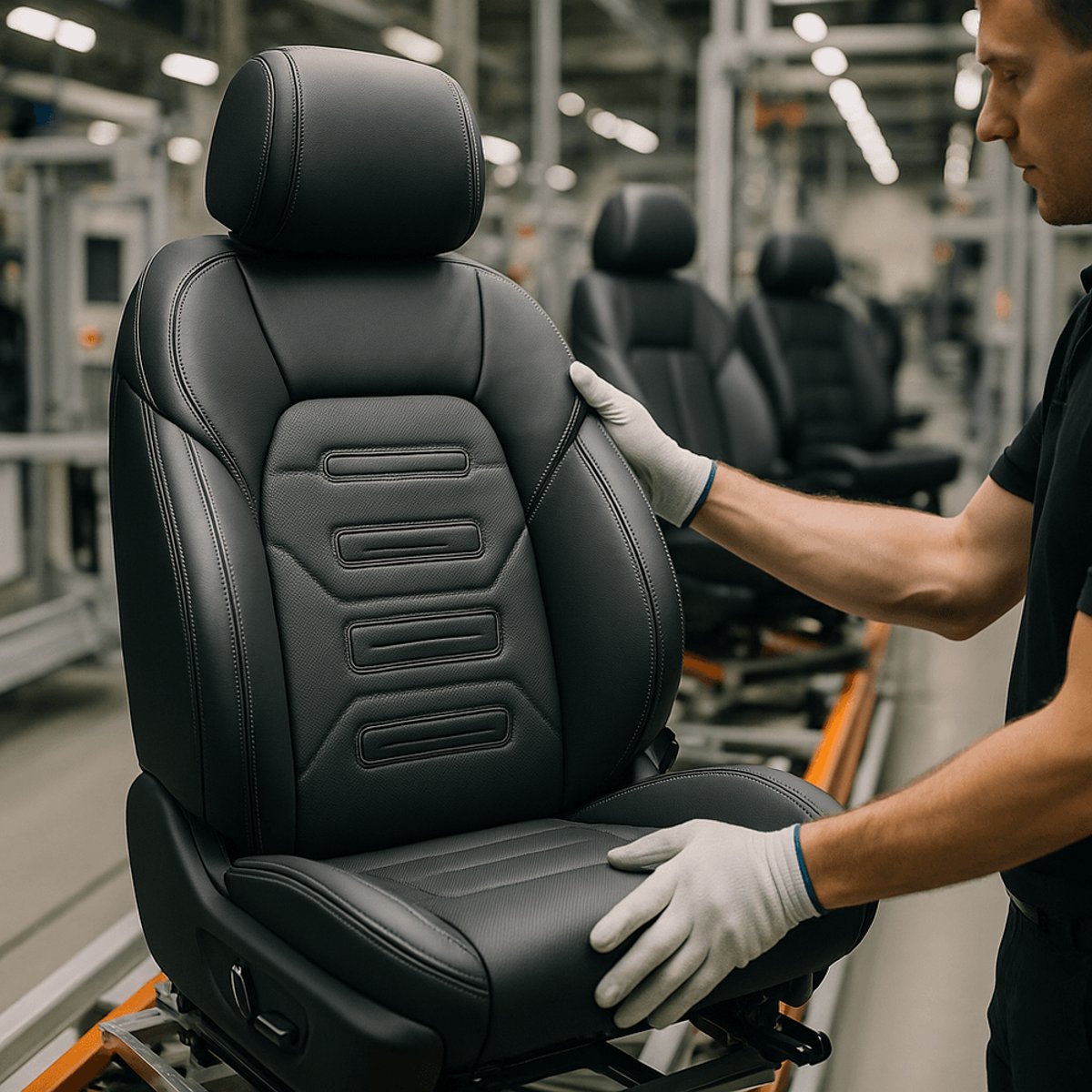
The seat supplier snag is classic supply chain whiplash. While the semiconductor shortage that paralyzed automakers in 2021 and 2022 has mostly eased, EV makers remain vulnerable to disruptions from smaller, specialized suppliers. Seats for luxury EVs aren't commodity parts - they're custom-engineered for specific models, with integrated heating, cooling, and massage functions that can't be swapped out overnight.
Tesla faced similar supplier headaches during its Model 3 ramp, and Rivian has publicly wrestled with component shortages that forced production pauses. For Lucid, which builds far fewer vehicles than those rivals, even a short supplier hiccup translates to a noticeable dent in quarterly numbers.
The company's confidence in maintaining its 2026 guidance suggests it's either found an alternative supplier, negotiated expedited deliveries, or believes it can make up the shortfall in subsequent quarters. Lucid previously indicated it was targeting higher production volumes this year as it works toward launching its Gravity SUV, a critical vehicle for expanding beyond the niche luxury sedan market.
Investors have been watching Lucid with cautious optimism. The company's stock has been volatile, reflecting broader uncertainty about which EV startups will survive the industry's brutal scaling phase. Any hint of production inconsistency tends to spook shareholders who've already sat through multiple rounds of dilution and missed targets.
What makes this episode particularly frustrating for Lucid is that it's not a problem of the company's own making. The Air sedan has earned strong reviews for its technology and range, and the production line in Arizona has been running more smoothly. Getting tripped up by a supplier highlights how little control automakers have over their extended manufacturing networks.
The broader EV industry is watching these dynamics closely. As legacy automakers ramp up electric production and new entrants fight for market share, supplier capacity remains a potential choke point. Companies that can lock in reliable component sources, or bring more manufacturing in-house, may have a crucial advantage.
For Lucid, the immediate priority is proving the seat issue was truly a one-off. The company will need to deliver a strong Q2 to reassure investors that it's back on track. Wall Street doesn't have much patience for execution stumbles, especially from companies still racing toward profitability.
The seat supplier disruption is a reminder that EV production remains a high-wire act where a single component can throw off carefully laid plans. Lucid says it's fixed the problem, but the real test comes in Q2 when the market will see whether the company can recover lost momentum. For investors and industry watchers, it's another data point in the ongoing question of which EV startups can navigate the treacherous path from boutique manufacturer to volume producer. The companies that master their supply chains will be the ones still standing when the shakeout ends.