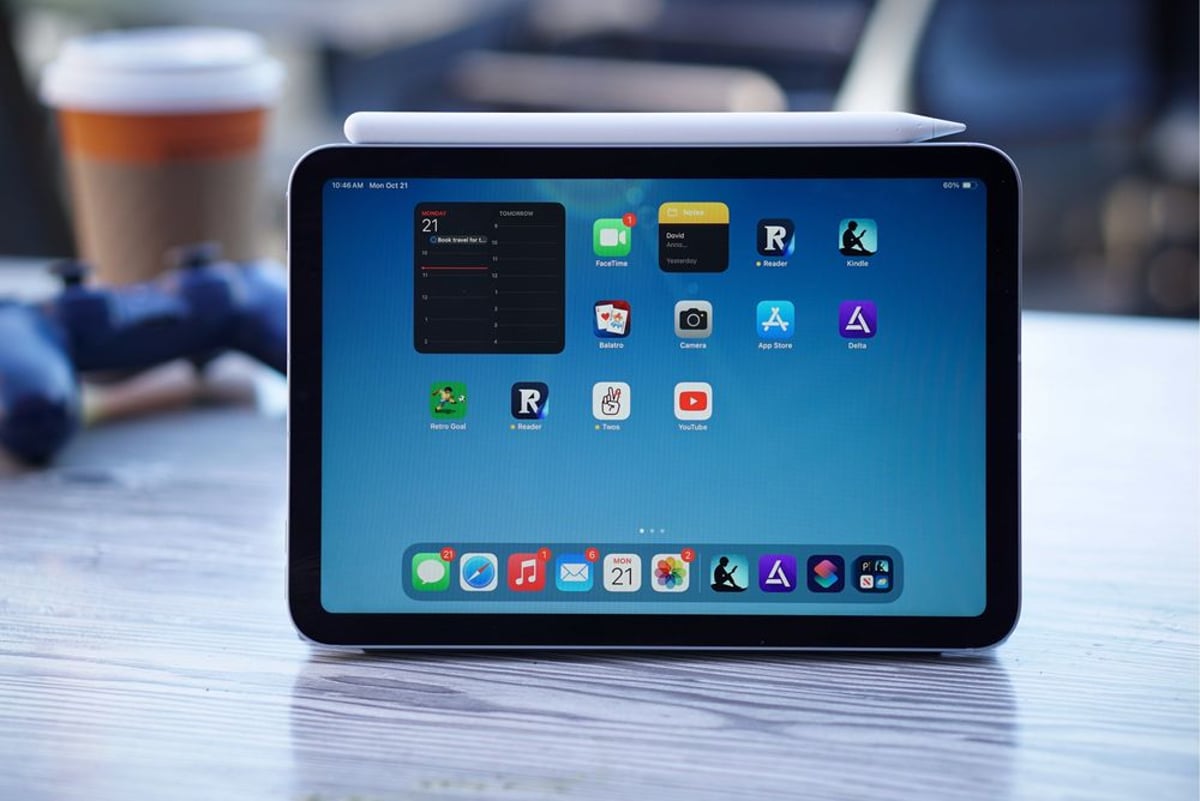
Apple is gearing up to launch an OLED-equipped iPad Mini as soon as October, marking the biggest hardware refresh for the compact tablet since its 2021 redesign. The move comes as the company continues an aggressive pricing strategy that's already added $100 to the current iPad Mini's price tag. According to Bloomberg's Mark Gurman, the display upgrade will likely bring another price increase, testing consumer tolerance as Apple pushes premium features down its product stack.
Apple is betting consumers will pay more for better screens. The company's rumored OLED iPad Mini, slated for an October reveal according to Bloomberg, represents the latest chapter in Cupertino's strategy to premiumize every corner of its product portfolio. And it's coming at a time when Apple has already shown it's willing to test how much more customers will tolerate.
The timing is notable. Just last month, Apple raised prices across nearly everything it sells - MacBooks, iPads, Macs, even the Vision Pro. The current iPad Mini, still running a Liquid Retina LCD display, jumped $100 overnight. CEO Tim Cook attributed the increases to rising component costs and expanded RAM configurations, but the moves signaled something bigger: Apple's confidence that its ecosystem lock-in gives it pricing power competitors can't match.
Now the OLED upgrade adds fuel to that fire. Mark Gurman, who's been tracking Apple's OLED transition for months, first reported last year that the iPad Mini would make the jump with an accompanying price bump. OLED displays cost more to manufacture - they're thinner, offer better contrast ratios, and enable true blacks that LCDs can't replicate. But they also give Apple justification to push the Mini's starting price even higher than the recent $100 increase.
The 2021 iPad Mini redesign brought flat edges, a larger 8.3-inch display, and USB-C connectivity, bringing it in line with Apple's modern design language. Since then, updates have been minimal - mostly chip bumps and storage tweaks. An OLED panel would represent the first major hardware evolution in five years, transforming the Mini from a budget-friendly option into a premium compact tablet.
But there's a pricing puzzle here. The current iPad Mini starts around $600 after the recent increase. Adding OLED could push that north of $700, territory that starts competing with the base iPad Air. Apple's product segmentation has always been precise - each device occupying a specific price band without cannibalizing siblings. An expensive iPad Mini challenges that calculus, potentially forcing adjustments across the iPad lineup.
The broader context matters too. Earlier this week, Gurman reported that AppleCare Plus pricing for Macs and iPads is climbing. That's not a standalone move - it's part of Apple's systematic margin expansion as hardware growth slows. Services revenue, which includes AppleCare, has become critical to Wall Street's Apple narrative. Every dollar extracted from the existing install base matters more than ever.
Apple's OLED transition has been methodical. The iPhone adopted OLED years ago, starting with the iPhone X in 2017. The iPad Pro got OLED earlier this year with tandem display technology that stacks two OLED panels for exceptional brightness. Now the iPad Mini follows, leaving only the entry-level iPad and MacBook Air on LCD technology. Gurman suggests those devices will make the switch by 2027 or 2028, completing Apple's display evolution.
For consumers, the calculus is simple: better screens cost more, and Apple knows you'll pay it. The iPad Mini has always occupied a unique niche - compact enough for one-handed use, powerful enough for real work, and portable enough to disappear into a bag. An OLED display makes that package even more compelling, especially for content consumption where screen quality matters most.
But the pricing pressure reveals Apple's broader strategy. As smartphone upgrade cycles lengthen and Mac sales plateau, the company is extracting more revenue per customer rather than chasing market share. That means premium features at premium prices, even on devices that once competed on value. The iPad Mini, long the scrappy underdog of Apple's tablet lineup, is getting the premium treatment whether shoppers asked for it or not.
Apple's OLED iPad Mini isn't just a display upgrade - it's a signal that no product is safe from the company's premiumization playbook. With prices already up $100 and another increase likely this fall, the Mini is transforming from value option to premium compact. For Apple, it's a bet that ecosystem loyalty trumps price sensitivity. For shoppers, it means deciding whether OLED's visual pop justifies what could be a $700-plus entry point for a device that once competed on affordability. As the last LCD holdouts prepare to make the switch by 2028, one thing is clear: Apple's margin expansion isn't slowing down, and your wallet is footing the bill.