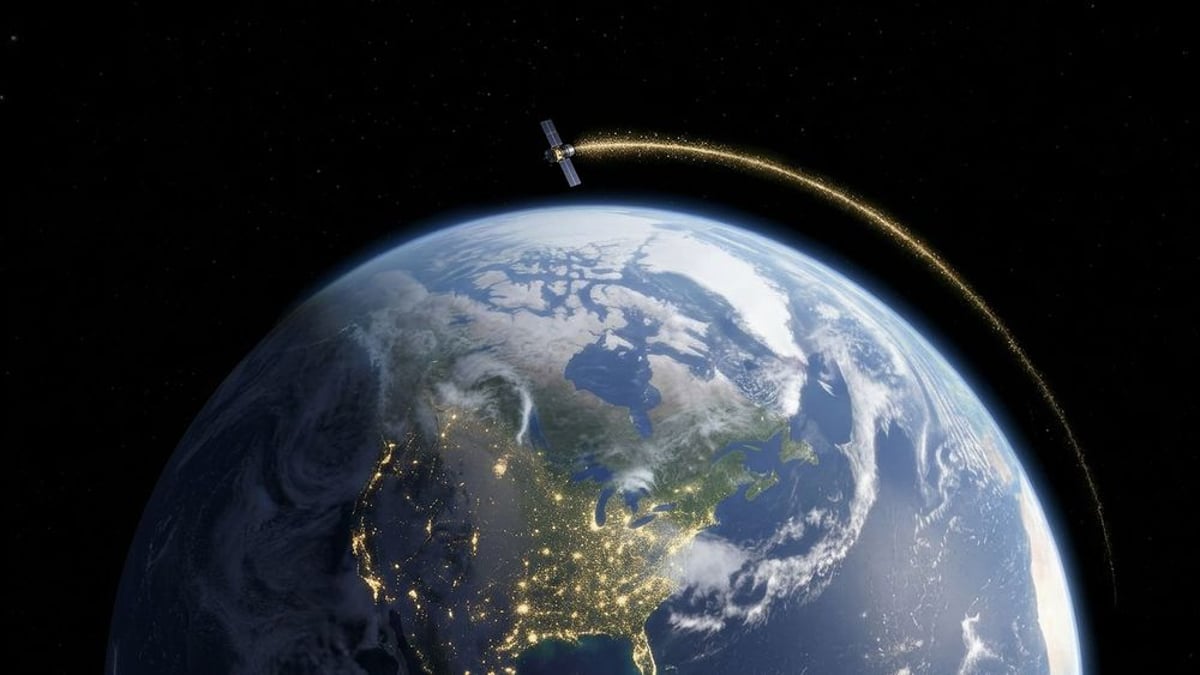
A new AI infrastructure player just emerged at NVIDIA GTC 2026 with a bold pitch: give robots and wearables the ability to remember what they see. Memories.ai is building what it calls a large visual memory model, designed to index and retrieve video-recorded memories for physical AI systems. The announcement positions the startup at the intersection of two hot markets - AI infrastructure and the exploding physical AI sector that includes everything from humanoid robots to AI-powered glasses.
Memories.ai is tackling one of physical AI's thorniest problems: how do you give a robot or wearable device the ability to remember and retrieve what it has seen? The startup's answer, unveiled at NVIDIA GTC 2026, is a large visual memory model that treats video recordings like a searchable database of experiences.
The challenge is more complex than it sounds. While large language models have conquered text and modern computer vision systems can identify objects in real-time, building a system that can efficiently store, index, and retrieve visual memories across hours or days of continuous recording remains largely unsolved. That's the gap Memories.ai is betting on.
According to TechCrunch, the platform is specifically designed for physical AI applications - think AI-powered glasses that need to remember where you left your keys, or warehouse robots that must recall the layout of inventory from previous shifts. The infrastructure layer sits between the camera sensor and the AI application, handling the heavy lifting of turning continuous video streams into queryable memory.
The timing couldn't be better. The physical AI market is exploding as companies race to embed intelligence into everything from factory robots to consumer wearables. Meta's Ray-Ban smart glasses already let users ask questions about what they're looking at, while startups like Humane and Rabbit have launched AI-powered devices that record and process the world around them. But most of these systems lack persistent, searchable visual memory - they process what they see in the moment, then forget it.
Memories.ai's approach appears to mirror the architecture that made large language models successful: pre-training on massive datasets, then fine-tuning for specific use cases. But instead of predicting the next word, the model predicts and retrieves relevant visual memories based on queries. The system needs to handle challenges unique to video - temporal relationships, changing lighting conditions, camera movement, and the sheer data volume of continuous recording.
The announcement at NVIDIA GTC isn't coincidental. The conference has become ground zero for physical AI innovation, with NVIDIA positioning its hardware as the backbone for robotics and embodied AI systems. The chip giant's Jetson platform already powers countless robots and edge AI devices, creating a ready-made ecosystem for infrastructure plays like Memories.ai.
For enterprise applications, the value proposition is clear. A warehouse robot with visual memory could optimize routes based on past observations of congestion patterns. A security system could instantly retrieve similar incidents from months of footage. A manufacturing robot could reference past successful assemblies when troubleshooting defects. These applications require more than object detection - they need genuine visual recall.
The technical hurdles are significant. Storing raw video is prohibitively expensive at scale, so the system must compress visual information into efficient representations without losing critical details. Retrieval needs to be fast enough for real-time applications, while indexing must capture semantic meaning - understanding that 'where did I put my coffee mug' and 'ceramic cup location' refer to the same query.
Memories.ai joins a growing cohort of AI infrastructure startups betting that the next wave of value creation isn't in foundation models themselves, but in the specialized layers that make them useful for specific domains. Companies like Pinecone built vector databases for AI applications, while Weights & Biases created infrastructure for model training. Visual memory for physical AI could be an equally fundamental building block.
The competitive landscape is still forming. Big tech companies like Google and Meta are undoubtedly working on similar capabilities for their own devices, while research labs have published papers on visual episodic memory for robots. But the market may be large enough to support dedicated infrastructure providers, especially if Memories.ai can establish itself as the standard layer that multiple device makers adopt.
What remains unclear is Memories.ai's business model and go-to-market strategy. Will they license the technology to device manufacturers? Offer it as an API service? Partner with cloud providers? The infrastructure-as-a-service model worked for companies like Twilio and Stripe in previous eras, but AI infrastructure economics are still being figured out, especially for compute-intensive applications like video processing.
The startup's focus on wearables and robotics suggests they're targeting the emerging physical AI stack rather than competing directly with computer vision APIs from major cloud providers. That's a smart positioning - the incumbents are optimized for analyzing static images or short clips, not building persistent memory systems for devices that record continuously.
Memories.ai is making a calculated bet that visual memory will become as fundamental to physical AI as vector databases became to language models. If wearables and robots are going to move beyond parlor tricks to genuinely useful assistants, they'll need to remember what they've seen - not just recognize what's in front of them right now. The announcement at NVIDIA GTC signals growing recognition that physical AI needs its own infrastructure layer, purpose-built for the unique challenges of embodied intelligence. Whether Memories.ai can execute on that vision and beat both startups and tech giants to market will determine if they've identified a genuine infrastructure opportunity or just an interesting research problem.