Nvidia just scored two of China's biggest automakers for its autonomous vehicle ambitions. At its GTX conference today, the chipmaker announced that BYD and Geely - along with Isuzu and Nissan - will deploy its Drive Hyperion platform to build Level 4 robotaxis. The move signals Nvidia's aggressive push beyond datacenter AI into the massive autonomous vehicle market, where it's betting its integrated hardware-software stack can beat Tesla's homegrown approach.
Nvidia isn't content dominating AI datacenters. The company's making a hard push into autonomous vehicles, and it just landed two heavyweight partners that could reshape the robotaxi race.
At its GTX conference today, Nvidia revealed that BYD and Geely - China's first and third-largest automakers by sales - will deploy its Drive Hyperion platform to develop Level 4 autonomous vehicles. Isuzu and Nissan also signed on, according to The Verge. Level 4 means full self-driving within defined areas, no human intervention required.
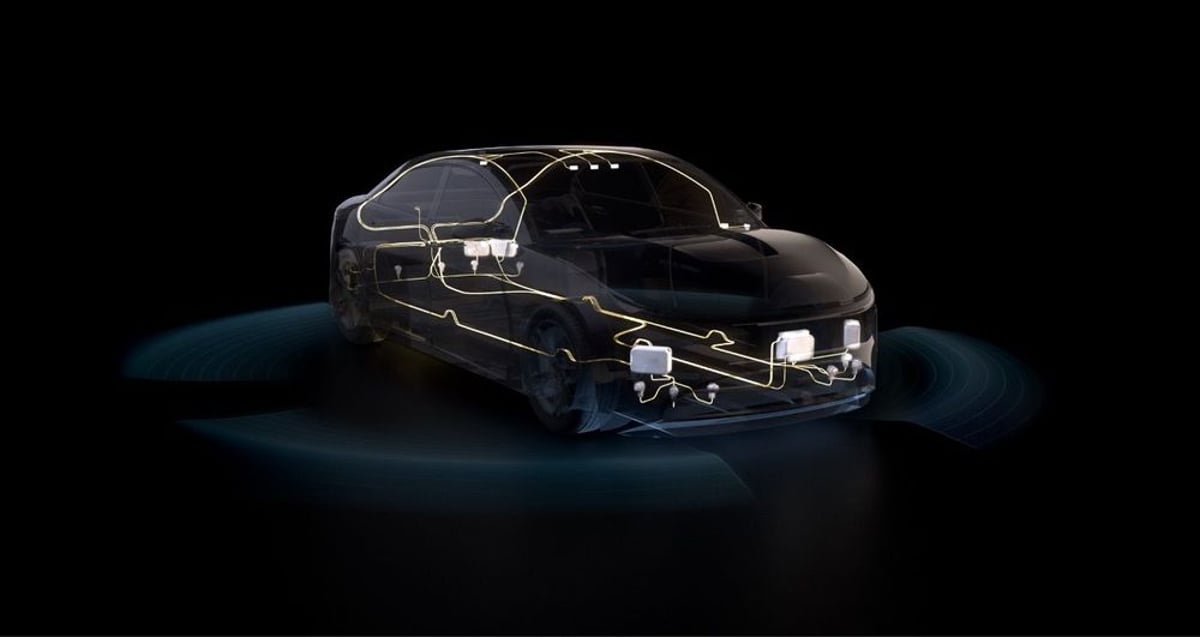
The announcement marks a significant escalation in Nvidia's automotive strategy. While the company's been selling AI chips to carmakers for years, Drive Hyperion represents a complete, integrated solution - combining processors, computers, sensors like cameras and lidar, plus all the software needed to turn a vehicle autonomous. It's essentially a turnkey robotaxi platform that automakers can bolt onto their existing vehicle designs.
BYD already uses Nvidia chips in its conventional electric vehicles, but this expanded partnership pushes the relationship into truly autonomous territory. The Chinese EV giant sold over 3 million vehicles last year, giving it massive scale to deploy robotaxis if the technology pans out. Geely, which owns Volvo and Polestar, brings similar manufacturing firepower and global reach.
The timing couldn't be more strategic. China's autonomous vehicle market is exploding, with cities like Beijing, Shanghai, and Shenzhen racing to approve robotaxi services. Local players like Baidu's Apollo and Pony.ai are already running commercial operations. By partnering with domestic automakers, Nvidia's positioning itself as the picks-and-shovels provider while sidesteppping some of the geopolitical complications that have hampered other U.S. tech companies in China.
But Nvidia's betting on a fundamentally different approach than Tesla. Where Elon Musk's company builds everything in-house - from custom AI chips to training infrastructure to vehicle integration - Nvidia's selling a platform that any automaker can license. It's the Android strategy versus Apple's walled garden, applied to self-driving cars.
The question is whether automakers will accept a vendor solution or insist on controlling their own autonomous destiny. Tesla argues its vertically integrated approach lets it iterate faster and optimize the entire stack. Nvidia counters that most carmakers don't have the AI expertise to build competitive self-driving systems from scratch, making Drive Hyperion an attractive shortcut.
Drive Hyperion's architecture centers on Nvidia's automotive-grade processors running neural networks trained on petabytes of driving data. The platform includes redundant sensor arrays - multiple cameras, radar, lidar - feeding data into the compute stack. The software handles everything from perception (identifying pedestrians, vehicles, road signs) to path planning (choosing routes) to control (actually steering, braking, accelerating).
For Nvidia, the automotive push diversifies revenue beyond its AI datacenter dominance while leveraging the same GPU architecture. The company's automotive segment pulled in $449 million last quarter, tiny compared to its $22.1 billion datacenter business but growing fast. Every robotaxi running Drive Hyperion means recurring revenue from hardware, software licenses, and cloud services for data processing and AI model updates.
The BYD and Geely partnerships also give Nvidia crucial real-world testing grounds. Autonomous driving is fundamentally a data problem - the more miles driven, the more edge cases captured, the better the AI gets. Deploying across millions of Chinese vehicles could generate the training data Nvidia needs to refine its platform faster than competitors.
Still, regulatory hurdles loom large. China requires autonomous vehicle technology to meet strict safety standards and often mandates partnerships with domestic companies. The U.S. is pushing export restrictions on advanced AI chips to China, though automotive applications have so far avoided the harshest controls. Nvidia will need to navigate these geopolitical crosscurrents carefully.
Competitors aren't standing still either. Intel's Mobileye has deep relationships with automakers and a similar platform strategy. Qualcomm's pushing its Snapdragon Ride system. Startups like Aurora and Waymo are building their own stacks. And Tesla keeps insisting its Full Self-Driving system will reach Level 4 autonomy through camera-only approaches, no lidar required.
What's clear is that the robotaxi race is entering a new phase. The technology's moving from experimental pilots to serious commercial deployment, and the winners will be whoever can scale fastest while maintaining safety. Nvidia's betting that by providing the underlying platform, it can win regardless of which automaker's robotaxis dominate the streets.
Nvidia's partnerships with BYD and Geely represent a calculated bet that the autonomous vehicle future runs on platform plays, not vertically integrated silos. By offering automakers a complete self-driving stack, Nvidia's positioning itself as essential infrastructure for the robotaxi era - much like it became the default choice for AI training. Whether that strategy can overcome Tesla's integrated approach and navigate China's regulatory landscape will determine if Nvidia can replicate its datacenter dominance on the road. For now, landing two of China's biggest automakers gives the chipmaker serious momentum as the race to deploy driverless vehicles accelerates globally.