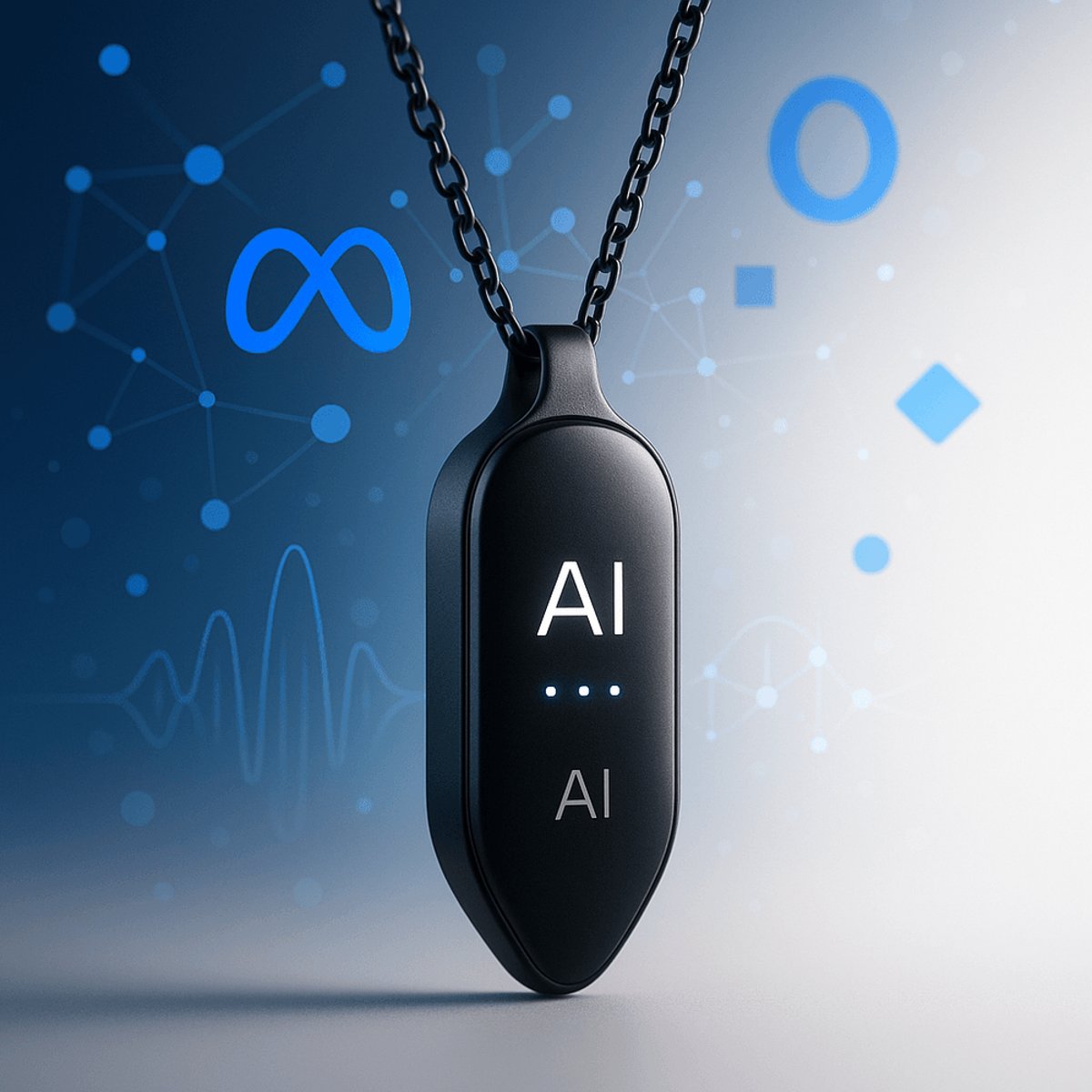
Meta just made its latest bet on AI wearables official, acquiring startup Limitless in a surprise Friday announcement. The deal brings Meta a small AI-powered pendant that records conversations and generates summaries, marking another strategic move in the company's push beyond smartphones into ambient computing devices that could reshape how we interact with AI daily.
Meta just pulled off another strategic acquisition in the AI hardware space, quietly scooping up Limitless, the startup behind a seemingly simple but powerful AI pendant. The deal, announced Friday by Limitless CEO Dan Siroker, adds another piece to Meta's expanding wearables puzzle as the company races to own the next computing platform beyond smartphones.
Limitless makes what might be the most unobtrusive AI device yet - a small pendant that continuously records conversations and uses AI to generate summaries, transcripts, and actionable insights. Think of it as having a personal assistant that never forgets a meeting or loses track of important details from casual conversations. The device has gained traction among professionals who want to capture ideas and decisions without the friction of note-taking apps or voice memos.
"Meta recently announced a new vision to bring personal superintelligence to everyone and a key part of that vision is building incredible AI-enabled wearables," Siroker explained in his announcement post. "We share this vision and we'll be joining Meta to help bring our shared vision to life." The timing isn't coincidental - Meta has been telegraphing its ambient AI strategy for months, and Limitless fits perfectly into that roadmap.
This acquisition comes as Meta doubles down on wearable AI after finding success with its Ray-Ban smart glasses partnership. Those glasses, which can take photos, answer questions, and provide real-time information, have proven there's genuine demand for AI that seamlessly integrates into daily life. But a pendant represents a different approach entirely - one that's always listening, always learning, without the visual bulk of glasses or the social friction of obviously recording devices.
The deal also positions Meta to compete more directly with startups like Humane and Rabbit, both of which have struggled to gain mainstream adoption with their AI pin and pocket device respectively. Limitless has already solved some of the core challenges these companies faced - battery life, form factor, and actual utility that people want to pay for. By acquiring rather than building from scratch, Meta gets a head start in a product category that could define the next decade of personal computing.
Financially, while Siroker didn't disclose terms, industry watchers suggest this could be a relatively modest acquisition by Meta standards - likely in the tens of millions rather than billions. Limitless had raised funding from investors but hadn't reached the scale that would command a massive premium. For Meta, it's essentially buying proven technology and a talented team rather than paying for market dominance.
The broader implications extend beyond just another Meta acquisition. This signals that ambient AI - devices that work in the background without constant user input - is becoming the next major computing interface. While smartphones require active engagement, devices like Limitless operate more like digital memory augmentation. You wear it, forget about it, and let it capture and process the information flow of your daily life.
What makes this particularly interesting is how it could integrate with Meta's existing ecosystem. Imagine your Limitless pendant capturing key insights from meetings, then automatically summarizing them in your Meta AI assistant, or using conversation context to improve your Instagram or Facebook experiences. The data collection potential is enormous, though it'll certainly raise privacy questions that Meta will need to address carefully.
Looking ahead, this acquisition suggests Meta is building toward a comprehensive wearables strategy that could include glasses for visual AI, pendants for ambient audio processing, and potentially other form factors we haven't seen yet. The goal seems clear: make AI assistance so seamless and valuable that it becomes indispensable to daily life, creating new touchpoints between users and Meta's broader platform ecosystem.
Meta's Limitless acquisition represents more than just another startup purchase - it's a strategic bet on ambient AI becoming the next major computing interface. By adding conversation-recording capabilities to its wearables portfolio, Meta is building toward a future where AI assistance becomes as natural and invisible as wearing a watch. The real test will be whether consumers embrace always-listening devices and whether Meta can navigate the inevitable privacy concerns while delivering genuine value that makes these tools indispensable to daily life.