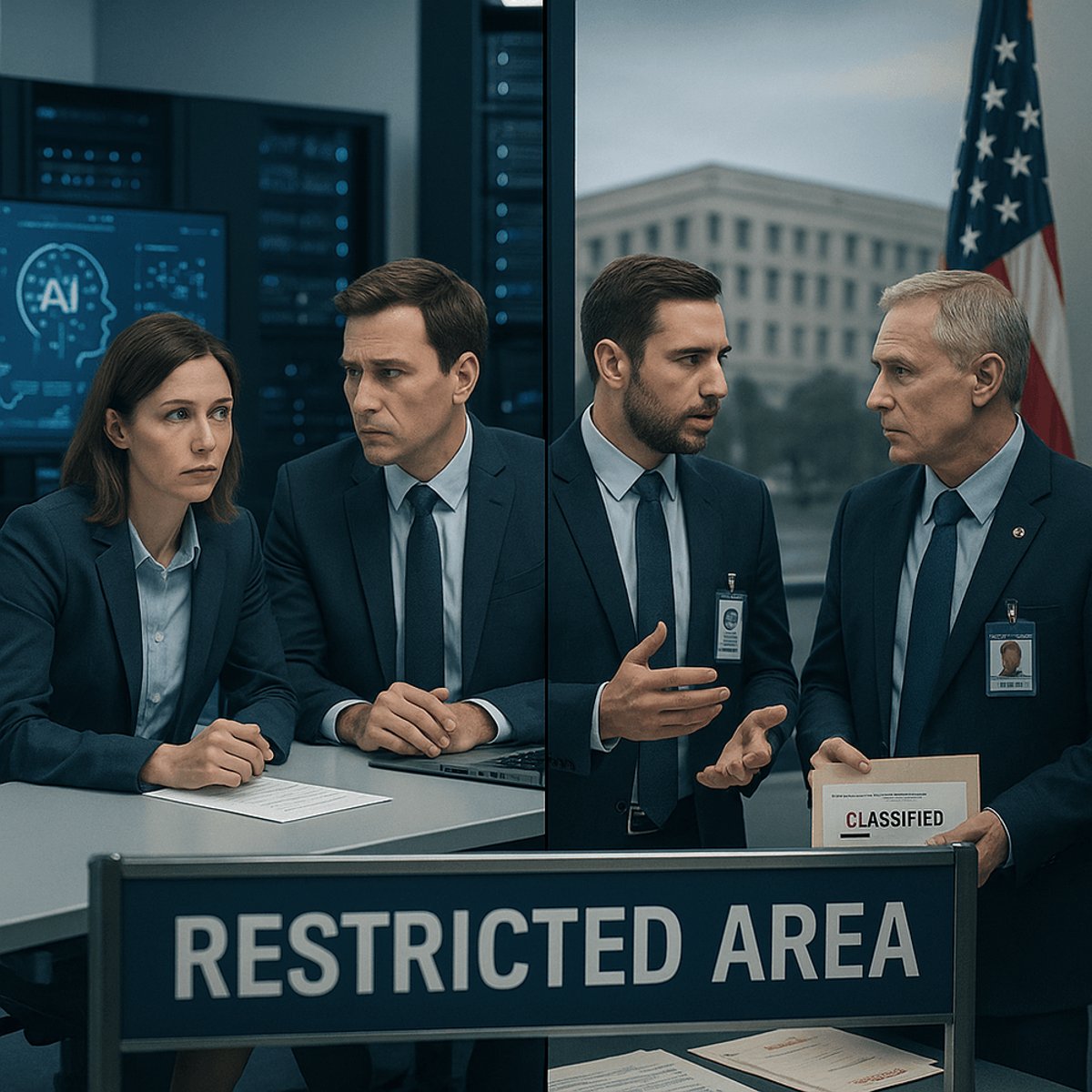
The Pentagon has blacklisted Anthropic, cutting off the AI startup from Department of Defense contracts just months after it became a preferred vendor through partnerships with Amazon and Palantir. The sudden reversal has sent shockwaves through the defense tech community, with industry experts warning the move could undermine America's military AI capabilities at a critical moment in the global tech race.
Anthropic was supposed to be the safe bet. The AI startup founded by former OpenAI executives had positioned itself as the responsible choice for sensitive government work, emphasizing safety and constitutional AI principles that aligned perfectly with Pentagon requirements. Now that carefully constructed relationship lies in ruins.
The Department of Defense confirmed the blacklisting in a terse statement according to CNBC, offering no detailed explanation for the reversal. What makes the decision particularly jarring is the timing - Anthropic had only recently secured DOD approval through its strategic partnerships with Amazon Web Services and defense contractor Palantir Technologies, relationships that were supposed to provide the compliance infrastructure needed for classified work.
Those partnerships weren't just corporate handshakes. Amazon invested $4 billion in Anthropic last year, while Palantir integrated Claude, Anthropic's flagship AI model, directly into its defense platforms. The arrangement gave military planners access to cutting-edge language models through established, security-cleared channels. Pentagon officials had privately praised the setup as a model for how Silicon Valley innovation could serve national security without compromising safety standards.
But something changed. Defense industry sources speaking on background suggest the blacklisting stems from concerns about Anthropic's broader commercial relationships and potential exposure to foreign influence, though no official confirmation has emerged. The vagueness itself is causing alarm - if a company as safety-focused and partnership-vetted as Anthropic can be suddenly cut off, what does that mean for the dozens of other AI startups eyeing defense contracts?
"This sends an incredibly chilling message to the AI community," one former Pentagon technology advisor told industry observers. "You can do everything right, partner with the approved players, follow every protocol, and still get blacklisted with no clear recourse. That's not how you build a robust defense tech ecosystem."
The ripple effects are already visible. Amazon now faces awkward questions about the viability of its AI partnership strategy, having positioned Anthropic as a cornerstone of its government cloud offerings. Palantir is scrambling to identify alternative large language model providers that can plug into its defense platforms without requiring another lengthy approval process. Several smaller AI companies that were in discussions with DOD have reportedly paused their pursuit of military contracts pending clarity on the blacklisting criteria.
The strategic implications extend far beyond one company's business prospects. The Pentagon is in the midst of a massive AI modernization push, racing to match capabilities that China and Russia are aggressively deploying in their own military systems. That effort depends on accessing the most advanced AI models, which are almost exclusively developed by private companies operating on commercial timelines. Creating an unpredictable approval environment risks pushing top AI talent away from defense work entirely.
Some experts see echoes of past technology gaps that haunted the military. "We've been here before," noted one defense technology analyst. "In the 1980s and 90s, the Pentagon's preference for custom, milspec solutions meant they fell behind commercial tech innovation. We spent the last two decades trying to fix that with flexible acquisition and private partnerships. This feels like a regression."
The ban also highlights the increasingly complex geopolitics of AI development. Unlike traditional defense contractors that work exclusively with U.S. military and allied governments, AI companies operate in a global market with users and investors spanning multiple jurisdictions. Anthropic's venture backing includes international investors, and its Claude model serves customers worldwide. Drawing clear lines about what constitutes acceptable commercial exposure while maintaining access to cutting-edge capabilities is proving extraordinarily difficult.
Microsoft, which has its own Pentagon contracts through its relationship with OpenAI, is watching the Anthropic situation closely. The same partnership dynamics that made Anthropic attractive to DOD - established tech giant plus AI innovator - apply equally to the Microsoft-OpenAI arrangement. If Anthropic's structure proved insufficient, what additional safeguards might be required?
For now, the Pentagon's AI plans move forward with a suddenly smaller pool of approved vendors. Google has been hesitant about defense work following employee protests, Meta remains largely focused on consumer applications, and OpenAI faces its own questions about governance and international ties. The blacklisting leaves DOD increasingly dependent on a handful of large tech companies with mixed track records on government partnerships and limited options if those relationships sour.
The Anthropic blacklisting represents more than one company losing access to lucrative defense contracts. It's a stress test of whether the Pentagon can successfully tap commercial AI innovation while maintaining the security and control requirements inherent to military applications. The lack of transparency around the decision criteria creates uncertainty that could deter the exact companies DOD needs most. As China and Russia pour resources into military AI with fewer bureaucratic constraints, America's ability to leverage its private sector AI advantage may depend on finding a more predictable framework for these partnerships. What happens next with Anthropic will signal whether defense tech collaboration is evolving or regressing.