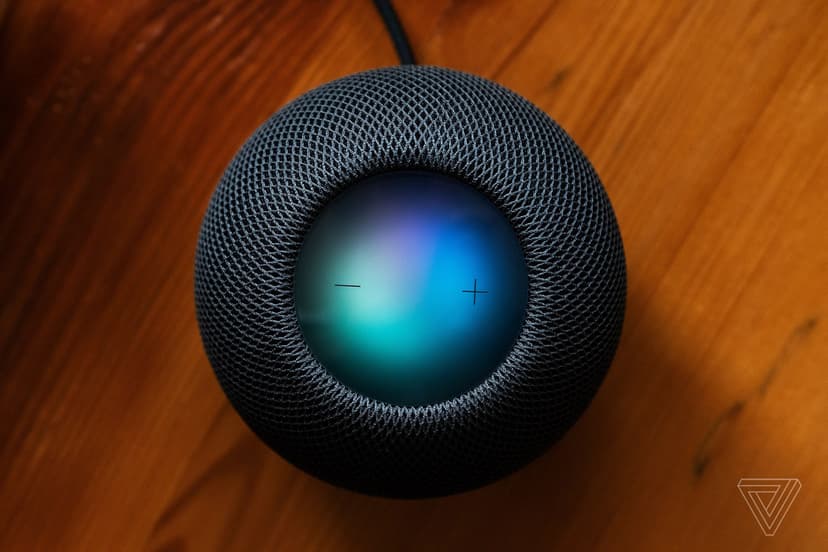
Apple just pushed back its long-rumored smart home display yet again, and this time the culprit is Siri. The device codenamed J490—dubbed "HomePad" by insiders—was supposed to ship this spring after missing a 2025 target. Now it's pushed to fall 2026, according to Bloomberg's Mark Gurman, all because Apple's chatbot-style AI overhaul for its voice assistant isn't ready. The delay signals just how critical conversational AI has become to Apple's hardware strategy—and how far behind the company is in catching up to rivals.
Apple keeps moving the goalposts on its smart home display, and the latest delay reveals something more telling than just another missed deadline. The company's HomePad—internally tagged J490—is now slated for fall 2026 instead of this spring, according to Bloomberg reporter Mark Gurman. The reason? Apple's AI-powered Siri overhaul simply isn't ready.
This marks the third delay for what's essentially a HomePod with a screen. First it was supposed to arrive in 2025, then early 2026, and now fall at the earliest. Leaker Kosutami flagged the shift on X last week, but Gurman's report confirms the AI dependency is what's holding everything up.
The stakes are higher than just another hardware launch. Apple's betting that its next-generation Siri—rebuilt with large language model capabilities and conversational AI—will be the killer feature that differentiates its smart display from Amazon's Echo Show lineup and Google's Nest Hub devices. But that technology isn't baked yet, and Apple apparently won't ship the hardware without it.
According to Gurman's sources, the revamped Siri was supposed to be finished by now. Instead, it's been pushed back to later in 2026, likely arriving alongside iOS updates for iPhone. That timing creates a cascade effect: no AI Siri means no HomePad launch, at least not one that meets Apple's internal standards for what a smart home control center should do in 2026.
The delay also impacts Apple's more ambitious smart home project—a tabletop device with a robotic arm that can tilt and swivel the display. That product, which would compete more directly with Amazon's discontinued Astro robot experiments, is now penciled in for 2027 according to Gurman. It's another sign that Apple's smart home strategy is running years behind where executives hoped it would be.
The competitive pressure is real. Amazon has owned the smart display category since launching the Echo Show in 2017, while Google has steadily improved its Nest Hub with better AI integration and proactive suggestions. Both companies have spent years refining their voice assistants with conversational capabilities, exactly what Apple is now scrambling to build.
For Apple, the HomePad was supposed to be the centerpiece of a broader smart home push, tying together HomeKit accessories, acting as a home hub, and potentially serving as a video calling device. Early rumors suggested a roughly six-inch square display that could mount on walls or sit on countertops, running a stripped-down version of iOS optimized for glanceable information and voice control.
But without a Siri that can actually hold natural conversations, understand context, and handle complex requests the way ChatGPT or Google's Gemini can, the device risks feeling outdated before it even ships. Apple clearly decided it's better to wait than to launch a product that would immediately be compared unfavorably to AI-powered competitors.
The repeated delays also raise questions about Apple's AI development timeline overall. The company has talked publicly about its Apple Intelligence features and improvements to Siri, but the gap between announcements and actual shipping products keeps widening. While competitors like Google and OpenAI iterate rapidly on AI features, Apple's perfectionist culture and hardware dependencies create longer development cycles.
Industry watchers note that Apple's challenge isn't just technical—it's also about ecosystem integration. The company needs its AI Siri to work seamlessly across iPhone, iPad, Mac, Apple Watch, and now smart home devices. That level of coordination takes time, especially when Apple insists on doing most AI processing on-device for privacy reasons rather than relying heavily on cloud infrastructure.
The fall 2026 timeline assumes everything goes according to plan with the Siri overhaul, which hasn't exactly been Apple's track record lately with AI projects. If the voice assistant work hits more snags, don't be surprised if the HomePad slips into 2027 alongside its robotic sibling.
Apple's HomePad delay is more than just another pushed timeline—it's a window into the company's AI struggles. By tying a hardware launch to a Siri overhaul that keeps slipping, Apple's effectively admitting it can't compete in smart home without conversational AI that matches what Amazon and Google already offer. The fall 2026 target is ambitious given the company's recent track record, and every month of delay gives competitors more time to refine their own AI-powered displays. For a company that built its reputation on shipping polished products, repeatedly missing deadlines on a category it doesn't even lead yet is a troubling sign of how much ground Apple needs to make up in the AI race.