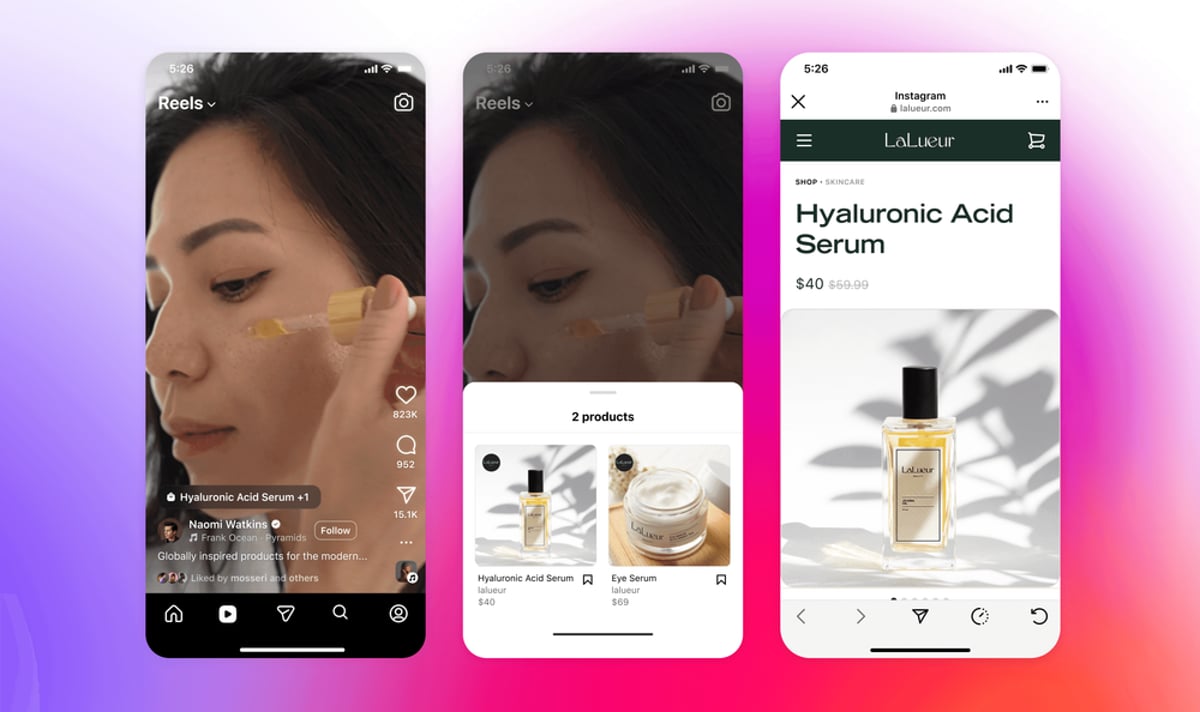
Meta just flipped the script on the entire creator commerce ecosystem. The company announced Tuesday it's embedding native affiliate shopping links directly into Instagram and Facebook posts, a move that could pull the rug out from under third-party platforms like ShopMy and LTK that have built businesses on solving exactly this problem. Content creators will soon tag products in Reels and photos without routing audiences through external link-in-bio tools, fundamentally changing how influencer marketing operates on the world's largest social platforms.
Meta is making its big play in creator commerce, and it's coming straight for the link-in-bio business. The company revealed Tuesday that Instagram and Facebook will soon let content creators embed affiliate shopping links directly into their posts - no workarounds, no external tools, just native product tags that turn content into storefronts.
Here's what's changing. On Facebook, creators can now link their existing brand affiliate accounts and tag products right in Reels and photos. Until now, influencers had to resort to clunky workarounds - dropping affiliate links in comments, directing followers to "link in bio" pages, or sending audiences to third-party platforms like ShopMy or LTK that specialize in managing affiliate relationships. Meta is effectively building that functionality directly into the platform, and approved products will display as clickable tags visible to anyone scrolling through their feed.
The timing isn't coincidental. The creator economy has exploded into a multi-billion dollar industry, with affiliate marketing representing one of the most reliable revenue streams for influencers. Platforms like ShopMy and LTK (formerly rewardStyle/LIKEtoKNOW.it) carved out profitable niches by solving a problem Meta created - the inability to easily monetize content through direct product links. Now Meta is reclaiming that territory, keeping both the user engagement and the commerce data inside its own ecosystem.
For Instagram, the functionality appears slightly different, though Meta hasn't disclosed full details yet. What's clear is that the company is treating this as a two-platform rollout with tailored features for each app's distinct user behavior. Instagram has long been the spiritual home of influencer culture, where the "link in bio" became such standard practice it spawned an entire category of startup solutions. Facebook, meanwhile, has been aggressively pushing Reels to compete with TikTok and looking for ways to incentivize creator content.
The implications ripple outward fast. Third-party affiliate platforms now face an existential question - what value do they offer when Meta provides the same core functionality to 3 billion users? These services will likely pivot toward analytics, relationship management with brands, and multi-platform support, but their most basic value proposition just got undercut by the world's largest social media company.
Brands stand to benefit significantly. Instead of negotiating with multiple affiliate platforms and tracking conversions across fragmented systems, they can work directly within Meta's ecosystem. The company gains unprecedented visibility into what products drive engagement, which creators move merchandise, and how social content converts to sales - data gold that feeds both its advertising business and its long-term commerce ambitions.
There's also the content angle. Making monetization frictionless typically means more of that content gets created. Expect feeds to flood with tagged products as creators who previously found affiliate marketing too cumbersome suddenly have seamless tools to monetize their audiences. Whether users embrace this or rebel against increasingly commercial feeds remains the billion-dollar question.
Meta has been steadily building out commerce features for years, from Instagram Shops to in-app checkout experiments. But those efforts often felt like optional add-ons rather than core platform features. Embedding affiliate links directly into the content creation flow is different - it makes commerce inseparable from content. Every product review, unboxing video, or style recommendation can now be a direct sales channel without interrupting the user experience or forcing audiences to click away.
The move also reflects Meta's broader strategy of keeping users inside its apps longer. Every external link is a potential exit point where Meta loses both attention and data. By handling affiliate commerce internally, the company keeps transactions trackable and audiences scrolling. It's the same logic behind in-app browsers and built-in messaging - control the entire experience, control the data.
Creators who've built businesses around link-in-bio platforms will need to decide whether to migrate their affiliate infrastructure to Meta's native tools or maintain parallel systems. The smart money is probably on embracing both, at least initially. But long-term, the path of least resistance will be whatever Meta makes easiest, and that's exactly what the company is betting on.
Meta's decision to embed affiliate links directly into Instagram and Facebook fundamentally rewrites the creator commerce playbook. By internalizing functionality that third-party platforms monetized for years, Meta keeps users, data, and transactions inside its ecosystem while making it effortless for creators to turn content into revenue. The question now isn't whether feeds will become more shoppable - that's inevitable - but whether the user experience can handle the coming wave of affiliate content without eroding trust. For ShopMy, LTK, and similar platforms, the challenge is stark: evolve beyond basic link management or watch Meta absorb your core business into its 3-billion-user empire.