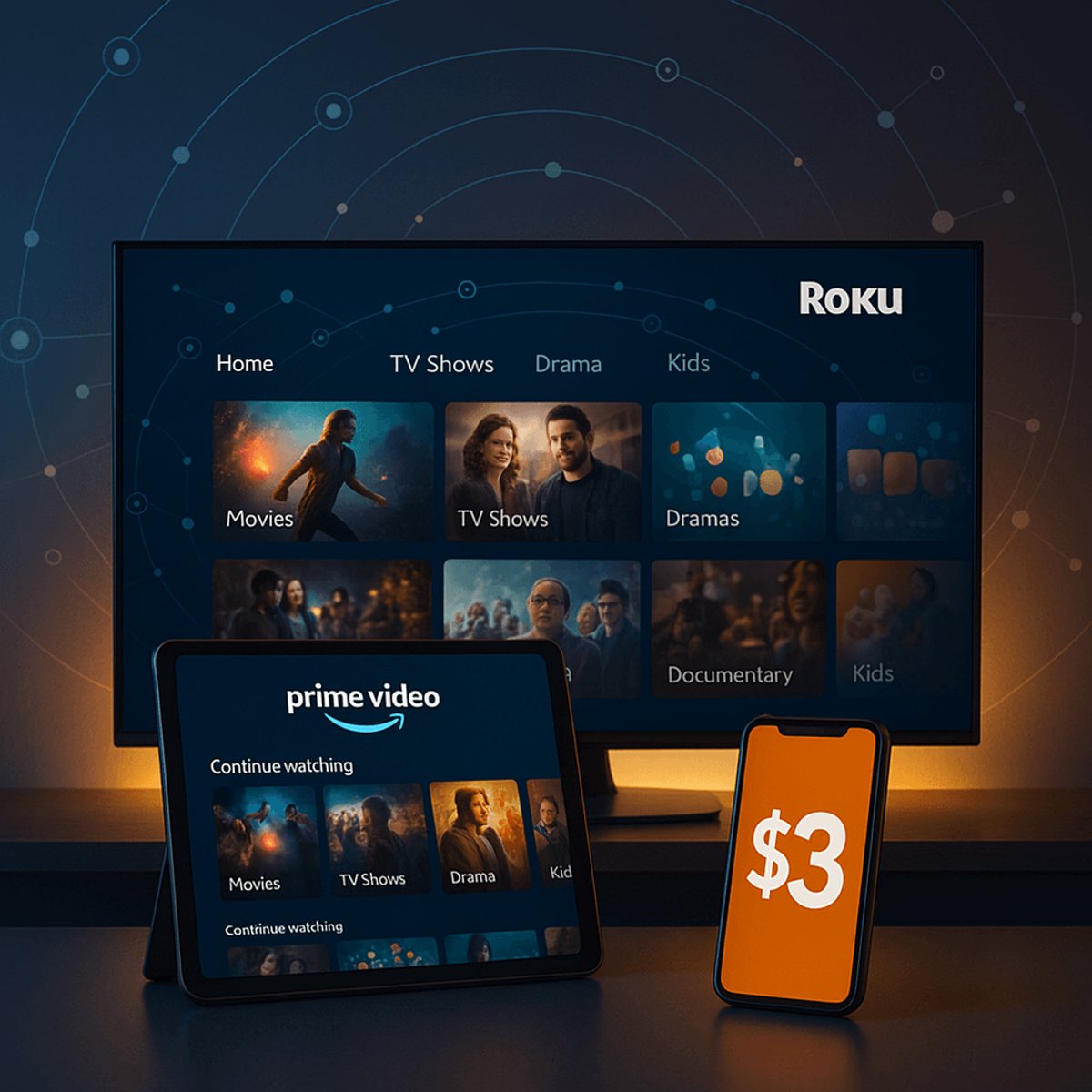
Roku is taking its budget streaming play to enemy territory. The company's $3-per-month Howdy subscription service just landed on Amazon Prime Video Channels, marking a strategic shift for the streaming hardware maker that's been trying to build a content empire of its own. The move comes seven months after Howdy's quiet August 2025 debut and signals Roku's willingness to distribute beyond its own ecosystem as competition in the streaming wars intensifies.
Roku is making a bet that distribution matters more than exclusivity. The company's Howdy streaming service, priced at just $3 monthly, is now available through Amazon Prime Video Channels, according to TechCrunch.
It's an unexpected partnership. Roku built its business on being the neutral platform where all streaming services compete, but it's increasingly become a content player itself. Launching Howdy last August was part of that strategy - create a super-cheap subscription tier that keeps viewers inside the Roku universe. Now, the company's putting that same service on a rival's turf.
The library is surprisingly deep for three bucks. Howdy packs nearly 10,000 hours of programming from heavyweight studios including Lionsgate, Sony Pictures, Disney Entertainment, and Warner Bros. Discovery. Independent distributor FilmRise rounds out the catalog, alongside Roku's own original productions.
What Roku gets from this deal is scale. Prime Video Channels reaches hundreds of millions of Amazon customers who might never buy a Roku device. The trade-off? Roku surrenders some control and likely shares revenue with Amazon. But in a streaming market where subscriber growth has flatlined, going wide might matter more than going deep.
The timing reveals something about where streaming economics are headed. Netflix raised prices again this year. Disney+ and Max aren't far behind. Meanwhile, budget-tier services like Howdy are multiplying, betting that price-sensitive viewers will trade breadth of selection for wallet relief. At $3 monthly, Howdy costs less than a single month of any major streamer.
Amazon benefits too. Prime Video Channels has become a clearinghouse for niche and budget streaming services that don't want to build their own payment infrastructure. Adding Howdy gives Prime subscribers another cheap option without Amazon having to license the content directly. It's distribution arbitrage - Amazon gets the subscriber relationship, Roku gets the content revenue.
Roku's broader strategy has been bumpy. The company's hardware sales have slowed as smart TVs increasingly come with built-in streaming capabilities. That pushed Roku to lean harder on advertising and content revenue, launching free ad-supported channels and now paid subscriptions like Howdy. Going multi-platform with Howdy suggests the ad-plus-subscription model might not be generating the returns Roku hoped for.
Industry watchers see this as part of a larger unbundling-then-rebundling cycle. Cable TV collapsed into a thousand streaming services. Now those services are realizing they need aggregators again. Amazon, Apple, and even traditional cable providers are becoming the new bundles, collecting smaller streaming services under one interface and one monthly charge.
For viewers, it's more choice and more confusion. Howdy on Prime Video means another line item to manage, another service to remember exists when you're hunting for something to watch. The streaming interface is already cluttered with overlapping catalogs and duplicate titles across services.
What's unclear is whether Roku will expand How to other platforms. Apple TV Channels would be the obvious next move, followed potentially by YouTube Primetime Channels. Each partnership dilutes Roku's platform advantage but extends its content reach. It's the classic aggregator's dilemma - own the customer or own the content.
The studio partners backing Howdy are hedging their own bets. Disney, Warner Bros., and Sony all operate flagship streaming services at much higher price points. Licensing older catalog content to budget tiers like Howdy generates incremental revenue without cannibalizing premium subscribers. It's the same strategy that powered cable syndication deals for decades.
Roku hasn't disclosed Howdy subscriber numbers or revenue figures. The company's most recent earnings call focused on advertising growth and active account metrics, suggesting the subscription side remains small. Expanding to Prime Video could change that math quickly if Amazon promotes it effectively.
The $3 price point is almost suspiciously low. After platform fees and content licensing costs, Roku's margin per subscriber must be razor-thin. The play is likely volume-based - sign up millions of casual viewers who want cheap background entertainment and make it up in aggregate. Whether that model works long-term depends on how much content costs escalate and whether viewers stick around.
Roku's decision to put Howdy on Prime Video Channels represents a pragmatic shift from platform exclusivity to content ubiquity. The company's betting that three-dollar subscriptions distributed everywhere will generate more revenue than trying to hoard content for Roku devices alone. It's a acknowledgment that in streaming's current phase, owning the customer relationship matters less than being wherever customers already are. Whether that trade-off pays off depends on how many viewers discover Howdy through Amazon and whether Roku can extract enough value from those partnerships to offset what it's giving up in platform control. For now, it's another sign that streaming's economic models are still very much in flux.