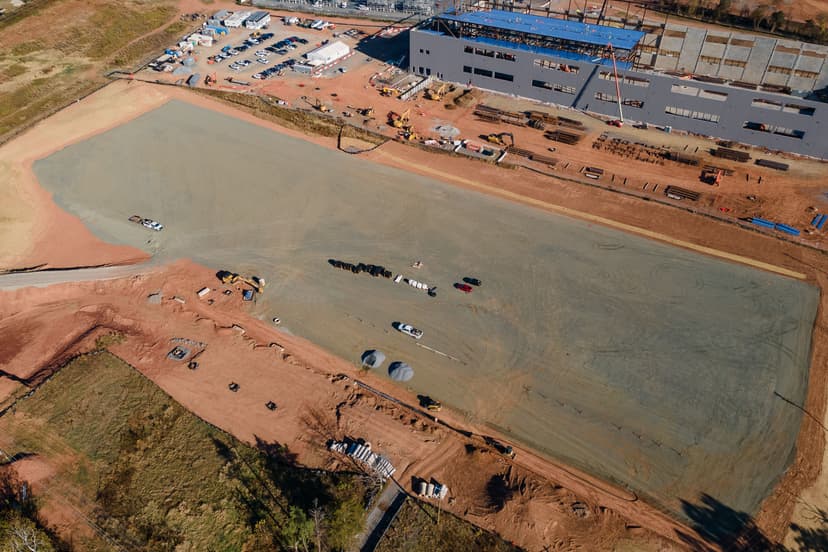
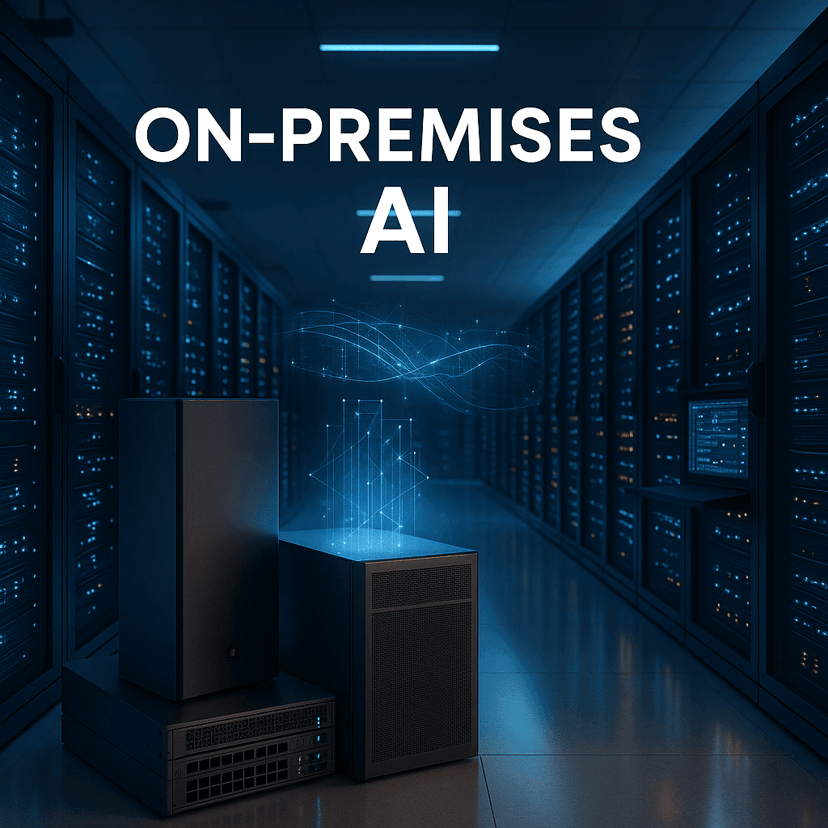
Meta just broke ground on its most ambitious infrastructure project yet - a $1.5 billion AI-optimized data center in El Paso, Texas, that can scale to a staggering 1 gigawatt of capacity. The facility marks a pivotal moment in Meta's race toward artificial general intelligence, representing the company's 29th data center and largest single investment in AI infrastructure to date.
Meta is making its boldest bet yet on the AI revolution. The social media giant just broke ground on a massive new data center in El Paso, Texas, that can scale to 1 gigawatt of power - enough to rival small cities and position Meta as a serious player in the infrastructure arms race powering artificial intelligence.
The $1.5 billion facility represents more than just another data center. It's Meta's admission that the path to superintelligence requires unprecedented computing power, and the company isn't waiting around to see if competitors beat them there. According to the official announcement, this will be Meta's 29th data center globally, but the first specifically designed from the ground up for AI workloads.
What makes this different from traditional data centers? Meta's engineers have built flexibility into every system. "AI, and its inference and training needs, is still evolving," the company explained in its statement. "Different AI configurations will require different approaches to hardware and network systems designs." Translation: they're building for AI chips that don't even exist yet.
The choice of El Paso isn't random. The city sits at the intersection of major power grids and offers the robust electrical infrastructure needed to support a 1GW facility. That's roughly equivalent to powering 750,000 homes, according to industry standards. Meta's partnership with The Borderplex Alliance and El Paso Electric includes upgrading local grid infrastructure with new transmission lines and substations - essentially rewiring part of Texas for the AI age.
This marks Meta's third data center in the Lone Star State, bringing the company's total Texas investment to over $10 billion. The facility will create approximately 100 permanent operational jobs and employ over 1,800 construction workers at peak build-out. But the real story is what this says about Meta's AI ambitions.
While tech giants have been throwing around terms like "AGI" and "superintelligence," Meta is putting serious money behind the words. The company's smart glasses, AI assistants, live translation tools, and video editing features all rely on massive computational resources. But this new facility suggests Meta is preparing for AI applications we haven't seen yet.
The environmental angle is equally telling. Meta plans to use a closed-loop, liquid-cooled system that consumes zero water for most of the year - a crucial consideration in water-scarce regions. The company has committed to being "water positive" by 2030, meaning it will restore more water than it consumes. In El Paso specifically, Meta will restore 200% of the facility's water consumption to local watersheds through partnerships with DigDeep and the Texas Water Action Collaborative.
The facility will achieve LEED Gold certification and run on 100% clean and renewable energy. That's not just good PR - it's becoming a competitive necessity as AI workloads consume exponentially more power than traditional computing.
Meta's timing is strategic. While OpenAI grabs headlines with ChatGPT and Google pushes Gemini, Meta is quietly building the infrastructure that could give it a decisive advantage in the AI race. The company's 2.9 billion monthly active users across its platforms provide an unmatched testing ground for AI models, but only if Meta has the computing power to train and run them.
The flexible architecture Meta is implementing could prove prescient. As AI moves from large language models to multimodal systems that process video, audio, and real-time interactions simultaneously, the infrastructure requirements will shift dramatically. By designing systems that can adapt to future hardware generations, Meta is essentially future-proofing its AI capabilities.
What we're seeing in El Paso reflects a broader trend: the AI infrastructure build-out is becoming as important as the algorithms themselves. Microsoft is investing heavily in data centers to support its OpenAI partnership, while Amazon is positioning AWS as the cloud backbone for AI startups. Meta's approach is different - building proprietary infrastructure to support its own AI ambitions rather than renting capacity from others.
Meta's $1.5 billion El Paso data center represents more than infrastructure investment - it's a declaration that the company is serious about leading the AI revolution. With 1GW of scalable capacity and flexible architecture designed for future AI workloads, Meta is building the computational foundation needed to turn its superintelligence ambitions into reality. As the AI arms race intensifies, the companies with the most powerful infrastructure may ultimately determine who controls the future of artificial intelligence.