Meta is set to shake up the AI wearables game this Wednesday at Connect 2025, where leaked footage reveals the company's most ambitious smart glasses yet - the Hypernova series featuring heads-up displays and gesture-controlled wristbands. With millions of Ray-Ban Meta glasses already sold and Silicon Valley doubling down on AI wearables, this could be the moment Meta reclaims its hardware leadership.
The tech world's eyes turn to Menlo Park this Wednesday as Meta prepares to unveil what could be its biggest hardware leap since the original Quest headset. Connect 2025 isn't just another product showcase - it's Meta's chance to prove it can compete with Apple and Google in the rapidly expanding AI wearables market.
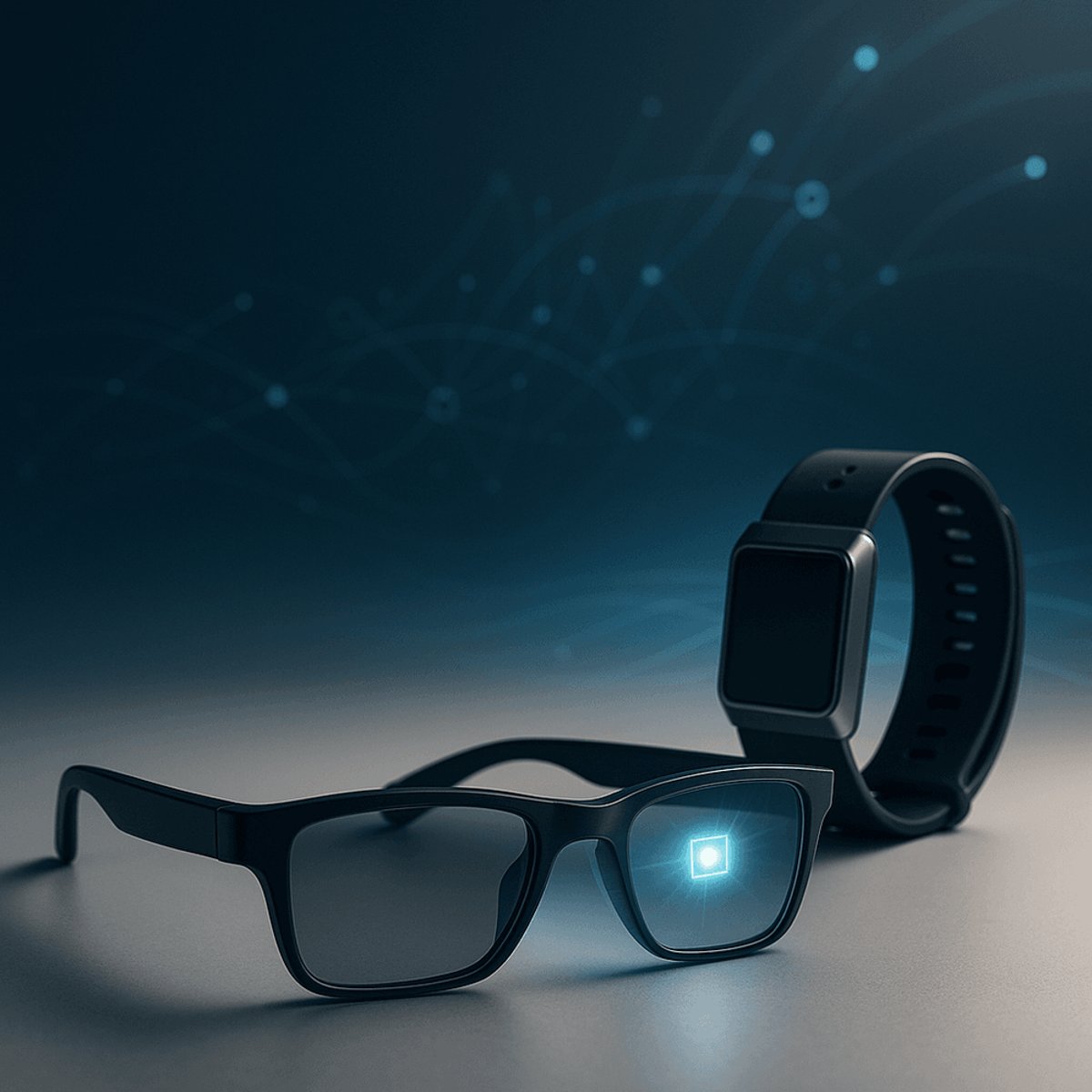
The star of the show appears to be the Hypernova smart glasses, accidentally revealed in a now-removed YouTube video spotted by UploadVR. The leaked footage shows Ray-Ban Meta glasses equipped with a heads-up display on the right lens, cameras, microphones, and an onboard AI assistant - a significant upgrade from the current model that lacks any visual interface.
Meta has already sold millions of Ray-Ban Meta smart glasses, proving there's real consumer appetite for AI-powered eyewear. But adding a heads-up display changes everything. Where the current glasses function more like wireless earbuds with cameras, Hypernova could deliver true augmented reality experiences without the bulk of traditional AR headsets.
The gesture-controlled wristband showcased in the leak represents another major leap forward. Meta first teased this technology at last year's Connect, demonstrating how subtle hand movements could control devices. Now it appears ready for prime time, potentially eliminating the need for voice commands or touch controls that can feel awkward in public settings.
"The future of glasses with contextual AI" will be a key theme, according to Meta's agenda. Reality Labs Chief Scientist Michael Abrash and VP of Research Richard Newcombe are scheduled to discuss "how Meta is poised to transform the future of computing" during Thursday's sessions.
But Hypernova isn't the only hardware expected. Meta and Oakley are likely unveiling new athletic-focused smart glasses in the Sphaera style. These feature a unified lens design ideal for runners and cyclists, with a single centered camera rather than the dual-camera setup on Ray-Ban models. The athletic market represents a significant opportunity, especially as fitness wearables continue growing.
This Connect carries extra weight as Meta's first major conference since launching Meta Superintelligence Labs under former Scale AI CEO Alexandr Wang. The ambitious project aims to develop cutting-edge AI systems that could power everything from smart glasses to future metaverse experiences. CEO Mark Zuckerberg might use the keynote to showcase early MSL developments.
The timing feels crucial for Meta. While the company has maintained its position in VR headsets, Apple's Vision Pro launch and Google's renewed AR efforts have intensified competition. Meta's bet on lightweight, everyday-wearable smart glasses could prove prescient if consumers aren't ready for bulky mixed-reality headsets.
Interestingly, traditional VR might take a backseat this year. While Meta is reportedly developing an ultralight VR headset for 2026, the focus appears firmly on AI-powered glasses and wearables. The company's standalone AI app, which currently serves double duty controlling smart glasses and functioning as a chatbot, could also receive updates to streamline user experience.
The stakes extend beyond hardware. Meta's vision of ambient computing - AI assistants seamlessly integrated into everyday objects - depends on proving that consumers will adopt smart glasses en masse. Success with Hypernova could validate the entire category and pressure competitors to accelerate their own programs.
Early leaks suggest Meta isn't just announcing products - it's launching them. CNBC previously reported that both Hypernova glasses and the gesture wristband were planned for immediate availability following the keynote, rather than the typical months-long wait between announcement and launch.
Meta Connect 2025 represents a pivotal moment for the company's hardware ambitions and its broader AI strategy. With smart glasses market adoption accelerating and competition intensifying, Meta's ability to deliver compelling, everyday-wearable AI devices could determine whether it remains a hardware leader or gets overtaken by Apple and Google. The leaked Hypernova glasses and gesture wristband suggest Meta is betting big on ambient computing - and Wednesday's keynote will reveal whether that bet pays off.