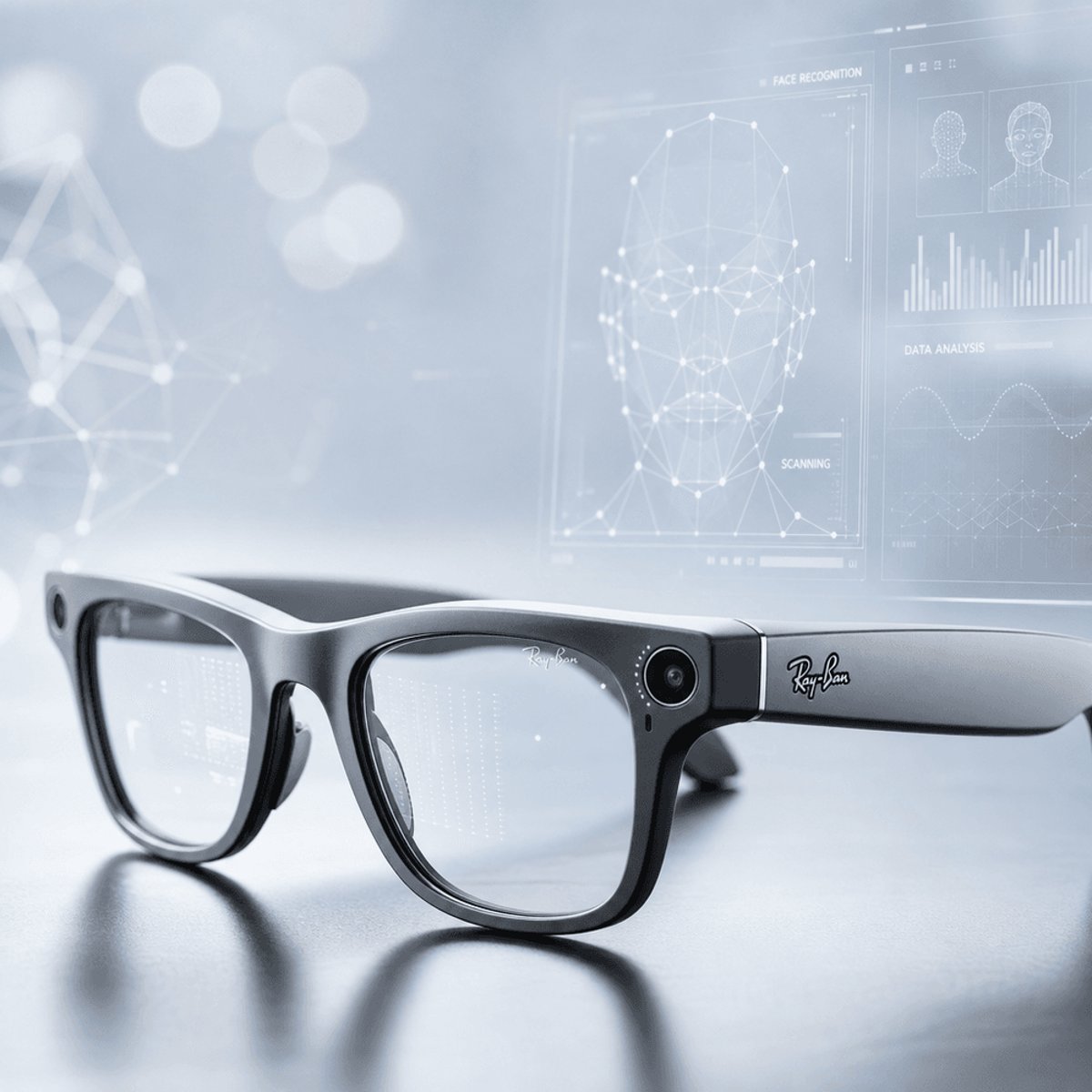
Meta has silently embedded unreleased face-recognition code into its smart glasses platform on millions of smartphones, according to an investigation by WIRED. The discovery reveals a sophisticated biometric identification system designed to recognize people using facial data stored locally on users' devices - raising fresh privacy alarms about the social media giant's hardware ambitions and its capacity to deploy surveillance features without public disclosure.
Meta has been quietly building facial recognition capabilities into its smart glasses ecosystem, and millions of users already have the code sitting on their phones. The revelation comes from WIRED's technical analysis of Meta's smart glasses platform, which found dormant but functional biometric identification systems embedded in the companion app that pairs with the company's Ray-Ban collaboration hardware.
The hidden feature appears designed to match faces captured by the glasses' camera against a database of biometric profiles stored locally on the paired smartphone. Unlike cloud-based facial recognition systems that send images to remote servers for processing, this approach keeps biometric data on-device - a design choice that could help Meta navigate privacy regulations while still enabling real-time identification of people in a wearer's field of view.
What makes the discovery particularly concerning is the lack of public disclosure. Meta hasn't announced plans to launch facial recognition for its smart glasses, and users who downloaded the companion app received no notification that their devices now contain code capable of biometric surveillance. The company's Ray-Ban Meta smart glasses, which launched in 2023 and received updates in 2024, already sparked privacy debates with their ability to capture photos and videos discreetly.
The technical implementation suggests Meta has been preparing this capability for months, if not longer. Code review indicates the system is designed to create and store "nametag connections" - essentially linking recognized faces to contact information or social media profiles. This would theoretically allow a glasses wearer to look at someone and instantly see their name, mutual connections, or other identifying information overlaid in their field of view or displayed on their phone.
Timing is everything here. Meta shut down its Facebook facial recognition system in 2021 amid mounting regulatory pressure, deleting the face-print data of more than a billion users. The company claimed it was stepping back from the technology due to "ongoing uncertainty" around regulation. Yet just a few years later, it's embedding similar capabilities into wearable hardware that puts cameras at eye level in millions of social situations.
The architecture reveals careful legal consideration. By storing biometric data on-device rather than Meta's servers, the company potentially sidesteps data protection laws that restrict how companies can collect and store facial recognition information. Illinois' Biometric Information Privacy Act, which has cost Meta hundreds of millions in settlements, primarily regulates corporate collection and storage - not data that technically remains under user control on personal devices.
Privacy researchers who spoke to WIRED expressed alarm at the implications. The difference between having facial recognition capability in your pocket and having it embedded in always-ready glasses pointing at everyone you encounter is profound. One enables deliberate scanning, the other enables ambient surveillance of every interaction.
Meta has not responded to requests for comment about when or whether this feature will be activated, what controls users will have, or whether the company plans to seek explicit consent before enabling biometric identification through its glasses. The silence is conspicuous given the company's previous commitments to transparency around facial recognition following the 2021 shutdown.
The discovery arrives as competition in AI-powered smart glasses intensifies. Both Google and startups like Brilliant Labs are racing to launch AR glasses with real-time information overlays. Meta's early embedding of facial recognition code suggests it's positioning to activate the feature quickly once it determines the regulatory or competitive landscape makes launch viable.
What remains unclear is whether users can fully remove this capability short of uninstalling the companion app entirely - which would render the $299 glasses largely useless. The code exists in shipping software that millions have already downloaded, creating a surveillance infrastructure that could be activated with a simple software update.
For Meta, smart glasses represent a critical hedge against its smartphone dependence. But embedding unreleased facial recognition systems without disclosure risks repeating the trust violations that have plagued the company for years. The technology might stay dormant, or it might quietly activate in a future update. Users currently have no way to know which scenario Meta is planning.
Meta's silent deployment of facial recognition code into its smart glasses ecosystem marks a troubling evolution in ambient surveillance technology. While the feature remains dormant for now, its mere existence on millions of devices creates infrastructure for biometric identification that could activate without meaningful notice. The approach sidesteps the transparency commitments Meta made when shutting down Facebook facial recognition in 2021, and raises questions about whether wearable AI hardware will normalize constant biometric scanning of everyone we encounter. What happens next depends on whether regulators and users demand disclosure and control before this code transitions from dormant to active.