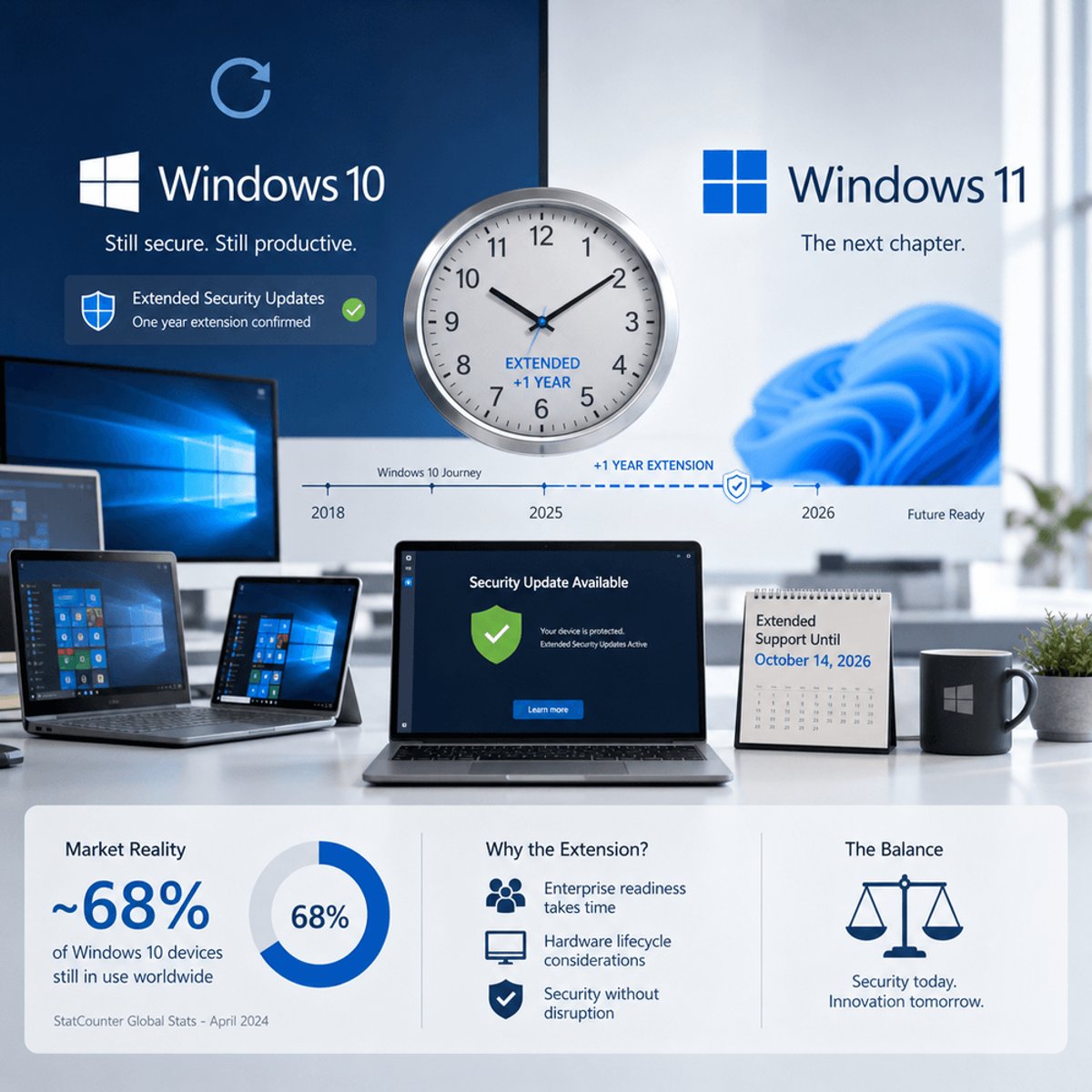
Microsoft just threw a lifeline to the millions still clinging to Windows 10. The company quietly extended its free Extended Security Update (ESU) program for consumers by a full year, pushing the end-of-life deadline further into 2027. It's a rare reversal for a company that's been aggressively pushing Windows 11 adoption, and it signals something's not going according to plan with the transition.
Microsoft doesn't usually do quiet U-turns on major product deadlines, which makes this Windows 10 extension all the more telling. The company's decision to extend the free Extended Security Update program for consumers by another year arrives without fanfare or press releases - just a silent update that could affect hundreds of millions of users worldwide.
Windows 10 was supposed to march toward its sunset with military precision. Microsoft set the original end-of-support date, started pushing Windows 11 hard, and made it clear the party was ending. But something happened on the way to that funeral - people didn't show up to bury it. According to various market research firms, Windows 10 still commands roughly 65-70% of the desktop OS market, while Windows 11 struggles to crack 30% after more than two years in the wild.
The ESU program typically acts as Microsoft's compromise for enterprises that can't flip the switch overnight. Companies pay for continued security patches while they finish lengthy migration projects. But offering consumers a free year-long extension? That's not standard operating procedure. It suggests Microsoft sees something in the telemetry data that's making them blink first.
The sticking point remains hardware compatibility. Windows 11's strict TPM 2.0 requirement and CPU generation cutoffs left perfectly functional machines in limbo. Organizations running fleets of 2018-era hardware faced a choice: buy entirely new computers or stick with Windows 10. Most chose door number two. Home users with devices that still handle daily tasks just fine aren't rushing to upgrade either, especially when Windows 10 does everything they need.
Microsoft hasn't released official statements explaining the reasoning behind this extension, which itself speaks volumes. When companies make customer-friendly moves they're proud of, they blast it from the rooftops. Silent policy changes usually mean internal recalibrations - target dates that aren't feasible anymore, adoption curves that aren't bending the right way, or enterprise customers making their displeasure known behind closed doors.
The extension particularly matters for small businesses and educational institutions operating on tight budgets. A year of breathing room means delaying capital expenditures, spreading hardware refresh cycles, and avoiding the chaos of rushed migrations. For IT departments already juggling a dozen priorities, it's the difference between a planned transition and a crisis.
But this also sets up an interesting dynamic for Microsoft's enterprise business. If consumers get free updates, enterprise customers paying for ESU might start asking uncomfortable questions about why they're being charged. Microsoft's enterprise agreements typically include premium support tiers, but the optics of giving consumers something for free while charging businesses could create friction in renewal negotiations.
The timing also intersects with broader industry trends around sustainable computing and e-waste. Forcing millions of functional computers into obsolescence to meet an arbitrary deadline generates both environmental concerns and political backlash. Several European consumer protection groups had already started making noise about Windows 11's hardware requirements creating unnecessary waste.
For users, the message is simple: if you're running Windows 10 and it's working fine, you just got another year of runway. Security patches will keep flowing, critical vulnerabilities will get closed, and the pressure to upgrade immediately just decreased. Whether that's good long-term strategy or just delaying the inevitable depends on your perspective - and probably your hardware situation.
Microsoft's quiet extension of Windows 10 support tells the real story behind the Windows 11 transition - it's not going as smoothly as planned. Users vote with their install base, and right now they're voting to stay put. This extra year gives everyone breathing room, but it also highlights the tension between Microsoft's upgrade ambitions and the reality of millions of computers that work just fine but don't meet arbitrary hardware cutoffs. For now, Windows 10 gets to stick around a bit longer, and the messy migration timeline just got messier.