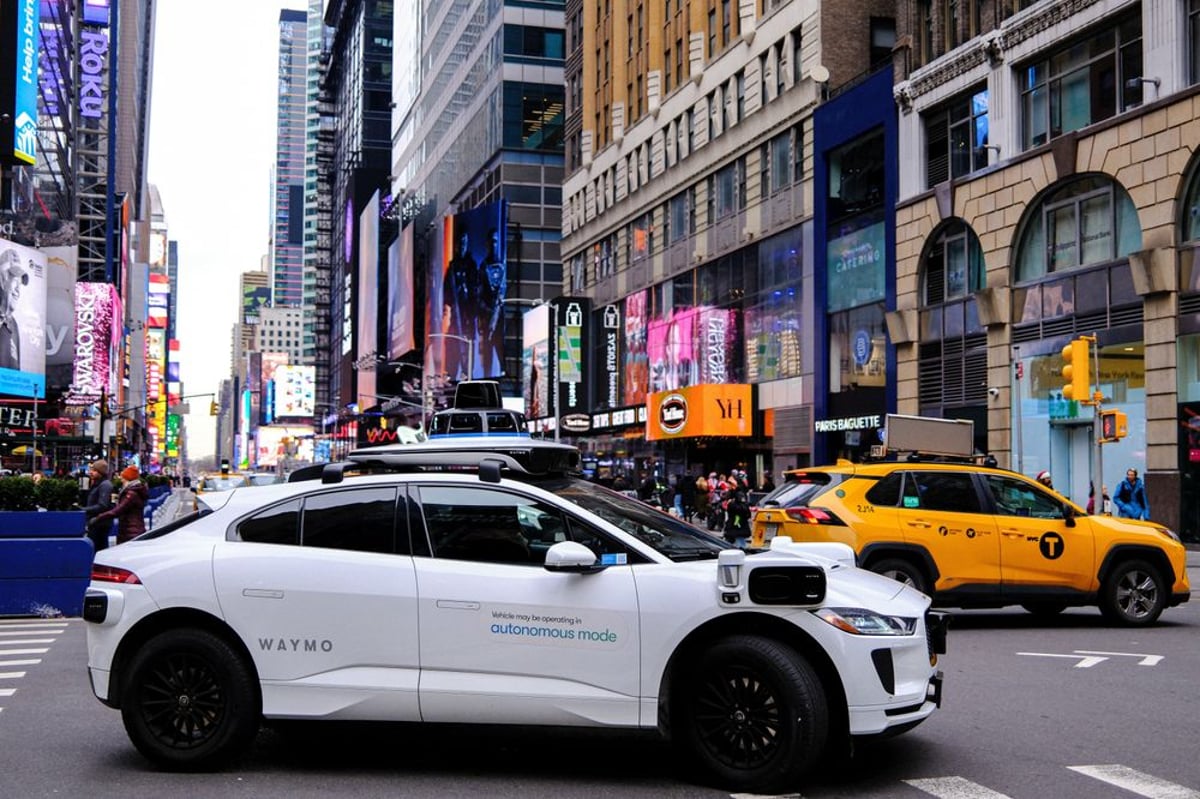
New York just slammed the brakes on autonomous vehicles. Governor Kathy Hochul pulled her proposal to legalize commercial robotaxi operations across the state, citing a lack of legislative support, according to Bloomberg. The abrupt reversal deals a major blow to Waymo and other self-driving companies that viewed New York - particularly Manhattan - as one of the most lucrative untapped markets in the country. The decision leaves the autonomous vehicle industry scrambling to salvage its expansion plans in America's fourth-largest state.
The robotaxi industry just hit a concrete wall in New York. Governor Kathy Hochul's decision to scrap her autonomous vehicle proposal marks one of the most significant regulatory setbacks for companies like Waymo since the technology began rolling out commercially in cities like San Francisco and Phoenix.
According to Bloomberg's reporting, Hochul cited insufficient support among state legislators as the reason for pulling the plug. The governor's office hasn't yet responded to requests for additional comment, but the move suggests deeper concerns about public safety, union opposition, and the political risks of backing unproven technology.
The proposal, which Hochul unveiled last month as part of her 2026 budget package, would have created a framework for limited robotaxi deployment in upstate cities like Buffalo and Rochester. But it took a more cautious approach to New York City itself, leaving the final decision on autonomous vehicles to Mayor Eric Adams and the City Council. That split structure apparently wasn't enough to win over skeptical lawmakers.
For Waymo, the timing couldn't be worse. The Alphabet-owned company has been aggressively expanding its robotaxi service after raising its valuation to $45 billion in a recent funding round. The company already operates commercial services in San Francisco, Phoenix, and Los Angeles, racking up over 4 million paid trips. New York City, with its density, transit infrastructure, and sky-high ride-hail prices, represented the holy grail for autonomous vehicle economics.
The state's retreat comes as robotaxi companies face mounting scrutiny nationwide. San Francisco residents have complained about Waymo vehicles blocking traffic and confusing emergency responders. In Los Angeles, the company's recent expansion drew protests from taxi unions and disability advocates concerned about accessibility. California regulators have repeatedly investigated incidents involving autonomous vehicles, including several high-profile collisions.
But the New York decision appears driven more by political calculation than safety concerns. Hochul faces reelection in 2026, and backing controversial technology that could threaten union jobs presents obvious risks. The Teamsters and other labor groups have been vocal opponents of robotaxis, arguing they'll destroy livelihoods for professional drivers. In a state where organized labor wields significant influence, that opposition carries weight.
The legislative resistance also reflects broader anxieties about AI and automation displacing workers. While Waymo and competitors argue their technology will create new jobs in vehicle maintenance, fleet management, and remote assistance, those roles won't replace the estimated 200,000 people who drive taxis, Ubers, and Lyfts in New York.
For the autonomous vehicle industry, the setback raises uncomfortable questions about regulatory fragmentation. Unlike Europe or China, where national governments can mandate standards, the U.S. leaves most vehicle regulations to individual states. That creates a patchwork of rules that makes scaling prohibitively expensive. If New York - a tech-friendly, Democratic-led state - won't embrace robotaxis, what hope do companies have in more conservative markets?
Waymo isn't giving up entirely. The company has been testing vehicles in Manhattan since late 2025, gathering mapping data and refining its technology for dense urban environments. Those tests can continue under existing permits, but the company can't charge passengers or operate commercially without new legislation. That leaves Waymo stuck in an expensive holding pattern, burning cash on testing while competitors like Tesla and Amazon's Zoox race ahead in more welcoming jurisdictions.
The real losers here might be New York residents. Cities that have embraced robotaxis report measurable benefits - fewer drunk driving incidents, improved mobility for elderly and disabled residents, and reduced parking demand as fewer people own personal vehicles. San Francisco data shows Waymo vehicles have significantly lower crash rates per mile than human drivers. By blocking the technology, New York may be sacrificing long-term public safety gains for short-term political comfort.
Industry analysts expect Waymo to refocus resources on markets where it already operates, potentially accelerating expansion in California and Texas. The company has permits pending in several other states, but New York's rejection will likely embolden opponents elsewhere. For an industry that's spent over $100 billion developing self-driving technology, the path to profitability just got significantly longer.
New York's decision to pull the robotaxi proposal reveals the yawning gap between Silicon Valley's technological ambitions and political reality. While Waymo has proven its vehicles can navigate complex urban environments safely, that doesn't matter if legislators won't let them operate. The industry now faces a critical choice - keep pushing for regulatory approval in hostile markets or consolidate gains in friendlier states. Either way, the vision of ubiquitous self-driving cars just got pushed further into the future, and companies like Waymo will need to recalibrate their expansion timelines and burn rates accordingly.