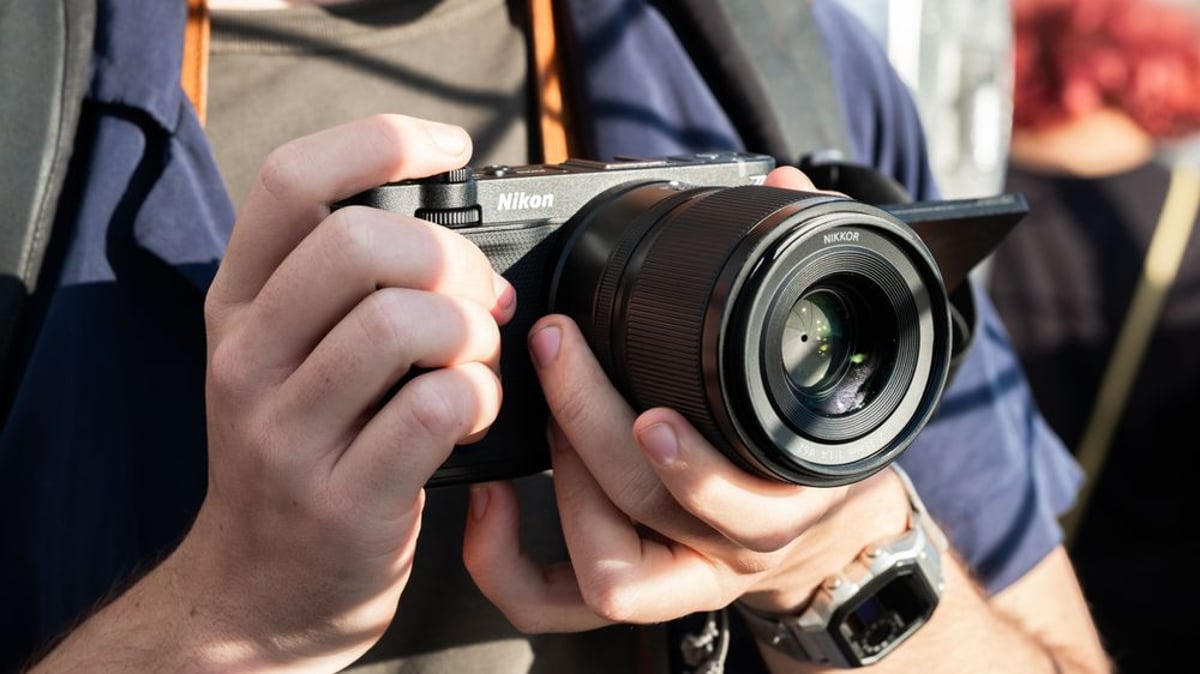
Nikon just made professional video production more accessible. The company's new $2,200 ZR cinema camera brings a modified version of RED's legendary R3D file format to budget-conscious filmmakers. It's the first camera from Nikon since acquiring RED in 2024, and it's causing quite a stir in the video production world.
Nikon's ZR represents something unprecedented in the camera world - access to RED's coveted R3D file format without the typical $45,000 price tag. The timing couldn't be better, as professional video creators have been priced out of RED's ecosystem for years. Now Nikon is betting that bringing RED's color science to the masses will shake up the entire industry. The ZR shoots R3D NE, a modified 12-bit version of RED's traditional 16-bit R3D format. It's not quite the full RED experience - the files are more computationally demanding than standard R3D since they're built around Nikon's Z6III sensor rather than RED's specialized compression chips. But the visual results are remarkably close to what you'd get from a dedicated RED camera. According to The Verge's review, "R3D NE still uses the iconic color pipeline, IPP2, that's been on RED's own cameras since 2017, offering extremely smooth highlight rolloff, great color, and an almost film-like tonal response." The biggest difference comes in ISO handling. Traditional RED cameras treat ISO as metadata that can be adjusted in post without affecting noise levels. The ZR bakes sensor gain into the R3D NE files, meaning you get less flexibility for exposure corrections after filming. Nikon addresses this by limiting shooters to two native ISO settings - 800 and 6400 - which keeps noise minimal if you expose correctly while shooting. Where Nikon really differentiates itself is in the all-in-one approach. While RED cameras are modular systems requiring additional monitors, handles, and accessories, the ZR comes loaded with professional features out of the box. The 4-inch, 1,000-nit touchscreen eliminates the need for external monitoring in most situations. More impressively, the ZR becomes the first camera to record 32-bit FLOAT audio internally - a feature that typically requires separate professional audio recorders costing thousands of dollars. The integration extends to physical design. At just 1.4 pounds, the ZR achieves its compact profile through fanless cooling and includes 7.5 stops of in-body stabilization. That's stabilization you won't find on any RED camera. The camera industry has been watching Nikon's video ambitions closely. The company has lagged behind Canon and Sony in professional video for nearly a decade. The RED acquisition in 2024 was seen as Nikon's play to leapfrog the competition. Early reactions from video professionals suggest the strategy might work. The ZR isn't perfect - it uses micro HDMI instead of full-size ports, has limited storage options, and caps recordings at 125 minutes. But for prosumer videographers who've been locked out of RED's ecosystem, these compromises seem manageable. The real test will be market adoption. Nikon is essentially democratizing technology that's been exclusive to big-budget productions for decades. If the ZR succeeds, it could force RED to reconsider its premium-only strategy while pushing competitors to develop their own accessible alternatives.
The Nikon ZR represents a potential turning point for professional video accessibility. By bringing RED's color science to a $2,200 price point, Nikon is betting that democratizing high-end video tools will create new markets while challenging industry leaders. For creators who've been priced out of RED's ecosystem, the ZR offers a compelling entry point into professional-grade video production. Whether this strategy helps Nikon reclaim its position in the video market remains to be seen, but early signs suggest the industry is taking notice.