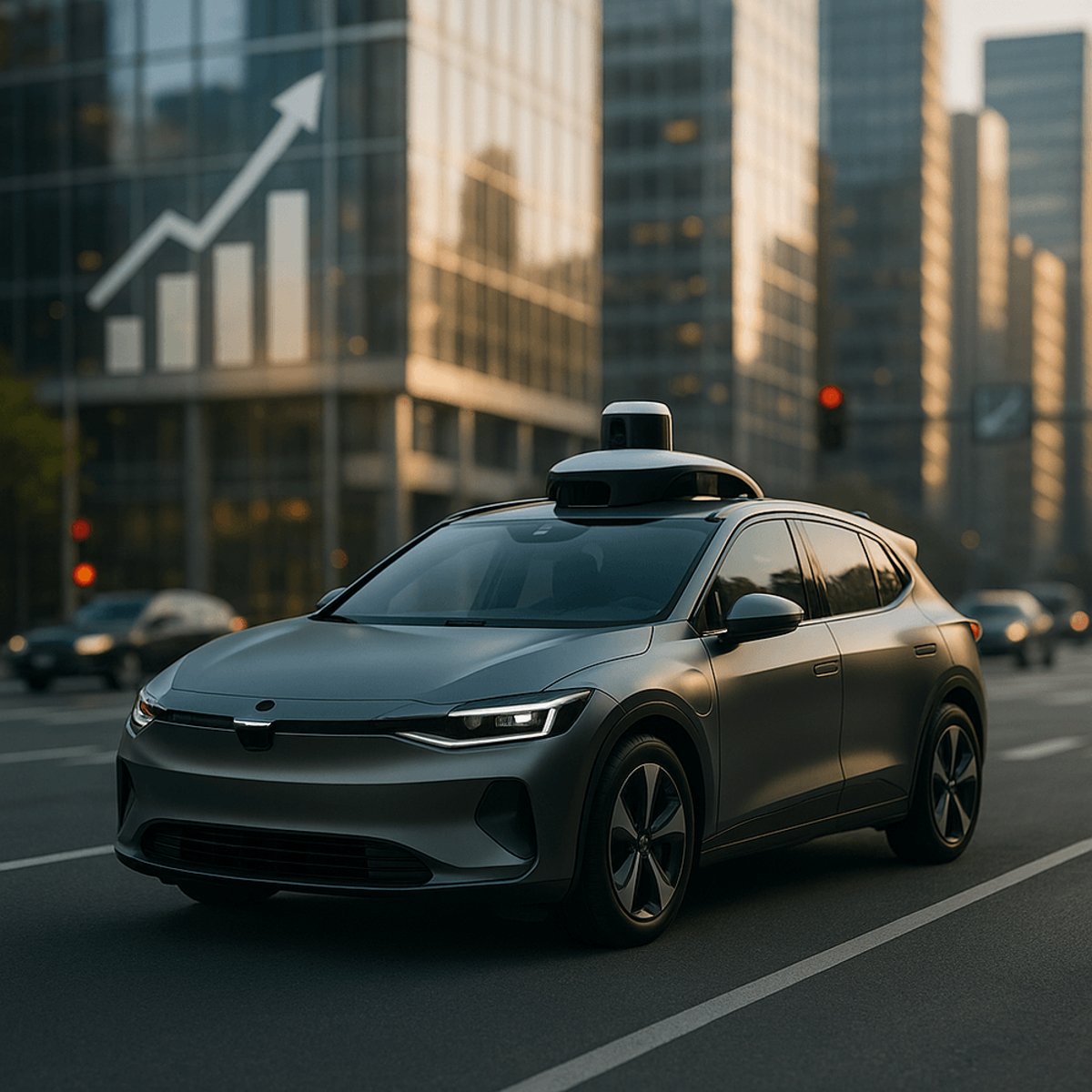
Waymo just closed one of the largest private tech funding rounds in history. The Alphabet-owned robotaxi company has nearly finalized a $16 billion raise that values it at $110 billion - more than double its $45 billion valuation from just over a year ago. The round brings blue-chip investors like Sequoia Capital, Dragoneer, and DST Global onto the cap table, signaling Wall Street's growing confidence that autonomous vehicles are finally ready for prime time. With over 20 million trips completed and operations expanding from San Francisco to Miami, Waymo is betting big that self-driving tech can scale into a multi-billion dollar transportation network.
Waymo is about to make autonomous driving history - not on the road, but in the boardroom. The Alphabet subsidiary has nearly closed a staggering $16 billion funding round that will value the robotaxi pioneer at $110 billion, according to the Financial Times. It's one of the largest private tech funding rounds ever, and it signals that big money is finally betting on self-driving cars becoming a mainstream reality.
The numbers tell a remarkable story of investor confidence. Just 15 months ago, Waymo raised a $5.6 billion Series C at a $45 billion valuation. Now the company has more than doubled that valuation despite operating in just a handful of cities and generating roughly $350 million in annual recurring revenue. That means investors are paying a premium for potential, not profits - a clear sign they believe Waymo has cracked the code on autonomous vehicles where so many others have failed.
Alphabet isn't just cheerleading from the sidelines. The tech giant is putting its money where its moonshots are, contributing more than three-quarters of the $16 billion raise. That's a powerful vote of confidence from a parent company that's seen plenty of experimental projects come and go through its X development lab, where Waymo was originally incubated. The substantial commitment suggests Alphabet sees Waymo as far more than a speculative bet - it's treating the robotaxi unit as a core pillar of its future business.
But Alphabet isn't the only believer. The round brings some of Silicon Valley's most respected investors into Waymo's orbit. Sequoia Capital, the firm behind Apple, Google, and countless unicorns, is joining as a new investor alongside Dragoneer and DST Global. Existing backers Andreessen Horowitz and Abu Dhabi's sovereign wealth fund Mubadala are doubling down. When investors of this caliber line up for a late-stage round, it typically means they see a clear path to either IPO or massive strategic value.
Waymo isn't commenting directly on the funding. When TechCrunch reached out, a company spokesperson offered only that "while we don't comment on private financial matters, our trajectory is clear: with over 20 million trips completed, we are focused on the safety-led operational excellence and technological leadership required to meet the vast demand for autonomous mobility." That 20 million trip milestone is worth noting - it represents real-world validation at a scale no competitor has matched.
The company has been expanding aggressively. Waymo recently launched public service in Miami, adding to its established operations in San Francisco, Phoenix, and Los Angeles. Each new market brings fresh challenges - Miami's chaotic traffic patterns and unpredictable weather are a far cry from Phoenix's grid-like streets and sunny skies. But Waymo is pressing forward, convinced its technology can adapt to diverse urban environments.
The rapid growth hasn't been without hiccups. During a widespread San Francisco blackout in December, multiple Waymo robotaxis stalled at traffic lights, highlighting the complex edge cases autonomous systems still struggle with. The company later explained the vehicles defaulted to conservative safety protocols when they couldn't communicate with traffic infrastructure - a reasonable fail-safe, but one that left passengers and blocked intersections stranded.
Those growing pains haven't dampened investor enthusiasm. The $110 billion valuation puts Waymo in rarefied air, worth more than established automakers like Ford or GM despite having zero manufacturing capacity and a fraction of their revenue. Investors are clearly betting on a future where autonomous ride-hailing becomes a massive market, and Waymo's multi-year head start in commercial deployment gives it a potentially insurmountable advantage.
The competitive landscape is shifting fast. Tesla keeps promising full self-driving is just around the corner, while Chinese startups are deploying robotaxis at scale in cities like Wuhan and Shenzhen. Cruise, once Waymo's closest rival, has retrenched after safety incidents forced it to pull vehicles from the road. That leaves Waymo as the clear leader in Western markets, with the capital and operational experience to press its advantage.
What happens next will determine whether this valuation was visionary or wildly optimistic. Waymo needs to prove it can scale beyond early-adopter cities, reduce per-trip costs, and navigate the regulatory maze that varies wildly by jurisdiction. The $16 billion war chest gives it runway to pursue all three simultaneously, but the clock is ticking. At $350 million in annual revenue, Waymo would need to grow nearly 30x just to justify its current valuation using traditional software multiples - and that's assuming robotaxi economics prove as favorable as bulls predict.
Waymo's massive funding round marks a turning point for the autonomous vehicle industry. The $110 billion valuation isn't just a bet on technology - it's a bet that self-driving cars can become a fundamental piece of urban transportation infrastructure within the next decade. With Alphabet's deep pockets, top-tier VC backing, and a multi-year operational lead over competitors, Waymo has the resources to find out if robotaxis can live up to the hype. But the company still needs to prove it can turn impressive technology into sustainable economics. The next 18 months will show whether this valuation was prescient or premature, as Waymo races to expand its service footprint while Wall Street watches every trip, every incident, and every dollar of revenue growth.