Two Americans were killed in January 2026 while documenting ICE operations in Minneapolis, but the video footage they and others captured is now holding federal agents accountable. As immigration enforcement escalates across US cities, civil liberties organizations are publishing detailed guides on how to safely record ICE and Border Patrol agents while protecting yourself from surveillance, device seizure, and violent confrontation. The paradox is stark: filming is both legally protected and potentially deadly.
The deadly cost of accountability is playing out in American streets. In January 2026, Renee Nicole Good was acting as a legal observer while her wife filmed ICE agents in Minneapolis. Alex Pretti held his phone up to document the same operation. Both were killed by the federal agents they were filming. Yet the video evidence captured by multiple witnesses at the scene immediately exposed what Freedom of the Press Foundation executive director Trevor Timm calls "the egregious lies that the Trump administration was spreading almost immediately."
This is the brutal paradox facing anyone trying to document immigration enforcement in 2026. Filming federal agents in public spaces remains protected by the First Amendment, but the Trump administration is actively trying to criminalize the practice. In July 2025, Department of Homeland Security secretary Kristi Noem called documenting federal agents "violence" and claimed "it is doxing them." DHS spokesperson Tricia McLaughlin went further, telling WIRED that "videoing our officers in an effort to dox them and reveal their identities that is a federal crime and a felony."
It's not. But the rhetoric represents a direct threat to legal observers, activists, and journalists. "Unfortunately, there is no way to film 'safely' right now," Timm says. "I think everybody may be taking a risk because of how aggressive and brazen and outright illegal ICE's conduct has been."
Still, civil liberties organizations argue that video documentation remains one of the most powerful tools for exposing federal overreach and creating accountability. Jackie Zammuto, associate director at Witness, a nonprofit focused on using video to fight human rights violations, points out that while the risks are real, there are practical steps to minimize danger. "There are ways to be safer, to consider your own security and also the security of those around you," Zammuto says.
The technical preparations start before you ever encounter federal agents. Using a burner phone or alternative device protects both your privacy and that of others if agents seize your device. ICE has built massive surveillance infrastructure, including buying online advertising data, deploying surveillance drones, and accessing systems that monitor phones across entire neighborhoods, according to reporting from multiple outlets.
If you're bringing your daily device, disable all biometric unlocking. Turn off Face ID and fingerprint sensors, and use only a PIN or password. Agents can legally compel you to unlock a device with your face or finger more easily than they can force you to reveal a passcode. It's a small technical detail that could mean the difference between protecting your contacts and communications or exposing everything.
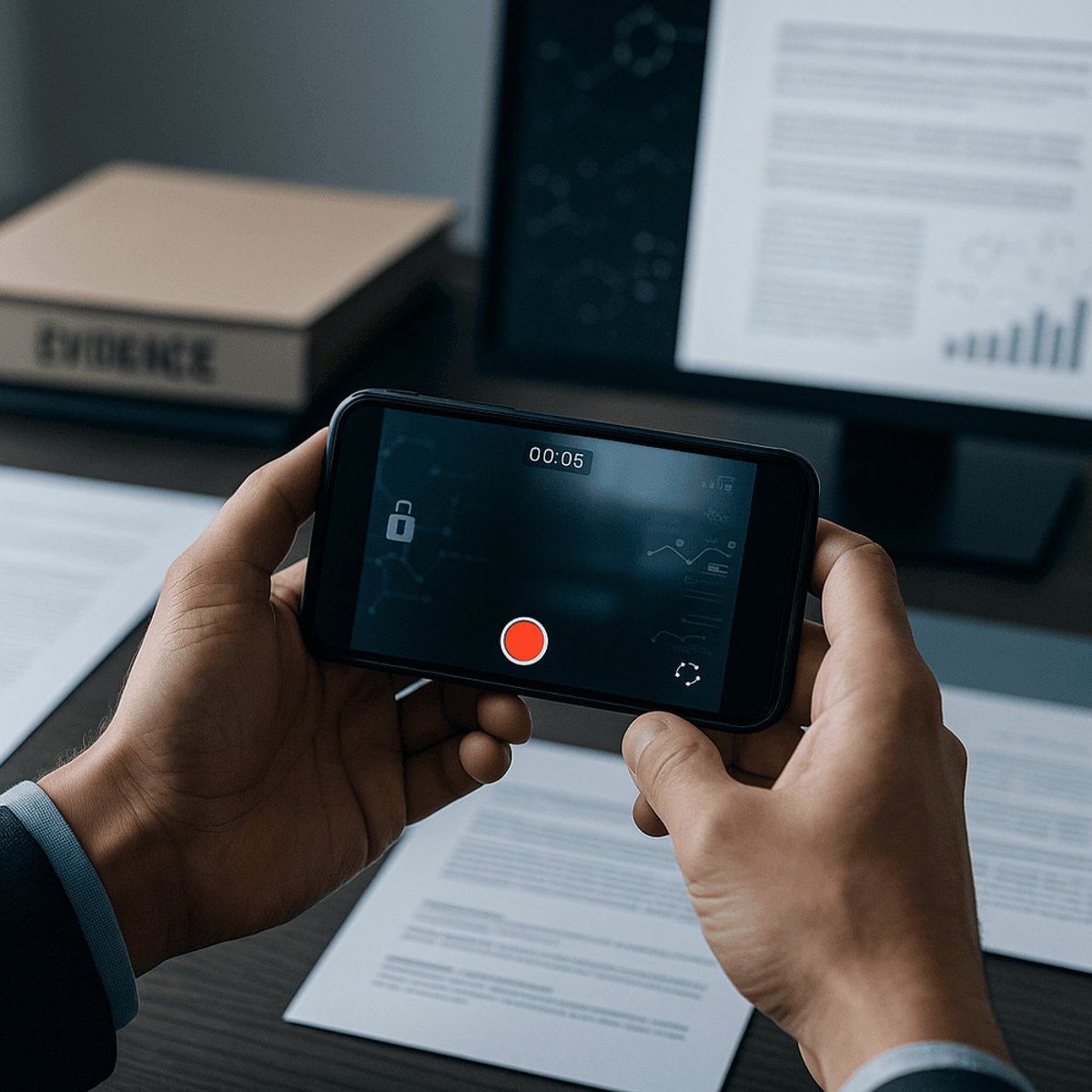
Once you're filming, keep the camera rolling continuously. "If you start and stop your footage, it's easier for people to say it's been manipulated or things have been cut out," Zammuto explains. Film in horizontal mode to capture more of the scene. The New York Civil Liberties Union recommends doing a slow 360-degree pan to establish context and make footage harder to dispute as AI-generated, a growing concern as fake ICE raid videos circulate online.
Focus your lens on the agents themselves rather than their targets. Capture badge numbers, vehicle license plates, and identifying features. Film nearby landmarks and street signs to establish location. These details matter enormously for investigations and lawsuits down the line.
The intimidation is real and escalating. Independent journalist Ken Klippenstein shared footage showing an ICE agent telling a legal observer: "We have a nice little database, and now you're considered a domestic terrorist. So have fun with that." It's a threat designed to stop people from filming.
But experts say visible compliance is crucial for deescalation. If agents order you to step back, step back while filming yourself doing so. Say out loud: "I am exercising my First Amendment right to observe and document this interaction, and I'm complying with orders." Document your own compliance. It can be evidence later that you weren't interfering.
What you do after filming may be just as important as the footage itself. Don't immediately post to social media. The FBI runs facial recognition against protest footage posted online, according to Forbes reporting. Consider who appears in your video and what risks they face if you publish it.
Backup everything. Share copies with trusted contacts. Upload to cloud storage, though be aware that law enforcement can subpoena companies for access to files on their servers. DHS has already issued at least one subpoena seeking information about people documenting ICE activity.
Better yet, submit footage directly to the growing network of official accountability channels. Attorneys general in New York, California, Arizona, Colorado, Maine, Oregon, Illinois, and Minnesota have all created evidence portals for ICE investigations.
Media organizations, civil society groups like LULAC, and community projects including ICE Watch initiatives are also systematically archiving footage. Bellingcat, the investigative journalism outlet, is using open source software called Atlos to geolocate and database ICE-related footage for detailed visual investigations of federal agent misconduct.
"You can see patterns of behavior, look at incidents that wouldn't normally break through on social media, because they aren't as violent or lethal as some of the other ones, but still show stuff that is at best dubious and possibly illegal or violations of human rights," says Eliot Higgins, Bellingcat's founder.
The legal impact is already visible. ACLU branches are using witness declarations and video evidence in multiple lawsuits against DHS. Ian Bratlie, an ACLU-MN attorney representing observers in federal court, says video makes testimony nearly impossible to dispute. Minnesota has resubmitted those declarations as evidence in the state's own lawsuit against Noem.
"Video has the power to expose the tactics that ICE and authorities are using against people and to challenge the official narrative," Zammuto says. "The administration is saying one thing and a video shows something completely different."
But the risks remain severe. There is no guaranteed safe way to film federal agents in the current climate. The two Minneapolis killings prove that. Anyone considering documenting ICE operations needs to weigh the very real possibility of violent confrontation against the accountability that video evidence can create.
The calculus is brutal but clear: filming ICE agents can cost you your life, yet not filming them means federal overreach goes undocumented and unchallenged. The footage captured by witnesses in Minneapolis immediately exposed administration lies about the killings, and that same video is now powering lawsuits in multiple states. Civil liberties organizations are building the infrastructure to turn scattered smartphone clips into systematic accountability through evidence portals, legal declarations, and investigative databases. But anyone pointing a camera at federal agents in 2026 needs to understand they're taking real physical risk for the chance at creating consequences. The First Amendment protects your right to film. It just can't protect your body.