The National Transportation Safety Board has launched an investigation into a fatal Tesla crash in Texas, marking another high-stakes probe into the EV maker's advanced driver assistance systems. The NTSB is working alongside the National Highway Traffic Safety Administration in what could become the latest regulatory flashpoint for Tesla's Full Self-Driving technology. The dual-agency investigation signals heightened federal scrutiny of autonomous driving features as crashes involving driver assistance tech continue to mount.
Tesla is facing fresh regulatory heat as the National Transportation Safety Board digs into a fatal crash in Texas that could reshape how the industry approaches autonomous driving technology. The investigation, announced by TechCrunch, puts Tesla's advanced driver assistance systems under the microscope once again.
What makes this probe particularly notable is the NTSB's involvement alongside the National Highway Traffic Safety Administration. When both agencies show up, it typically means federal regulators see something worth a deeper look - and the NTSB's reputation for exhaustive, months-long investigations suggests this won't wrap up quietly. The safety board doesn't just count the damage; it reconstructs every decision, every sensor reading, every split-second that led to tragedy.
The crash details remain sparse, but the NTSB's interest points toward questions about whether Tesla's Full Self-Driving or Autopilot systems were engaged at the time of impact. Texas has become something of a proving ground for Tesla - the company moved its headquarters to Austin in 2021 and operates its massive Gigafactory there. But the state has also seen its share of Tesla-related incidents that drew federal attention.
This isn't Tesla's first rodeo with the NTSB. The safety board has previously investigated multiple crashes involving Tesla vehicles, often raising pointed questions about the naming and marketing of features like Autopilot and Full Self-Driving. Those investigations revealed a pattern of drivers misunderstanding the limitations of driver assistance technology, sometimes with fatal consequences. The NTSB has repeatedly called for stronger safeguards to ensure drivers stay engaged, recommendations that have sparked ongoing debate about how much automation is too much.
The timing couldn't be more sensitive for the autonomous vehicle industry. Companies from Waymo to Cruise are racing to deploy self-driving technology at scale, while regulators struggle to write rules for a technology that's evolving faster than legislation can keep pace. Every high-profile crash becomes a referendum on whether the industry is moving too fast, cutting corners on safety in the rush to market.
For Tesla specifically, the stakes are enormous. CEO Elon Musk has bet the company's future on autonomous driving, promising for years that full self-driving capability is just around the corner. Tesla's Full Self-Driving beta program has enrolled hundreds of thousands of customers who pay up to $15,000 for the privilege of testing the technology on public roads. Critics argue this approach puts untrained civilians in the position of safety drivers for an unfinished system.
NHTSA has its own complicated history with Tesla. The agency opened multiple investigations into Autopilot-related crashes over the past several years, including a high-profile probe into why Tesla vehicles kept slamming into parked emergency vehicles. That investigation led to a massive recall affecting more than 2 million Teslas, requiring an over-the-air software update to strengthen driver attention monitoring.
The NTSB's involvement typically signals a more comprehensive investigation than NHTSA conducts alone. While NHTSA focuses on regulatory compliance and potential defects, the NTSB digs into root causes and systemic issues. The board's final reports often include detailed recommendations for industry-wide safety improvements, even though the NTSB lacks enforcement authority. Its conclusions carry weight because of the agency's reputation for thorough, independent analysis.
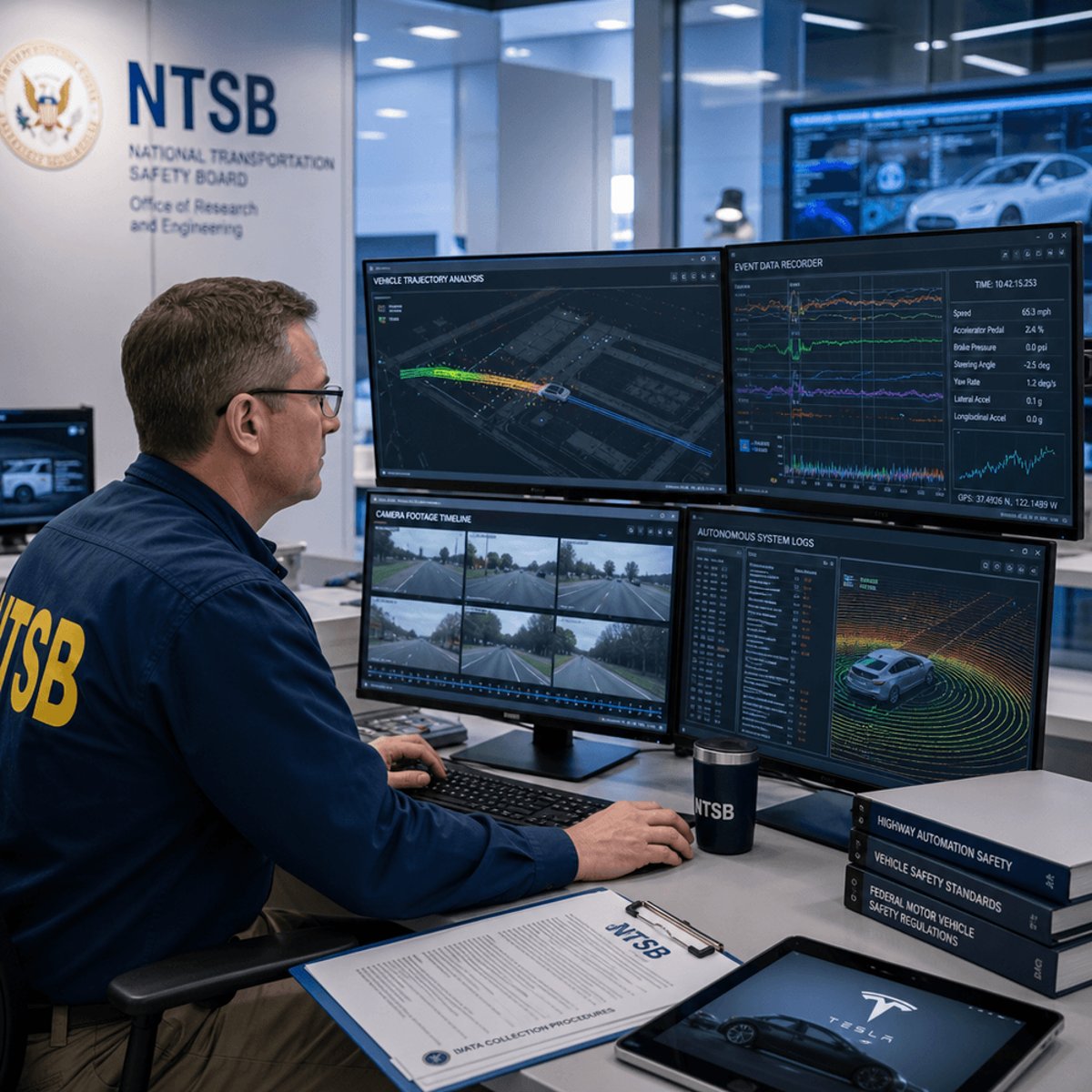
What investigators will likely examine is whether the driver assistance system was active, whether the driver was paying attention, and whether Tesla's safeguards to ensure driver engagement were adequate. They'll pull data from the vehicle's event data recorder, analyze camera footage if available, and reconstruct the moments leading up to impact. The NTSB will also look at road conditions, lighting, and whether the system's sensors should have detected whatever the vehicle struck.
This investigation arrives as the broader conversation about AI safety extends beyond chatbots and into physical systems that can kill. The same questions that haunt large language models - how do we ensure they do what we intend, how do we prevent misuse, how do we know when they're ready for deployment - apply with even greater urgency to autonomous vehicles. A hallucinating chatbot is embarrassing; a confused self-driving system is deadly.
The EV maker's stock has weathered these investigations before, but each new probe chips away at the narrative that Tesla's autonomous technology is ahead of the competition. General Motors, Ford, and traditional automakers are pouring billions into their own driver assistance systems, while tech companies like Apple watch from the sidelines, perhaps grateful they haven't rushed a product to market.
Investigations like this one can take months or even years to complete. The NTSB will methodically work through every data point before issuing preliminary findings, followed eventually by a final report with safety recommendations. But the immediate impact is already being felt - another data point in the ongoing debate about whether society is ready for autonomous vehicles, and whether autonomous vehicles are ready for society.
This Texas crash investigation represents more than just another regulatory headache for Tesla - it's a test case for how aggressively federal authorities will police the autonomous vehicle revolution. The NTSB and NHTSA working in tandem sends a clear message that regulators are watching closely as driver assistance technology becomes more prevalent. For Tesla, the findings could influence everything from future software updates to how the company markets its automation features. For the industry, it's a reminder that every crash is a potential inflection point in the race toward full autonomy. As investigators sift through data in the coming months, the broader question looms: are we moving too fast toward a self-driving future, or is this simply the cost of progress in a technology that will ultimately save lives?