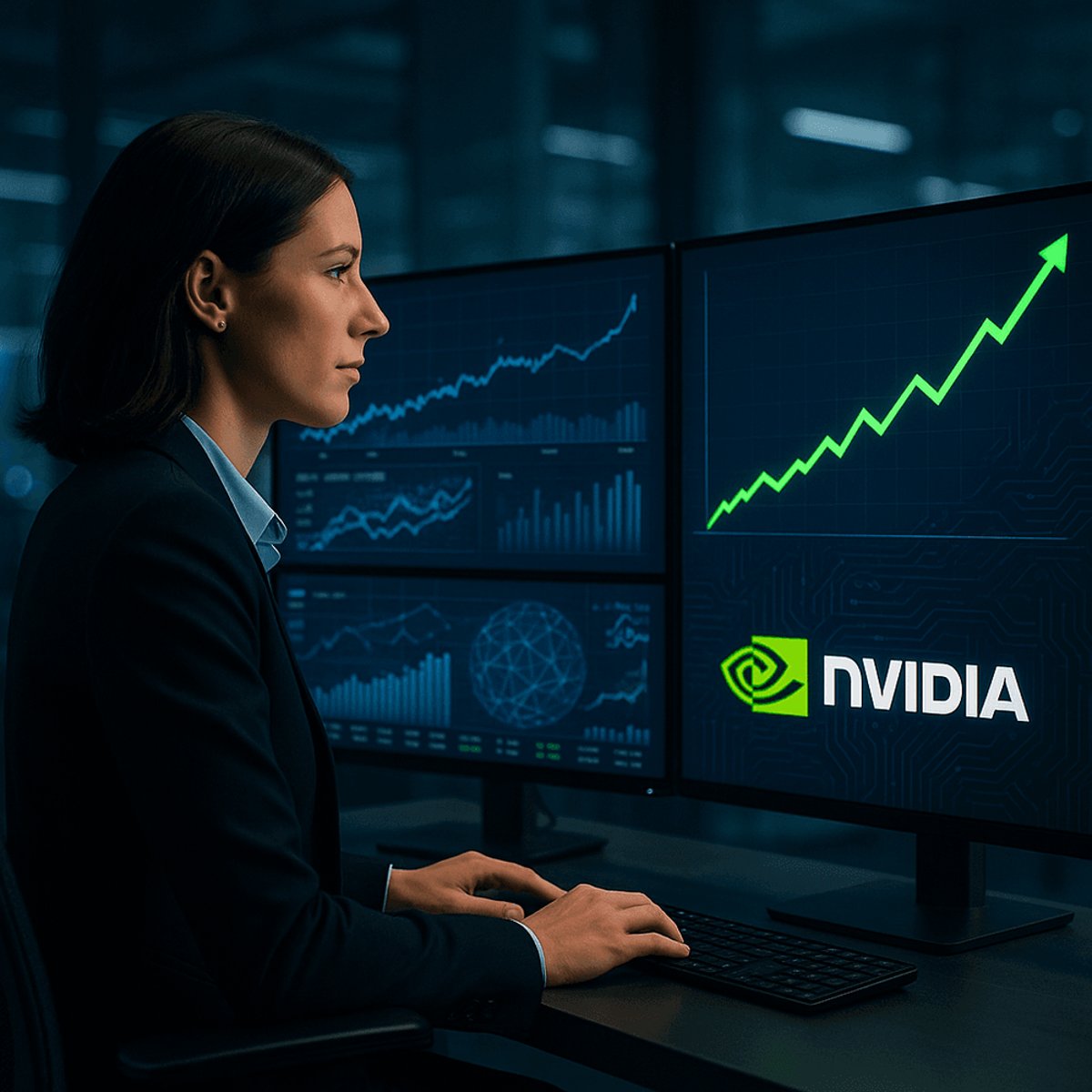
Nvidia is shooting down acquisition rumors even as Wall Street can't get enough of its stock. The chipmaker denied it's in talks to buy a major PC company, telling CNBC it's "not engaged in discussions" - but that hasn't stopped investors from pushing shares up 18% over a 10-day winning streak. The dual narrative reveals how speculation swirls around the AI chip leader as it rides unprecedented momentum in data center demand.
Nvidia just put the brakes on Wall Street's latest acquisition fantasy. The company flatly denied rumors Tuesday that it's eyeing a major PC manufacturer, issuing a statement to CNBC that it's "not engaged in discussions" about any such deal. But here's the thing - investors don't seem to care about what Nvidia isn't doing. They're too busy buying what it is doing.
Shares have climbed 18% over a 10-day winning streak, extending a rally that's become one of the market's most reliable performances this year. The surge reflects something deeper than M&A speculation - it's validation of Nvidia's stranglehold on AI infrastructure. Every hyperscaler from Microsoft to Meta is fighting for allocation of the company's next-gen chips, and that demand shows no signs of cooling.
The acquisition rumors, while quickly dismissed, reveal how analysts and investors are trying to game out Nvidia's next move. With data center revenue already dominating the business, whispers of vertical integration into PCs or gaming hardware make a certain kind of sense. Buying a PC maker could theoretically give Nvidia more control over how its chips reach consumers and enterprise customers. But the denial suggests CEO Jensen Huang isn't interested in that playbook right now.
And why would he be? Nvidia's current strategy - dominating AI training and inference chips while letting partners handle the integration - is printing money. The company's market position in AI accelerators sits above 80% by most estimates, and moving into PC manufacturing would be a distraction from that core advantage. Apple already proved you can own the whole stack, but Nvidia's model of being the essential supplier to everyone else has worked spectacularly.
The 10-day rally reflects several tailwinds converging at once. Enterprise AI spending continues to accelerate as companies move from experimentation to production deployments. Cloud providers are locked into multi-year infrastructure buildouts that heavily favor Nvidia's architecture. And competition from AMD and custom chips from hyperscalers hasn't meaningfully dented Nvidia's market share - yet.
What makes this rally particularly notable is its persistence through broader market volatility. While tech stocks generally have faced pressure from interest rate concerns and valuation questions, Nvidia has shrugged off the macro headwinds. Investors are treating it less like a semiconductor play and more like critical infrastructure for the AI era - a bet that every major tech platform needs what Nvidia sells.
The timing of the denial matters too. Nvidia doesn't typically comment on rumor and speculation, so the quick pushback suggests the PC acquisition chatter was gaining enough traction to become distracting. The company's focus is clearly elsewhere - on ramping production of its newest GPU architectures and maintaining its technological lead over rivals who've collectively invested billions trying to catch up.
For the broader semiconductor sector, Nvidia's continued momentum creates a complicated dynamic. Component suppliers and manufacturing partners benefit from the rising tide, but PC makers and traditional hardware companies find themselves increasingly dependent on a single chip supplier's roadmap. That concentration of power is precisely what sparked the acquisition rumors in the first place.
The denial won't stop speculation about Nvidia's next strategic move, but it does clarify what that move won't be. Rather than diversifying into hardware manufacturing, the company appears committed to deepening its moat in AI silicon - a strategy that's working better than almost anyone predicted two years ago.
Nvidia's quick denial of PC acquisition talks shows a company focused on protecting its core AI chip dominance rather than chasing hardware diversification. The 18% surge over 10 days isn't about M&A speculation - it's the market recognizing that Nvidia's position as the essential supplier to the AI buildout remains unshaken. As hyperscalers continue massive infrastructure spending and enterprises ramp AI deployments, investors are betting Nvidia's current strategy of owning the chip layer while letting partners handle everything else is the right playbook. The real story isn't what acquisition Nvidia might pursue, but whether anyone can meaningfully challenge its 80%-plus market share before the next wave of competition arrives.