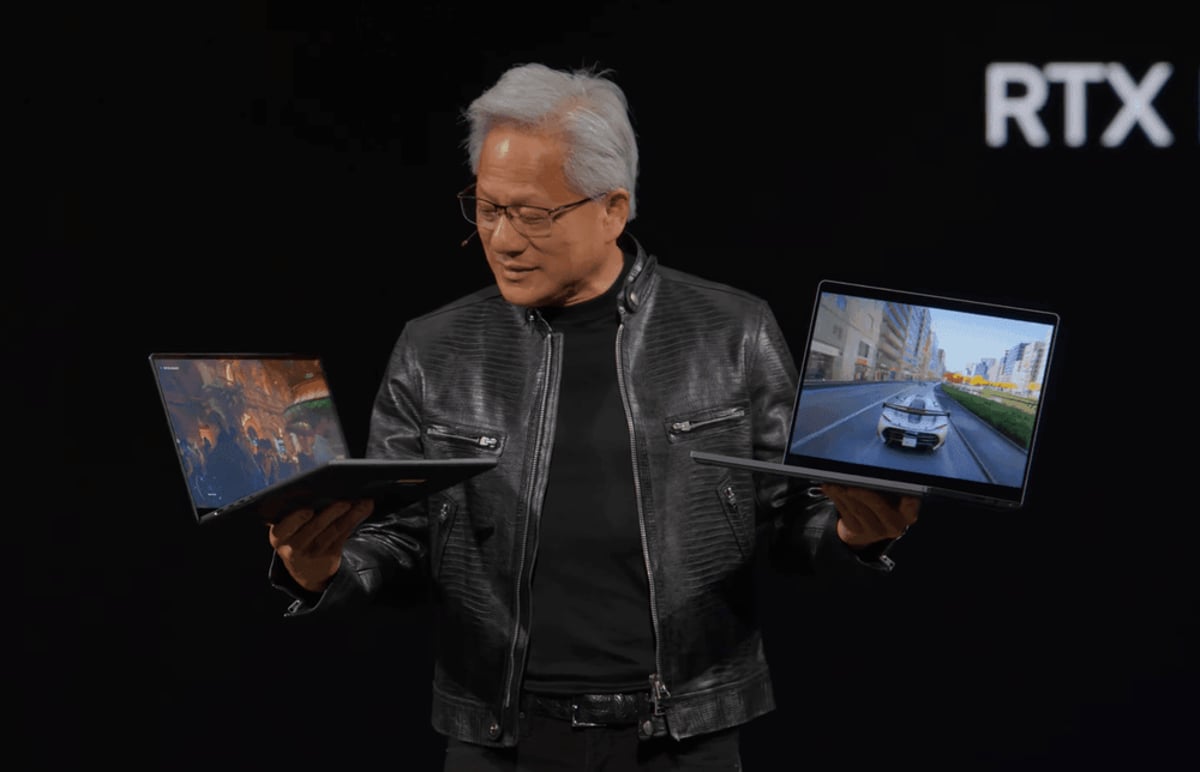
Nvidia just made its boldest move yet into consumer computing, and it could reshape the entire Windows laptop market. The chip giant's new RTX Spark processors promise to deliver what Qualcomm couldn't - Arm-based performance that actually rivals Apple's M-series chips. With CEO Jensen Huang unveiling the first RTX Spark laptops at Computex 2026, Windows users are finally getting their answer to the M1 revolution that started back in 2020. But there's a catch that could make or break this potential watershed moment.
Nvidia is finally doing what many in the industry have been anticipating for years - bringing its GPU expertise to consumer laptop processors. The RTX Spark announcement represents a fundamental shift in the Windows computing landscape, one that could rival the seismic impact Apple created when it introduced the M1 chip in November 2020.
The timing couldn't be more critical. For the past few years, Qualcomm has been the primary champion of Arm-based Windows laptops, but its Snapdragon chips have consistently struggled with graphics performance. Users got impressive battery life and solid CPU capabilities, but gaming and GPU-intensive tasks remained disappointing compared to traditional x86 chips from Intel and AMD. That's where Nvidia's decades of graphics dominance comes into play.
According to The Verge's coverage, the RTX Spark platform leverages Nvidia's unparalleled GPU technology alongside Arm CPU cores, creating a unified architecture that mirrors what made Apple's chips so successful. The company showed off multiple RTX Spark laptops from partners at Computex 2026, with manufacturers clearly betting big on Nvidia's vision.
This isn't just about matching Apple - it's about potentially surpassing what the M1, M2, and M3 chips have delivered. Nvidia brings something Apple doesn't have: a massive ecosystem of PC gaming optimizations and decades of discrete GPU development. If RTX Spark can deliver desktop-class graphics in a laptop form factor while maintaining all-day battery life, Windows laptops could finally have their "everything just works" moment that Mac users have enjoyed since 2020.
But here's where the excitement hits a wall. The leaked pricing for RTX Spark laptops suggests these machines won't come cheap. We're looking at premium positioning that could make even Apple's MacBook pricing seem reasonable by comparison. And that's before considering RAM upgrade costs, which have historically been a pain point in the Windows laptop ecosystem.
Microsoft has been pushing hard for Arm-based Windows to succeed, investing heavily in software compatibility and developer tools. The company needs a silicon partner that can deliver compelling hardware, and Qualcomm alone hasn't been enough to sway consumers away from traditional x86 machines. Nvidia entering this space could be the catalyst Microsoft's been waiting for.
The competitive dynamics get really interesting when you consider Nvidia's position in AI computing. The RTX Spark chips reportedly include dedicated AI acceleration hardware, positioning these laptops as premium machines for both creative professionals and AI developers. This plays directly into the current industry obsession with on-device AI capabilities, something Apple has also emphasized with its recent chip designs.
What made the M1 such a revelation wasn't just raw performance - it was the combination of speed, efficiency, and a seamless software ecosystem. Apple controlled the entire stack, from silicon to operating system to applications. Nvidia doesn't have that luxury. It's dependent on Microsoft to ensure Windows runs flawlessly on Arm, and on software developers to optimize their applications for the new architecture.
The graphics advantage could be Nvidia's trump card. Gamers and creative professionals have been waiting for a Windows laptop that doesn't force them to choose between portability and performance. If RTX Spark delivers on its promise of powerful GPU capabilities without decimating battery life, it could create an entirely new category of ultra-portable workstations that simply doesn't exist in the Mac world.
But pricing will determine whether this becomes a revolution or just another premium niche product. When Apple launched the M1 MacBook Air at $999, it wasn't just impressive technology - it was impressive technology at an accessible price point. If Nvidia and its partners can't deliver RTX Spark laptops that compete on value as well as performance, this could end up being a missed opportunity despite the technical achievements.
The industry has been craving a viable alternative to Apple's silicon dominance. Nvidia certainly has the engineering chops to deliver it. Whether they can nail the execution, pricing, and ecosystem support remains the biggest question mark hovering over what could genuinely be Windows' M1 moment.
This could genuinely be the inflection point Windows laptops have needed since Apple flipped the script with the M1. Nvidia brings unmatched graphics expertise and AI acceleration capabilities that could finally make Arm-based Windows machines genuinely competitive - or even superior - for demanding workloads. But the promise of revolutionary performance means nothing if pricing puts these machines out of reach for most consumers. The M1 succeeded because it was both technically brilliant and accessible. Nvidia's RTX Spark has proven the first part at Computex, but the real test will come when price tags get announced and consumers decide whether this revolution is worth paying a premium for.