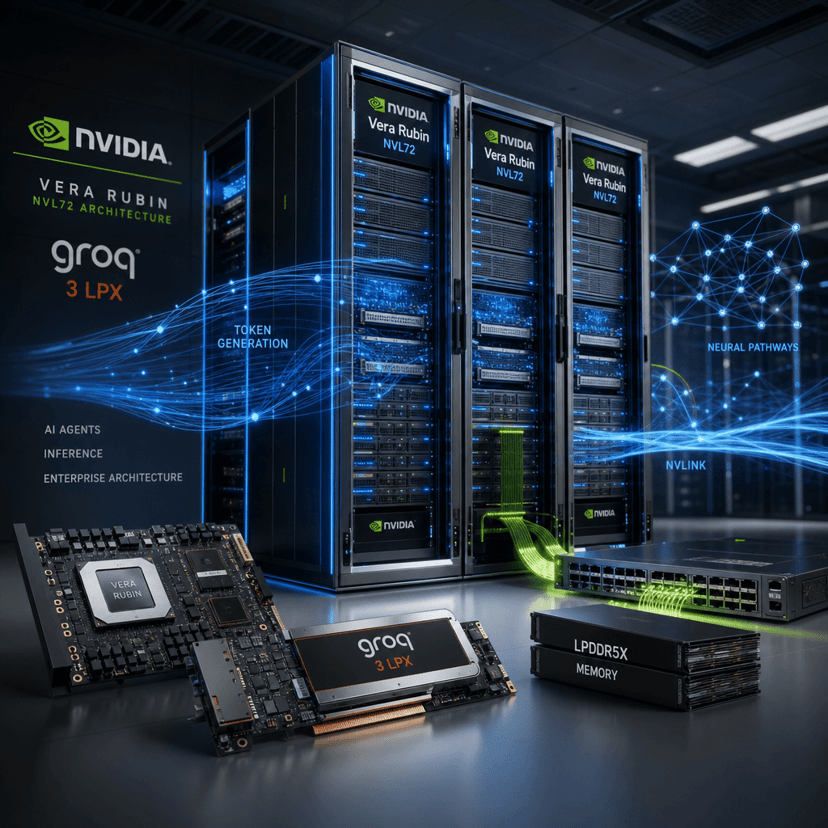
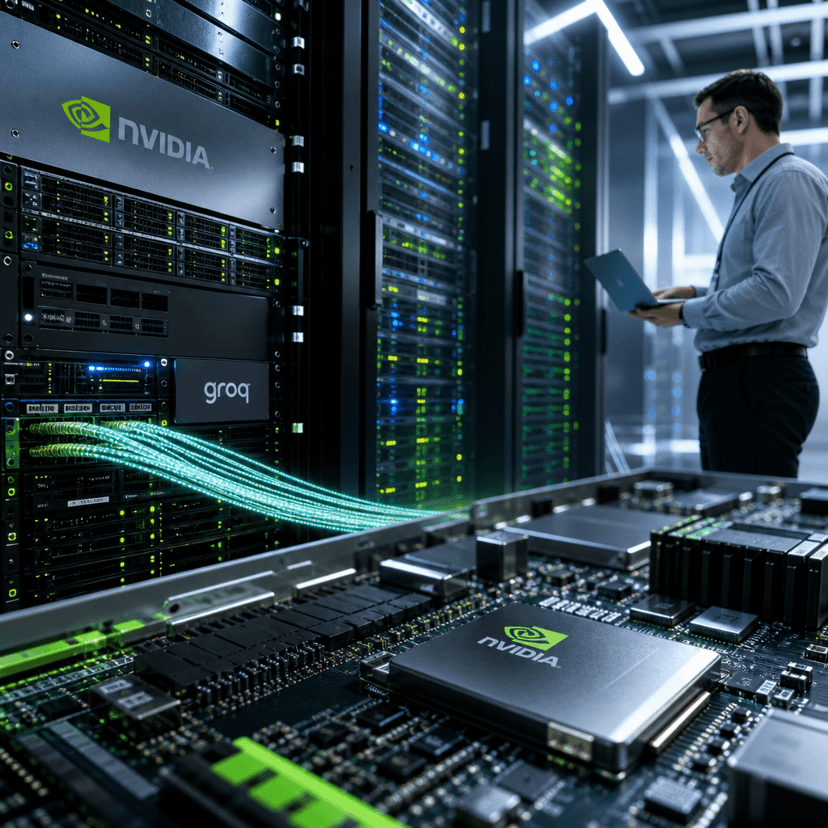
Nvidia is moving fast after its blockbuster $20 billion acquisition of AI inference startup Groq. The chip giant just confirmed it'll have Groq-powered server racks online and serving customers before the year ends, according to CNBC. The aggressive timeline signals how seriously Nvidia is taking the race for low-latency AI inference—the technology that makes AI responses feel instant rather than sluggish. For enterprises already spending billions on AI infrastructure, this could reshape which chips power their next-generation applications.
Nvidia just threw down $20 billion for Groq, and the company isn't wasting time getting its new hardware into customers' hands. The chip giant confirmed today it's racing to manufacture Groq-based server racks and make them available before the calendar flips to 2027, according to CNBC.
The breakneck timeline reveals just how critical low-latency inference has become in the AI arms race. While Nvidia built its empire on training massive AI models—think OpenAI's GPT systems or Meta's Llama models—Groq carved out a different niche. Its custom Language Processing Unit architecture is designed specifically to make AI responses feel instantaneous, rather than the noticeable delays many users experience with chatbots and AI assistants today.
For Nvidia, this acquisition is about plugging a gap in its portfolio. The company's H100 and upcoming Blackwell GPUs dominate AI training workloads, but inference—the process of actually running AI models to serve users—has different technical requirements. Groq's chips reportedly deliver inference speeds up to 10 times faster than traditional GPU-based solutions for certain workloads, though the company hasn't publicly disclosed comprehensive benchmarks.
The $20 billion price tag makes this one of the largest semiconductor acquisitions in recent memory and the biggest AI chip deal to date. It dwarfs Intel's recent moves in the space and puts pressure on competitors like AMD and Amazon Web Services, which has been developing its own custom inference chips.
What makes the deal particularly intriguing is that Nvidia is essentially acquiring a potential competitor to its own product lines. Groq's technology takes a fundamentally different approach than Nvidia's GPU architecture, using a deterministic, single-core design that eliminates the unpredictability of multi-threaded processing. That architectural choice makes inference latency far more consistent—a crucial factor for real-time AI applications like voice assistants, autonomous vehicles, and live translation services.
The rapid integration timeline suggests Nvidia had been eyeing this acquisition for months. Manufacturing and deploying server racks in just a few months requires supply chain coordination that typically takes much longer. Either Nvidia had already begun preliminary work, or it's pulling out all the stops to fast-track production through its existing fabrication partners.
For enterprise customers, this changes the calculus around AI infrastructure investments. Companies that have been building inference infrastructure around Nvidia's existing GPU offerings now have to consider whether to wait for Groq-enhanced solutions or continue with current deployments. The promise of dramatically lower latency could justify the delay for applications where response time directly impacts user experience.
The inference market is heating up precisely because it represents a much larger long-term opportunity than training. While only a handful of companies train frontier AI models, millions of businesses will deploy inference workloads to serve their customers. Google has been pushing its TPU chips for inference, Microsoft is developing custom silicon with its Maia chips, and Amazon has rolled out multiple generations of Inferentia processors.
But there's a regulatory wildcard here. A $20 billion acquisition by the already-dominant AI chip maker could draw scrutiny from antitrust regulators, particularly in the EU and US. Nvidia currently controls an estimated 80-90% of the AI training chip market, and adding Groq's inference capabilities could raise concerns about further market concentration. The company hasn't disclosed whether it's received regulatory approval or if that's still pending.
The timing also intersects with broader questions about AI economics. As model sizes plateau and the industry shifts focus from "bigger is better" to "faster and cheaper," inference efficiency becomes the key competitive battleground. Groq's technology promises to reduce the cost per inference request, which could make AI applications economically viable for a much broader range of use cases.
What remains unclear is how Nvidia will position Groq's offerings relative to its existing product stack. Will Groq chips be reserved for premium, latency-sensitive workloads while standard GPUs handle everything else? Or will Nvidia eventually integrate Groq's architectural innovations into its core GPU designs? Those strategic decisions will shape the AI infrastructure landscape for years to come.
Nvidia's aggressive push to get Groq hardware into production before year-end shows this isn't just another acquisition to file away—it's a strategic sprint to own the inference market before competitors can close the gap. The $20 billion bet says more about where AI is heading than any roadmap presentation: as the industry moves from building models to deploying them at scale, the companies that can deliver the fastest, cheapest inference will control the infrastructure layer that powers everything from chatbots to self-driving cars. For CIOs planning their next wave of AI investments, the message is clear—inference architecture is about to get a whole lot more interesting, and waiting a few months to see what Nvidia-Groq produces might be worth the delay.