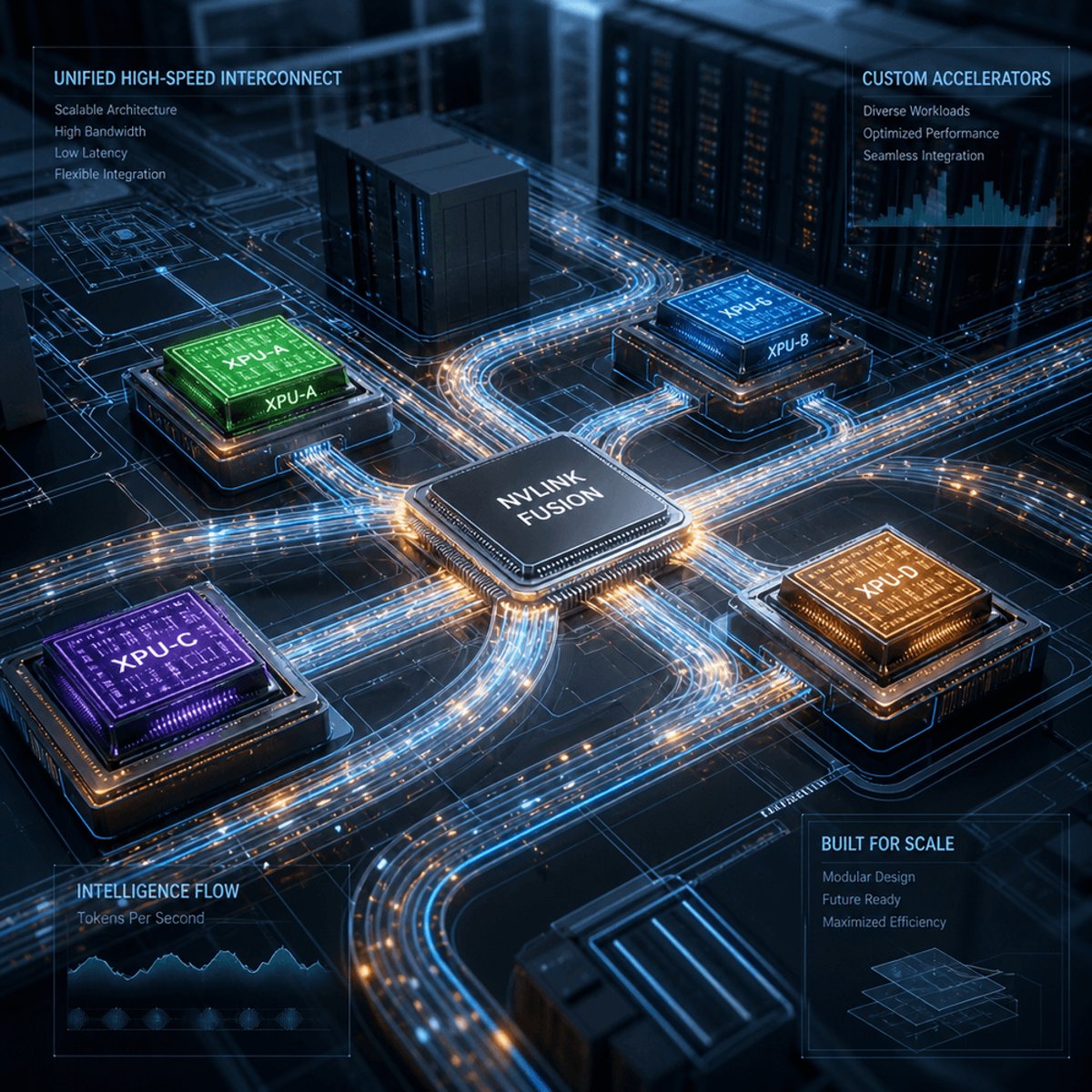
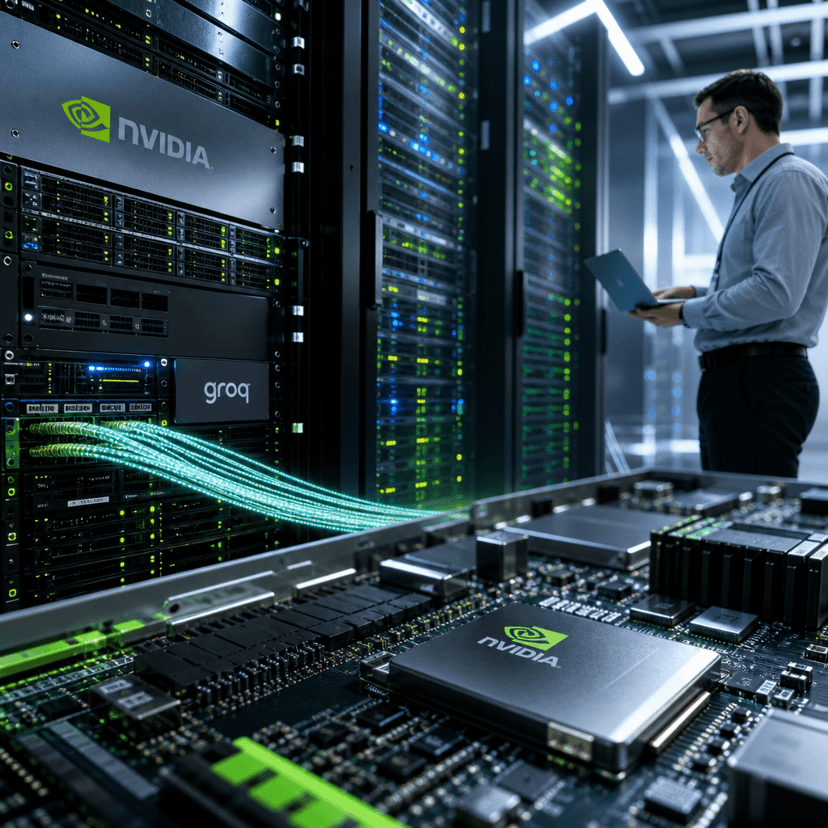
Nvidia just threw down a strategic play that could reshape how hyperscalers think about custom silicon. The chip giant's new NVLink Fusion technology positions its interconnect as the backbone for AI factories running custom XPUs - a move that keeps Nvidia central even as companies like Amazon, Google, and Microsoft design their own accelerators. Instead of fighting the custom chip trend, Nvidia's betting it can provide the plumbing that makes those chips actually work at scale.
Nvidia isn't waiting for hyperscalers to finish designing GPU competitors. The company's latest move acknowledges what's been obvious in Silicon Valley for months - everyone's building custom chips - and positions Nvidia to profit from that reality anyway.
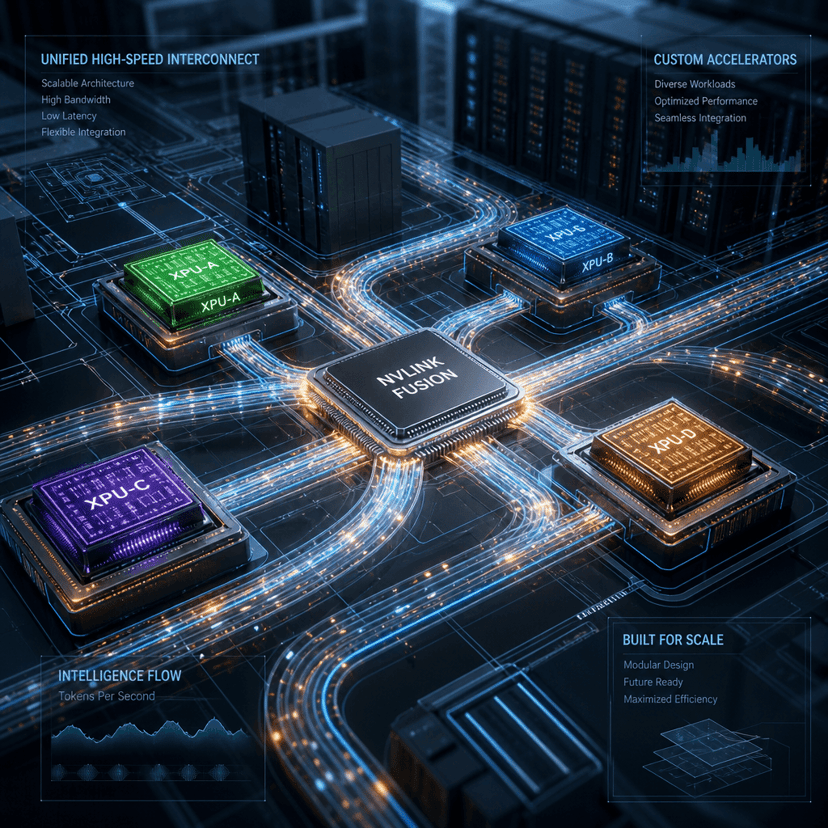
The newly announced NVLink Fusion technology represents a pragmatic pivot. Rather than insisting customers buy complete Nvidia systems, the company's offering its high-speed interconnect as infrastructure that custom XPUs can plug into. It's the difference between selling the whole car and selling the highway system.
"To generate intelligence at scale, AI factories run continuously, and their economics are defined by delivered output," according to the Nvidia blog post by Jesse Clayton. The metrics that matter: tokens per second, tokens per watt, cost per token, utilization and uptime. Not chip specifications or theoretical performance numbers.
That framing matters because it's exactly how hyperscalers think about infrastructure spending. Amazon Web Services didn't build its Trainium chips for bragging rights - it built them to improve economics on massive inference workloads. Google designed TPUs for the same reason. Microsoft is developing Maia chips with identical goals.
Nvidia's calculated bet is that even with custom silicon, these companies still need world-class interconnect to make their AI factories actually function as integrated systems rather than collections of isolated accelerators. And NVLink - already proven in data centers running Nvidia's own GPUs - offers bandwidth and latency characteristics that are tough to replicate.
The timing aligns with a broader shift in how AI infrastructure gets built. The first wave saw companies simply buying Nvidia H100 and A100 clusters. The second wave brought custom accelerators optimized for specific workloads. This third phase is about integration - making heterogeneous compute resources work together efficiently.
"That requires AI infrastructure designed and built as a full factory, not a collection of individual accelerators," the blog post notes. It's a direct shot at the complexity challenge facing anyone trying to wire up custom chips at scale.
For AI-native companies and hyperscalers, the value proposition is straightforward. Design your own XPU optimized for your workload, but leverage proven networking infrastructure rather than reinventing that particular wheel. Nvidia gets to remain architecturally relevant even as its GPU monopoly faces pressure.
The announcement also reveals Nvidia's read on where the market's headed. CEO Jensen Huang has talked about AI factories for over a year, positioning data centers as manufacturing facilities that produce intelligence rather than just running workloads. Now the company's releasing products specifically designed for that vision - products that work regardless of whose silicon is doing the actual compute.
Industry sources suggest several hyperscalers have already been testing NVLink-compatible designs for their custom accelerators. The technology isn't entirely new - it's an extension of Nvidia's existing NVLink interconnect - but packaging it as a licensable component for third-party XPUs represents a strategic shift.
The economics could work for both sides. Hyperscalers get proven networking without the R&D overhead. Nvidia maintains relevance and captures revenue even from systems not running its GPUs. It's pragmatic in a way that acknowledges market realities rather than fighting them.
What makes this particularly interesting is the implicit admission that custom silicon isn't going away. Nvidia's not positioning NVLink Fusion as a stopgap until everyone comes back to buying complete Nvidia systems. It's building a business model that assumes custom XPUs are a permanent feature of the landscape.
For smaller AI-native companies, the technology could lower barriers to building differentiated infrastructure. Instead of choosing between Nvidia's ecosystem and rolling everything custom, there's now a middle path - custom compute with standardized interconnect.
The move also puts pressure on other interconnect technologies. Competitors like AMD's Infinity Fabric and Intel's Ultra Path Interconnect now face an opponent that's not just faster but specifically optimized for the AI factory use case that's driving most new data center spending.
Nvidia's betting that the future of AI infrastructure is hybrid - custom compute married to standardized networking. It's a pragmatic acknowledgment that the GPU monopoly can't last forever, coupled with a smart play to stay architecturally central regardless. For hyperscalers building custom XPUs, NVLink Fusion offers a shortcut on the hardest part of system integration. For Nvidia, it's a hedge that turns the custom silicon trend from existential threat into revenue opportunity. Watch how quickly Amazon, Google, and Microsoft adopt - or ignore - the technology. That'll tell you whether Nvidia successfully navigated this strategic shift or just delayed the inevitable.