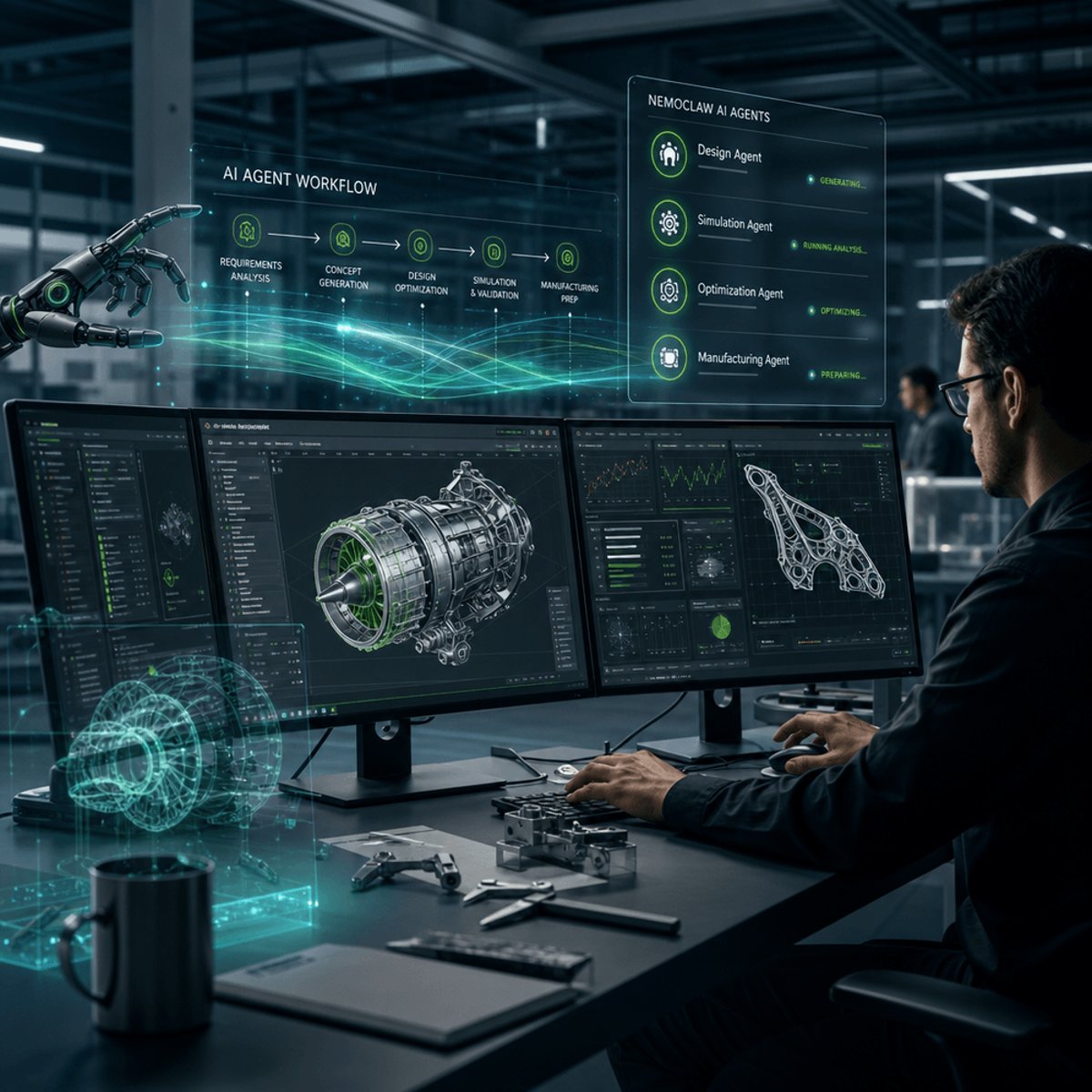
Nvidia just dropped a major play for the industrial software market. At GTC Taipei during COMPUTEX, the chipmaker unveiled NemoClaw, a platform that transforms AI into autonomous engineering assistants capable of handling everything from CAD design to simulation debugging. The announcement comes with backing from over a dozen major engineering software providers, signaling Nvidia's push to move beyond raw compute power into solving the workflow bottlenecks that still plague industrial engineers even after simulation times have shrunk from weeks to hours.
Nvidia is making its move into autonomous AI agents for industrial engineering. The company revealed NemoClaw at GTC Taipei during COMPUTEX, a platform designed to help engineering software companies build what Nvidia calls "secure, autonomous AI engineers."
The timing makes sense. While accelerated computing has already compressed simulation times from weeks to hours, the workflows surrounding those simulations remain painfully manual. Engineers still spend days on computer-aided design, meshing, simulation setup, debugging, and generating reports. NemoClaw aims to automate that entire chain with AI agents that can operate independently.
According to Nvidia's blog announcement, more than a dozen engineering software leaders are already on board. The company didn't name all partners in the truncated content available, but the scale of collaboration suggests this isn't a side project. It's a coordinated industry effort to inject AI agents into every step of the engineering process.
The platform's name - NemoClaw - ties into Nvidia's broader Nemo framework for building and customizing large language models. But this goes beyond chatbots answering questions about simulation results. These agents are meant to execute tasks: setting up meshes, identifying errors in simulations, adjusting parameters, and compiling technical reports without human intervention.
Security appears central to the pitch. Industrial engineering involves proprietary designs, sensitive simulation data, and intellectual property that companies guard fiercely. Nvidia's emphasis on "secure" AI engineers suggests the platform includes controls for keeping data on-premises or within specific cloud environments, plus mechanisms to audit what these autonomous agents actually do.
This launch puts Nvidia in direct competition with the broader AI agent ecosystem emerging around models from OpenAI, Anthropic, and others. While those companies focus on general-purpose agents, Nvidia is betting on vertical-specific tools built for industries where precision and security aren't negotiable.
The industrial software market represents a massive opportunity. Companies like Siemens, Ansys, and Autodesk generate billions annually from engineering simulation and design tools. If NemoClaw can genuinely automate the grunt work that consumes 60-70% of an engineer's time, it could reshape how these software giants price and package their products.
But there's a question about control. Engineering software companies might embrace AI assistants, but will they want to build them on Nvidia's platform versus developing proprietary agents? The early partnerships suggest Nvidia is offering something these companies can't easily replicate - likely a combination of optimized AI infrastructure, pre-trained models for engineering tasks, and integration with Nvidia's GPU ecosystem.
The announcement lands as industrial companies face mounting pressure to accelerate product development cycles. Whether it's automotive manufacturers iterating on electric vehicle designs or aerospace firms optimizing aerodynamics, faster engineering workflows translate directly to competitive advantage. AI agents that can run simulations overnight, identify issues, and have solutions ready by morning could be transformative.
What's less clear from the announcement is how autonomous these agents actually are. Can they make judgment calls on design trade-offs? Do they require human approval at each step, or can they execute multi-day workflows independently? Those details will determine whether NemoClaw is a productivity enhancer or a genuine shift in how engineering gets done.
Nvidia's NemoClaw announcement signals the company's ambition to own not just the chips powering AI but the platforms shaping how industries deploy it. By focusing on industrial engineering workflows and securing partnerships with established software providers, Nvidia is building a moat around its enterprise AI strategy. The success will hinge on whether these autonomous agents can deliver genuine time savings without introducing new risks around errors or security. For engineering software companies and their customers, the promise is compelling: AI that doesn't just speed up simulations but handles the tedious work that surrounds them. The industrial software market just got a lot more interesting.