The AI race just flipped. OpenAI CEO Sam Altman sent an internal 'code red' memo to his team this week, demanding the company refocus on core products as Google's Gemini and other rivals close the gap that ChatGPT opened three years ago. The company that sparked the AI revolution now finds itself scrambling to maintain its lead in an increasingly crowded field.
Three years ago, OpenAI dropped a bomb on Silicon Valley with what it called a 'low-key research preview.' ChatGPT didn't just launch - it detonated, forcing every major tech company to scramble for AI relevance overnight. Google executives reportedly panicked. Microsoft rushed to integrate the technology. The entire industry pivoted.
Now the tables have turned. Sam Altman, the CEO who confidently steered OpenAI through its meteoric rise, just told his team they're in crisis mode. According to The Verge's reporting, Altman's internal memo declares a 'code red' situation, urging the company to laser-focus on its most critical products as competitors close in.
The pressure is real. Google's Gemini has evolved from a rushed ChatGPT response into a formidable challenger, while Meta, Amazon, and others pour billions into their own AI initiatives. What started as OpenAI's blue ocean has become a shark-infested battleground.
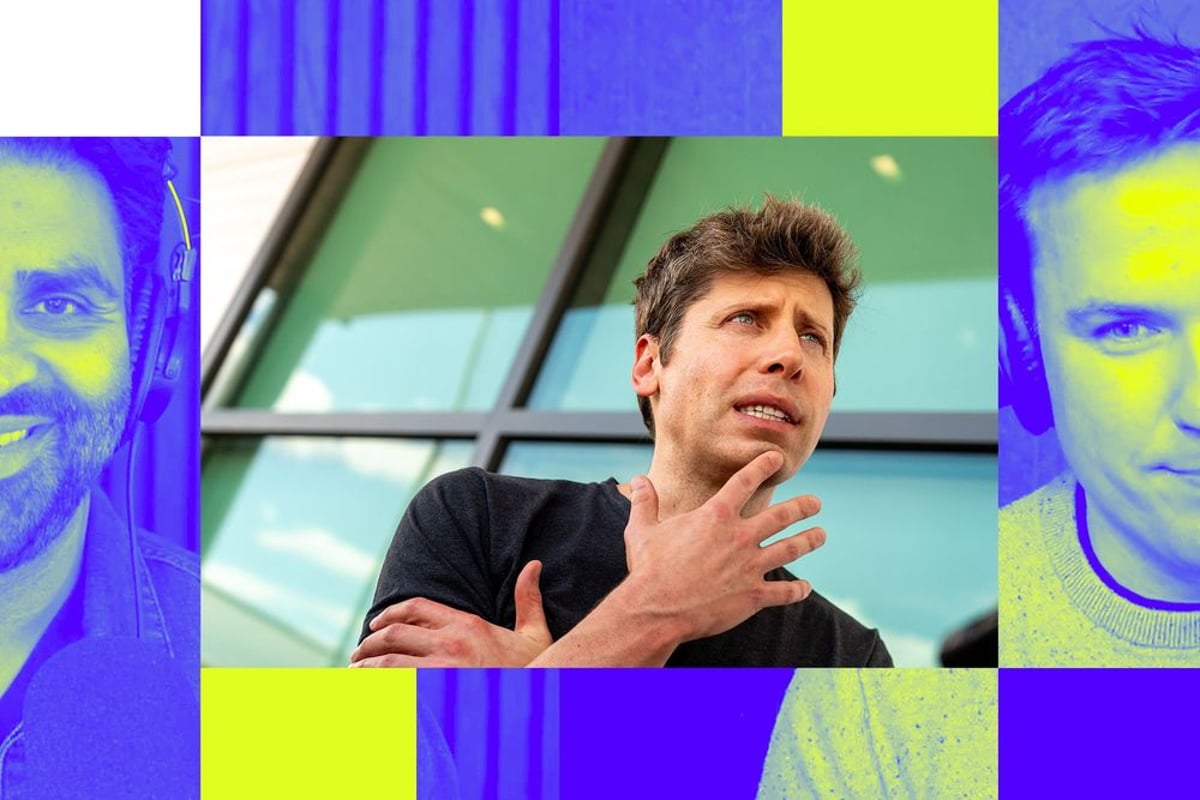
'The question now is, what does making ChatGPT better actually look like?' The Verge's David Pierce asks in the latest Vergecast episode. It's the billion-dollar question facing not just OpenAI, but the entire AI industry.
The competitive landscape has shifted dramatically since ChatGPT's November 2022 debut. Back then, Google seemed caught flat-footed, scrambling to release Bard after years of cautious AI development. Today, Gemini competes directly with ChatGPT across multiple use cases, while Google's massive infrastructure and data advantages give it staying power OpenAI can't match.
But the real challenge might be deeper than competition. Industry observers increasingly question whether large language models represent the path to true AI advancement. As Pierce notes, 'Language is not the same thing as intelligence.' If current LLM technology has hit a ceiling, the race becomes about who can build the most useful products with existing capabilities, not who can achieve the next breakthrough.
For OpenAI, that means doubling down on ChatGPT's user experience, enterprise features, and API ecosystem. The company's recent focus on reasoning models like o1 suggests one direction - making AI better at complex problem-solving rather than just generating text. But Google is pursuing similar approaches while leveraging its search dominance and cloud infrastructure.
The memo also signals internal pressure at OpenAI. After unprecedented growth and a $157 billion valuation, the company faces the challenge of maintaining innovation velocity while scaling operations. Altman's call for refocus suggests the organization may have spread itself too thin across multiple initiatives.
What's at stake extends beyond corporate rivalry. OpenAI's early lead helped establish the current AI paradigm - conversational interfaces, subscription models, and API-first distribution. Losing that position could reshape how AI develops and who controls its direction.
The code red also highlights AI's transition from experimental technology to infrastructure battleground. Early adopters are now choosing between platforms, and switching costs are rising. Google's integration with workspace tools, Microsoft's Copilot ecosystem, and OpenAI's developer-friendly APIs represent different visions of AI's future.
For now, the race remains wide open. But Altman's emergency signal suggests OpenAI recognizes the window for maintaining its lead is closing fast.
Altman's code red memo marks a pivotal moment in AI's evolution. The company that started the current AI boom now faces the same existential pressure it once inflicted on others. Whether OpenAI can maintain its edge will determine not just corporate fortunes, but the trajectory of AI development itself. The next few months will show if early innovation advantage can withstand the full force of Big Tech's resources and ambition.