Pacific Fusion just figured out how to save over $100 million on its fusion reactor design. The startup exclusively shared results with TechCrunch from recent experiments at Sandia National Laboratory's Z Machine, where it eliminated the need for expensive preheating lasers by tweaking a fuel pellet's aluminum casing. It's the kind of cost engineering breakthrough the fusion industry desperately needs if commercial power plants are going to hit competitive electricity prices by the early 2030s.
Pacific Fusion just cracked one of fusion power's most expensive problems. The startup ran experiments at Sandia National Laboratory's Z Machine and discovered they can ditch over $100 million worth of preheating lasers by making a simple tweak to their fuel pellet casings. They shared the results exclusively with TechCrunch.
Fusion power's fundamental economics question remains wide open: how do you keep the cost of starting fusion reactions below the price you can sell the electricity for? Commonwealth Fusion Systems is betting hundreds of millions on their approach, but their massive reactor won't fire up until next year. Pacific Fusion thinks they've found a cheaper path forward.
The company is chasing what's called pulser-driven inertial confinement fusion, similar to experiments at the National Ignition Facility that made headlines. Instead of NIF's lasers, Pacific Fusion uses massive electrical pulses to create magnetic fields that crush pencil-eraser-sized fuel pellets in under 100 billionths of a second. "The faster you can implode it, the hotter it'll get," Keith LeChien, Pacific Fusion's co-founder and CTO, told TechCrunch.
But here's where it gets interesting. Pulser-driven inertial confinement fusion has always needed a kickstart - researchers typically use both lasers and magnets to preheat the fuel pellet before the big compression hits. "It's just a little bit of energy just to give it a little bit of a boost before you compress it," LeChien explained, roughly 5% to 10% of total energy. Those extra lasers and magnets add complexity, cost, and maintenance headaches that make competitive electricity pricing nearly impossible.
Pacific Fusion's Sandia experiments changed the game. The team tweaked the design of the cylinder encasing the fuel pellet and adjusted the electrical current. Before the massive pulse that ignites fusion, they let a bit of magnetic field leak through to the fuel, warming it naturally. "We can make very subtle changes to how this cylinder is manufactured that allow the magnetic field to leak or to seep into the fuel before it's compressed," LeChien said.
The engineering is surprisingly straightforward. Pacific Fusion's fuel sits in a plastic target wrapped in aluminum. By varying the aluminum thickness, they control how much magnetic field reaches the fuel. The precision required matches what's needed for a .22 caliber bullet casing, LeChien noted - "a process that's been honed and manufactured and perfected over 100 plus years."
The energy math is wild. This magnetic field leak uses less than 1% of the system's total energy. "It's a very, very, very small fraction of the overall energy in the system, so it's effectively unnoticeable," LeChien told TechCrunch. But the cost savings are massive.
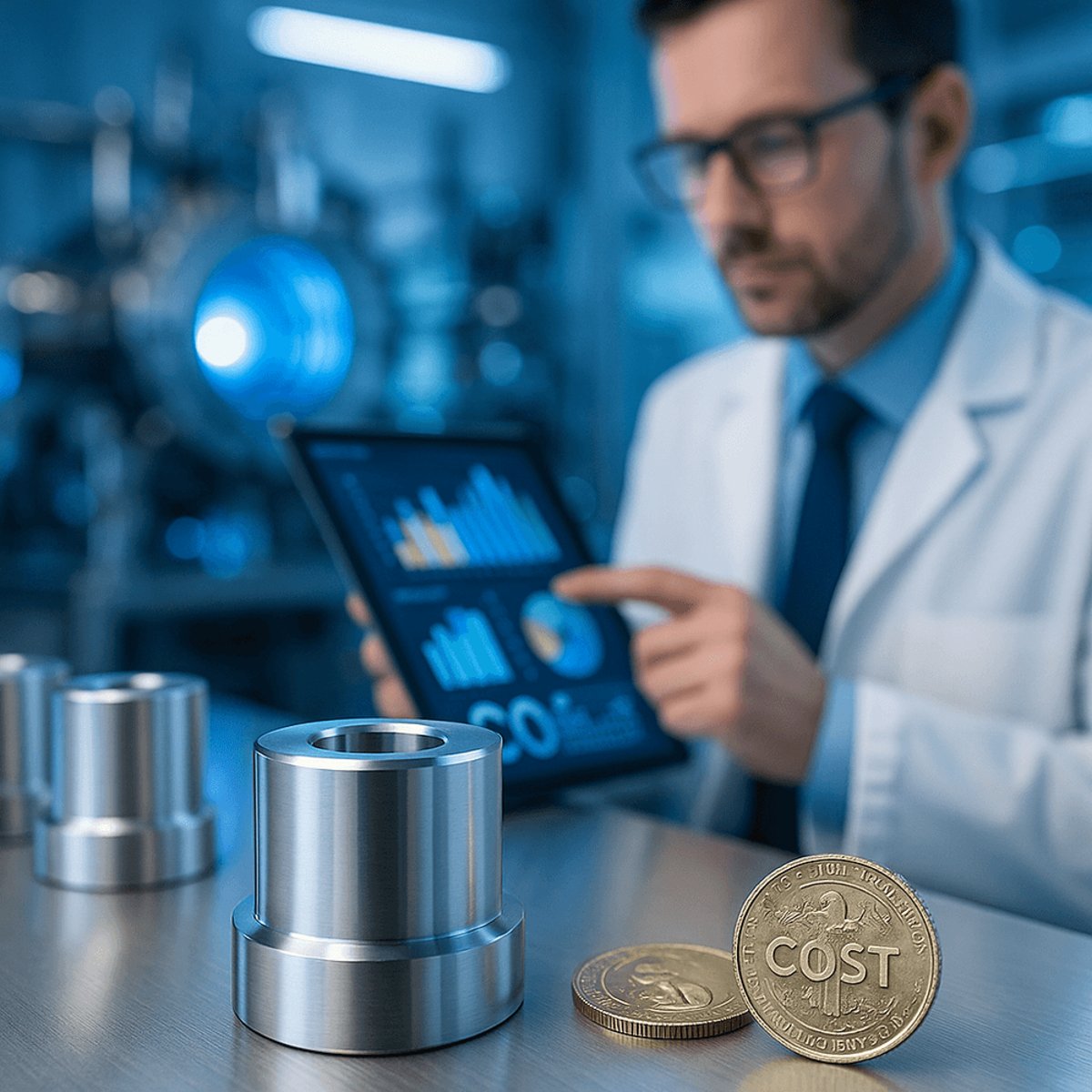
Ditching the magnetic system brings modest cost reductions and simpler maintenance. But eliminating the laser? That's where Pacific Fusion really wins. "The scale of laser [needed] to preheat these types of systems at high gain is north of $100 million," LeChien said. That's over $100 million they won't need to spend building their reactor.
The experiments also validated Pacific Fusion's computer simulations against real-world results - critical for a technology where plenty of companies have promised breakthroughs that never materialized. "A lot of people have simulated things and said, 'Oh, this will work or that will work,'" LeChien noted. "It's a very different game to simulate something, build it, test it, and have it work. Closing that loop is hard."
Fusion startups are racing toward the early to mid-2030s target for commercial power plants that can deliver 24/7 electricity to grids. The technology promises baseload power without the carbon emissions or fuel supply chains of fossil fuels. But economics have always been the killer question - fusion reactions are energetically favorable, but building and operating reactors that produce electricity cheaper than natural gas or renewables plus storage is the real challenge.
Commonwealth Fusion Systems raised billions and is building their tokamak-style reactor in Massachusetts. TAE Technologies has pulled in over $1.2 billion. The sector's awash in venture capital betting that someone will crack commercial fusion first. Pacific Fusion's cost engineering could give them an edge in a race where capital efficiency might matter as much as scientific breakthroughs.
The Sandia experiments used the Z Machine, one of the world's most powerful pulsed-power facilities. Access to national lab infrastructure has been critical for fusion startups that can't afford to build billion-dollar test facilities themselves. Pacific Fusion previously shared their approach with TechCrunch, outlining how pulser-driven inertial confinement could compete with more established magnetic confinement approaches.
LeChien emphasized that real-world validation separates serious fusion companies from PowerPoint presentations. The gap between simulation and experimental results has killed plenty of fusion concepts. Pacific Fusion's ability to predict, build, test, and confirm their magnetic field leakage approach shows their modeling matches physical reality - the kind of credibility that matters when you're asking investors or utilities to bet on fusion power.
The aluminum casing breakthrough also addresses manufacturing scalability. Fusion power plants will need to compress fuel pellets in rapid succession - potentially several times per second - to generate continuous electricity. If each pellet required expensive, precision-manufactured components with tight tolerances, the operational costs would spiral. But bullet casing-level precision? That's mass manufacturing territory with century-old supply chains.
Pacific Fusion's Sandia experiments show that fusion economics might hinge less on massive scientific leaps and more on clever engineering. Cutting $100 million from reactor costs by adjusting aluminum thickness isn't as dramatic as achieving fusion ignition, but it might be what actually gets fusion power plants connected to the grid at competitive prices. While billion-dollar bets on tokamaks grab headlines, this kind of cost engineering could determine which fusion approach actually scales to commercial deployment. The race to fusion power just became as much about manufacturing innovation as plasma physics.