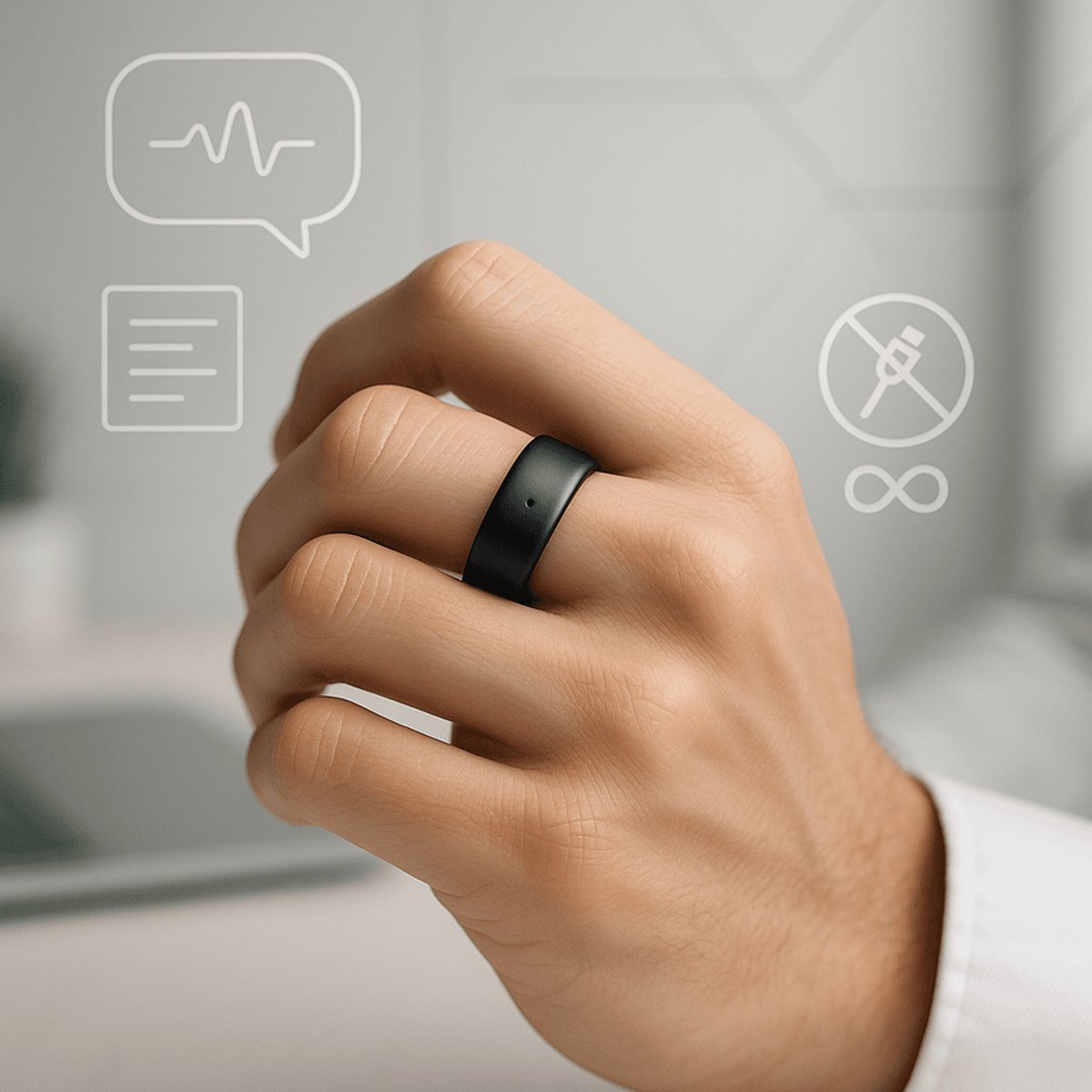
Pebble just launched preorders for its $75 Index smart ring, marking a dramatic pivot from smartwatches to wearable memory devices. Unlike typical smart rings that track health metrics, the Index focuses solely on voice recording with a unique selling point: no charging required for two years. The device processes everything locally without cloud connectivity, targeting users frustrated with constantly dying gadgets.
Pebble is betting big on a different kind of smart ring. While the resurrected smartwatch company celebrates shipping 25,000+ Pebble 2 Time preorders, founder Eric Migicovsky is already moving to capture the next frontier: wearable memory.
The Pebble Index launched for preorder today at $75, promising something no other smart ring delivers - two years of battery life without a single charge. "I didn't want yet another gadget to charge every day," Migicovsky told WIRED, explaining the decision to use non-rechargeable silver oxide hearing aid batteries instead of traditional rechargeable tech.
This isn't your typical health-tracking ring. The Index strips away heart rate monitors, sleep tracking, and vibration motors to focus on one core function: capturing your thoughts through voice. Users press and hold a physical button while speaking into the ring's microphone, creating audio clips that sync to the Pebble app when in phone range.
The timing puts Pebble directly against Sandbar's Stream Ring, which launched with similar voice recording capabilities. But where Sandbar leans heavily on cloud AI processing and requires subscriptions, Pebble takes the opposite approach. "I'm not as interested in the AI persona," Migicovsky explained, emphasizing local processing over cloud dependency.
All speech-to-text conversion happens on-device using open source AI models. An on-device large language model then categorizes recordings as reminders, timers, or general notes. "These are your innermost thoughts," Migicovsky noted. "You don't want to send them anywhere."
The hardware reflects this privacy-first philosophy. The stainless steel ring comes in matte black, polished silver, and polished gold across eight sizes. It's water resistant with internal memory for offline storage. The microphone picks up voice clearly even in loud environments, according to Migicovsky, who's worn a prototype for three months.
Customization extends beyond basic voice recording through the open source Pebble app. Single button presses can trigger music controls or smart home routines. Double-press combinations unlock additional actions. Users can integrate with services like Notion for task management, routing reminders and notes to their preferred platforms.
For users wanting more AI capability, a double-press and hold activates ChatGPT-like responses for weather queries and basic questions. These features require internet connectivity and are disabled by default, maintaining the device's offline-first approach.
The business model reflects confidence in sustained demand. Unlike the limited-run Pebble 2 Duo, Migicovsky plans mass production of the Index. "I have a good feeling about it," he said, positioning the ring as "an extension of your brain" rather than just another tech gadget.
The $75 price point undercuts most smart rings while eliminating ongoing costs. After the initial batch, pricing jumps to $99. When batteries die after two years, users buy a replacement ring rather than charging cables - a model that works because of the relatively low cost and Pebble's recycling program for old devices.
This launch represents Pebble's evolution from a smartwatch revival story to a broader wearable technology company. With the Index shipping in March 2025, Migicovsky is testing whether consumers will embrace a fundamentally different approach to smart rings - one that prioritizes simplicity, privacy, and reliability over features and connectivity.
The Pebble Index represents a fascinating counter-narrative in the smart ring market. While competitors chase health metrics and AI integration, Pebble is betting consumers want something simpler: a reliable way to capture thoughts without charging anxiety or privacy concerns. At $75 with two-year battery life, it challenges both the feature-creep tendencies of wearable tech and the subscription models that increasingly define the industry. Whether users embrace this stripped-down approach over comprehensive health tracking remains to be seen, but Pebble's track record of resurrection suggests they understand their audience's appetite for thoughtful, user-centric design.