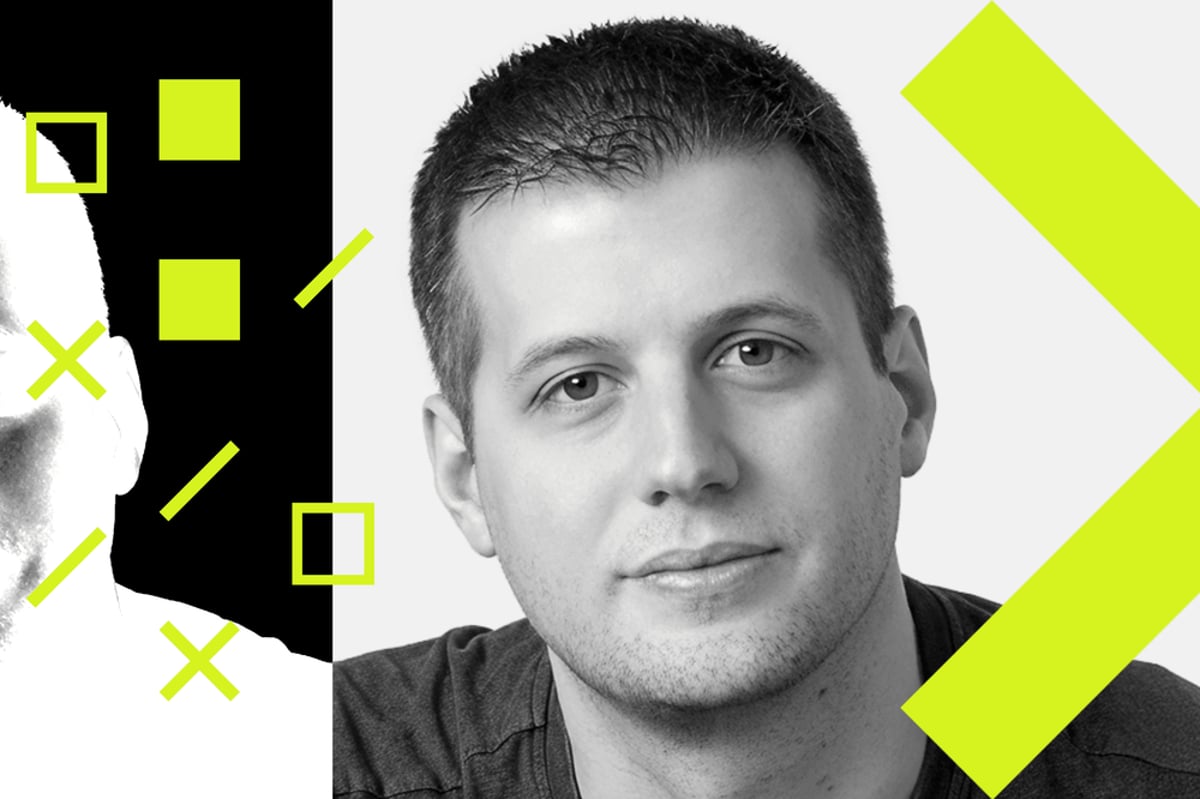
Proton CTO Bart Butler sat down with The Verge's Decoder podcast to discuss the privacy-focused company's technical architecture and mounting regulatory pressures. The 650-person Swiss company, known for its encrypted email service and expanding productivity suite, now faces existential questions about jurisdiction, government data requests, and AI integration. Butler revealed that Proton allocates nearly 10 percent of company resources to fighting abuse without breaking encryption, while preparing contingency plans to leave Europe if surveillance laws become "dystopian." The conversation offers rare insight into how a mission-driven tech company balances idealistic privacy promises with competitive growth demands.
Proton is betting its entire business model on a simple architectural principle: if the company can't see your data, it can't betray your trust. But as CTO Bart Butler explained in a sweeping Decoder interview, that technical constraint is colliding with government pressure, AI integration demands, and the need to compete with Big Tech at scale.
The 11-year-old company has grown to 650 employees while maintaining an unusual corporate structure. A controlling stake is held by the Proton Foundation, a Swiss nonprofit designed to prevent acquisition or mission drift. Butler, employee number six and a former CERN physicist recruited by founder Andy Yen, now oversees the technical implementation of what he calls "defense in depth" - layers of encryption, business model constraints, and legal safeguards that align company incentives with user privacy.
But the foundation is showing cracks. In March, 404 Media reported that Proton handed payment metadata to Swiss authorities, who passed it to the FBI, unmasking a Stop Cop City protester. Butler defended the move as legally unavoidable: "No company is going to go to jail for you." The Swiss government evaluates Mutual Legal Assistance Treaty requests, and Proton complies. The failure point, Butler acknowledged, is that the US government appears to have found an "attack vector" - label anything terrorism, and data-sharing floodgates open.
The incident crystallizes Proton's core tension. Butler told The Verge that privacy is fundamentally about user control, not absolute secrecy. End-to-end encryption is the gold standard, but features like external mailing lists require breaking encryption. The company prompts users to make informed choices, but Butler admitted payment processors and credit card data create unavoidable exposure points.
Now Proton faces existential regulatory threats. The EU's Chat Control law, which passed through Parliament in July 2026, would require service providers to scan message contents for CSAM and other illegal material. Switzerland is pushing for VPN decryption. Butler said Proton's response is unequivocal: "It's dead serious. We will leave."
The company is already building distributed infrastructure in Germany and Norway as part of contingency planning. Butler suggested a corporate inversion could shift legal jurisdiction away from Switzerland, though he deferred to lawyers on whether the Swiss government could block such a move. "The thing about digital services is they can be moved," he said. "There are a lot of countries in the world."
But where would Proton go? NATO still exists. Germany and Norway are in the EU. Butler acknowledged that if both Switzerland and the EU become "inhospitable," the company has identified potential landing spots, though he declined to name them. The threat of a truly "dystopian" scenario - where no jurisdiction offers refuge - looms larger as surveillance laws proliferate globally.
Proton's growth ambitions complicate the picture. Butler said the company's mission includes becoming a "default" alternative to Big Tech, which requires competitive scale. Mail and VPN remain the largest revenue drivers, but the company is expanding into docs, calendar, password management, and video conferencing. The consumer-to-enterprise pivot is inevitable, Butler admitted, citing the familiar calculus: "Why do you go B2B? It's where the money is."
That's where AI enters. Proton launched Lumo 2.0, an AI assistant built from stitched-together open-source models rather than proprietary training. Butler positioned it as a response to enterprises "leery of giving a bunch of data" to Anthropic or OpenAI. Lumo runs on Proton-controlled infrastructure, offering what Butler called "in-house" guarantees. The company uses third-party models like ChatGPT and Anthropic's Claude for client-side development work, since that code is public anyway, but keeps user-facing inference behind its own walls.
Butler dismissed fears that AI will upend privacy architectures. He said LLMs have shifted software engineering toward senior-level skills like code review, but the fundamentals of building secure systems remain unchanged. "If your code is well-designed, the LLM will actually work better," he noted. The real risk is the "voracious appetite" AI models have for data, which puts pressure on Proton's encryption-first approach.
The solution, Butler argued, is user control. Proton already handles external integrations by prompting users to disable end-to-end encryption when adding non-Proton recipients to mailing lists. The same model could extend to AI and CRM integrations for business customers. "Privacy is fundamentally about sharing data with third parties you choose, not by default with everybody," he said.
But critics might question whether that model can survive contact with enterprise sales cycles. Google, Microsoft, and Meta built surveillance systems that, in Butler's words, do "the most American thing ever" - sell you stuff you don't need. The systems sit on the mantelpiece "like Chekhov's gun," waiting for someone to use them for authoritarian purposes. Butler warned that age verification and Chat Control laws risk creating similar infrastructure that China or other regimes could commandeer.
Proton has its own Chekhov's gun problem. Butler disclosed that the company spends nearly 10 percent of total resources on abuse detection systems that don't require content scanning. He refused to detail methods, citing "security through obscurity," but said behavioral indicators let Proton identify and shut down ransomware accounts months before legal requests arrive. The same approach applies to CSAM, though Butler admitted he doesn't know the effectiveness rate.
That uncertainty is the rub. Activists focused on child safety argue that encrypted platforms enable abuse at massive scale. Apple faces the same critique over iMessage encryption. Butler's response echoed Apple's: there's no way to build a backdoor that only "good guys" can use. He proposed zero-knowledge age verification schemes using cryptographic proofs rather than storing driver's licenses in S3 buckets, but acknowledged the industry will likely choose the cheapest, worst implementation.
Regulators, Butler suggested, suffer from "willful ignorance" when they ask companies to "just be smart" and nerd harder. The math is the math. Encryption works or it doesn't. Mandating privacy protections in regulations, rather than prescribing technical solutions, might thread the needle - but Butler admitted he doesn't have a clear answer for how to make the industry match Proton's values.
Proton's structure offers some insulation. Unlike OpenAI, which killed its nonprofit foundation to chase an IPO, Proton has no VC investors burning cash and demanding exits. The company reinvests profits into growth. Butler said the Proton Foundation is legally barred from selling the company, and even if it weren't, "the value of Proton is in the trust we have. If Google bought us, it would have no value."
That claim assumes trust is non-transferable. It also assumes Proton can maintain trust while navigating the compromises Butler spent 90 minutes discussing. The company complies with Swiss legal requests. It's preparing to leave Switzerland. It's building AI systems that require user data trade-offs. It's eyeing enterprise growth that historically pulls companies toward surveillance-friendly integrations.
Butler framed these tensions as unavoidable. "We have to play the same game," he said of competing with Big Tech. The question is whether playing the game eventually erodes the architectural constraints that made Proton trustworthy in the first place. Or whether, as Butler hopes, those constraints create a competitive moat as enterprises wake up to the risks of handing everything to frontier AI companies.
The next few years will test the theory. Chat Control implementation, Swiss VPN laws, and AI data hunger are all accelerating. Proton's threat to leave Europe is credible, Butler insists, but the list of safe harbors is shrinking. Meanwhile, the Stop Cop City case showed that even Swiss neutrality has limits when the FBI comes calling with terrorism charges.
"Personnel is policy," Butler said, quoting a Washington truism. The Proton Foundation, the encryption stack, the business model - these are all structural defenses. But at the end of the day, someone has to decide whether to comply with the next government request. Whether to flip the switch and leave Europe. Whether to break encryption for a lucrative enterprise integration. Proton is betting that its interlocking systems will constrain those decisions in users' favor. The alternative is admitting that idealism, once again, couldn't survive the collision with growth, governments, and the messy reality of running a tech company in 2026.
Proton's gamble is that technical architecture can substitute for trust in people or institutions. Bart Butler spent 90 minutes detailing the encryption, foundation structure, and business model constraints designed to keep the company honest even as it chases enterprise growth and navigates government pressure. But every safeguard has a failure mode. The Swiss government can compel data sharing. The EU can mandate content scanning. AI integration requires trade-offs. The real test isn't whether Proton's systems work in theory - it's whether they survive the next decade of regulatory assault, competitive pressure, and the temptation to compromise just a little to keep growing. Butler insists the company will leave Europe before breaking encryption. We'll find out soon enough if that's a promise Proton can keep, or just another Silicon Valley ideal that couldn't survive contact with reality.