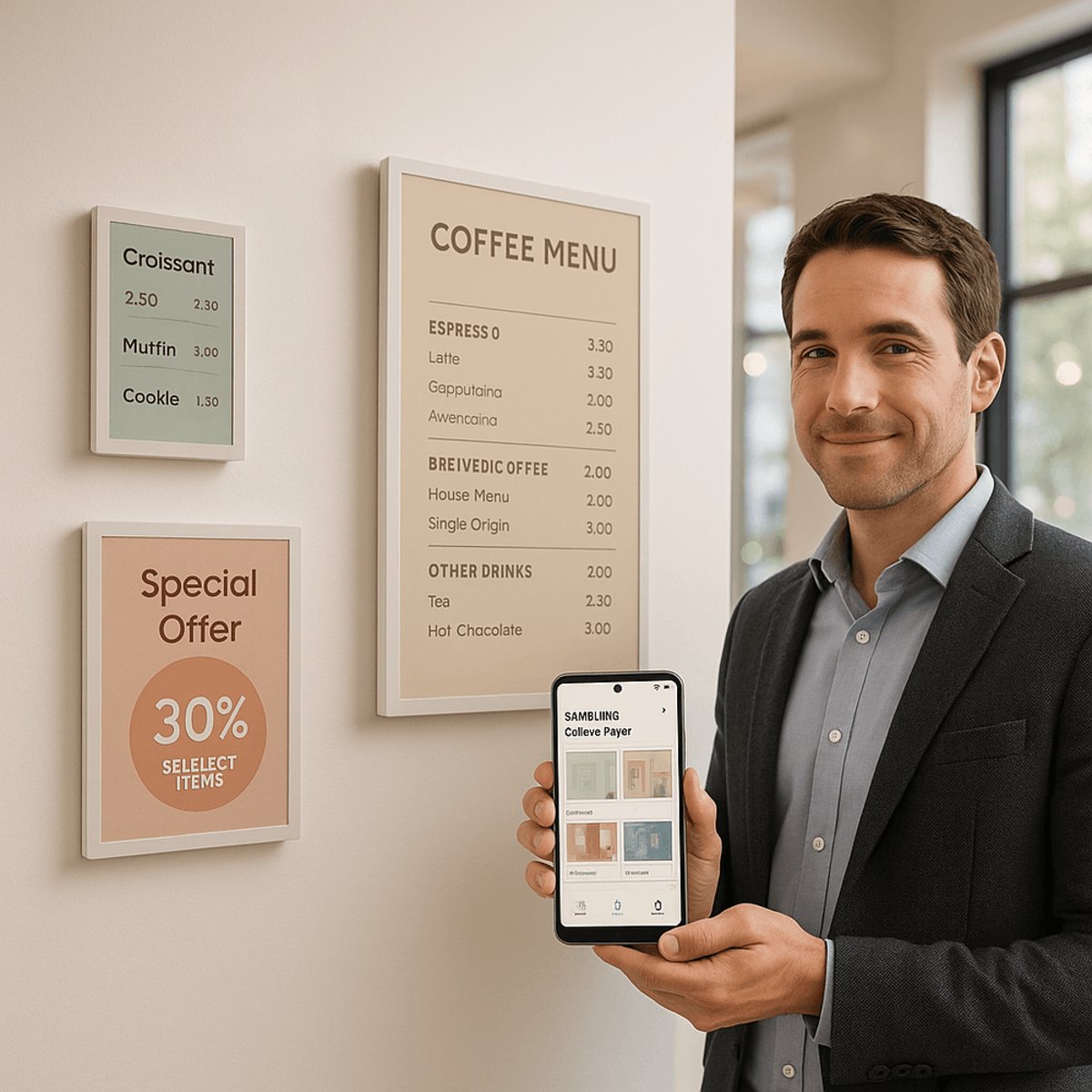
Samsung just unveiled Color E-Paper, a digital signage solution that consumes zero power when displaying static content. The ultra-thin displays - available in 32-inch, 20-inch, and 13-inch sizes - target retail managers and franchise operators struggling with the recurring costs of paper poster updates. Using digital ink technology, the screens maintain paper-like visuals while enabling instant remote updates via mobile app or Samsung's VXT platform, potentially reshaping how small businesses handle in-store communications.
Samsung is making a play for the retail signage market with Color E-Paper, a display technology that borrows from e-readers to cut the operational headaches of traditional paper posters. The announcement positions the company squarely in the growing digital signage space, where businesses are hunting for alternatives to printing costs and manual poster swaps.
The core pitch is power efficiency. According to Samsung's official announcement, Color E-Paper displays consume zero watts when showing static images - the kind of content that dominates retail environments like café menus, class schedules, or promotional notices. Even when updating content, overall energy use stays far below conventional LCD or LED signage, which Samsung claims helps lower operating costs over time.
It's a familiar technology leap. Digital ink displays have powered e-readers for years, but Samsung's betting that retail hasn't caught up yet. The company's rolling out three sizes - 32-inch, 20-inch, and 13-inch - with the 20-inch model arriving in the second half of 2026. The smaller formats align with standard paper poster dimensions, meaning businesses can swap to digital without redesigning their layouts or wall spaces.
Installation flexibility matters here. The displays support wall mounting, hanging brackets, or movable stands, with the 13-inch model including simple stands out of the box. Samsung's clearly targeting environments where heavy infrastructure isn't an option - think coffee shop counters, boutique retail walls, or franchise locations spread across multiple cities.
Management happens two ways. For single-location operators or on-the-spot updates, Samsung built a dedicated Color E-Paper mobile app that works with Android 10+ and iOS 15+. Store managers can push new content directly from their phones without touching a computer. But the real infrastructure play is Samsung VXT (Visual eXperience Transformation), the company's cloud-based display management platform.
Samsung VXT connects Color E-Paper displays alongside Samsung's existing LCD and LED signage running Tizen 4.0 or higher. That means franchises operating mixed display environments can centralize control - rolling out menu changes or promotional updates to dozens of locations instantly without manual visits. The platform includes a preview function for checking color accuracy before deployment, addressing a common pain point where digital colors don't match brand guidelines.
The competitive landscape here is crowded but fragmented. Traditional digital signage players focus on high-brightness video displays for advertising, while e-paper technology has mostly stayed in niche industrial applications or retail shelf labels. Samsung's threading the needle - bringing e-paper's power efficiency to a form factor that retail operators actually recognize and can install themselves.
Timing matters. Small businesses and franchises faced margin pressure throughout recent years, making recurring costs like printing and poster distribution obvious targets for cuts. If Color E-Paper delivers on the zero-power promise for static content, the total cost of ownership could undercut both paper systems and conventional digital signage over a multi-year period.
But questions remain. Samsung hasn't disclosed pricing, which will determine whether this technology makes sense for independent cafés or stays limited to larger franchise operations. Battery performance claims come with caveats about network environments and usage patterns. And the 20-inch delay until late 2026 suggests production or supply chain constraints.
The announcement arrives as Samsung continues expanding its commercial display portfolio beyond consumer TVs. The company's been pushing VXT as a management layer across its signage products, and Color E-Paper fits that strategy - another endpoint that feeds into centralized control infrastructure.
For retail tech watchers, this is less about revolutionary technology and more about market positioning. E-paper displays aren't new, but Samsung's packaging them for a specific pain point - the franchise operator printing 50 posters every week - with software tools that scale across locations. If the economics work, it could accelerate digital adoption in spaces that still rely heavily on paper.
Samsung Color E-Paper represents a practical middle ground between paper posters and power-hungry digital signage, but its success hinges on pricing details the company hasn't disclosed yet. If the total cost of ownership undercuts traditional printing over a two-to-three-year period, franchise operators and multi-location retailers have a clear business case. The VXT integration matters more than the hardware itself - it's Samsung's play to become infrastructure for retail communications, not just a display vendor. Watch for pricing announcements and early franchise deployments to signal whether this tech moves beyond pilot programs into mainstream retail adoption.