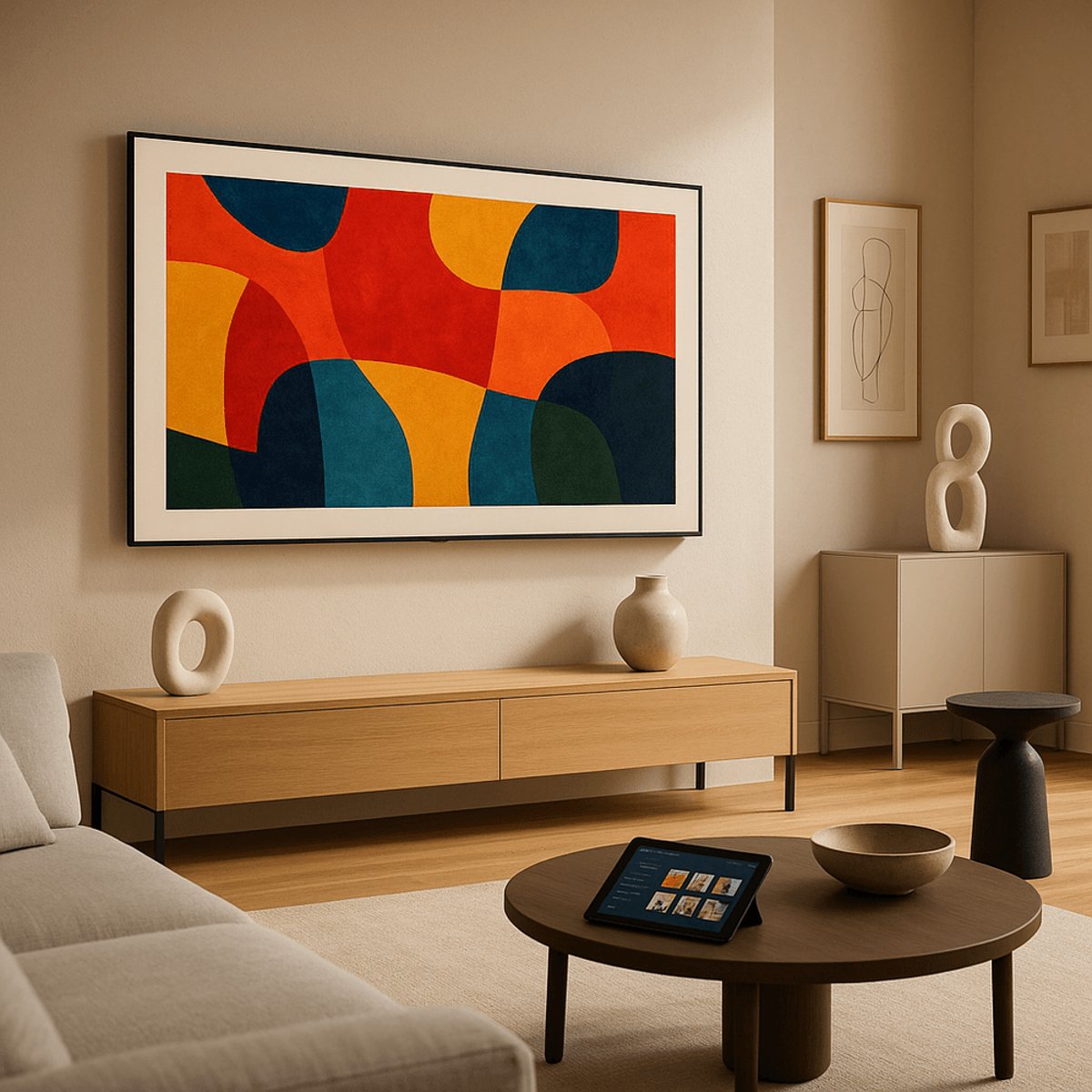
Samsung just brought the gallery home. The electronics giant showcased its 2026 Art TV lineup at Art Basel Hong Kong 2026, where 240 galleries from 41 countries gathered from March 25-29. At the center of its immersive Samsung Art Lounge sat a 130-inch Micro RGB display rendering museum-quality artwork alongside premium OLED and Frame Pro models - part of Samsung's ongoing push to turn living rooms into curated art spaces through its Art Store platform.
Samsung is betting your next TV purchase won't be about picture quality alone. At Art Basel Hong Kong 2026, the company transformed its booth into what it calls the Samsung Art Lounge - a carefully staged environment where a 130-inch Micro RGB display anchored an exhibition titled "Crossing Time, Crossing Space."
The installation ran March 25-29 alongside 240 galleries from 41 countries, but Samsung's play here isn't about competing with traditional art dealers. It's about redefining what a television does when you're not watching it. According to Junwha Hong, Vice President and Head of Marketing for Samsung's Visual Display Business, the 2026 Art TV lineup positions screens as "a more personal, everyday way to discover and live with art."
That vision played out across three premium displays arranged in a cube formation. Samsung OLED on the left, The Frame Pro on the right, and that massive 130-inch Micro RGB in the center - each rendering works from the late Samsung Chairman Lee Kun-Hee's art collection through a partnership with the National Museum of Korea. The technical specs mattered less than the statement: these aren't just TVs, they're digital canvases.
Samsung paired the museum pieces with contemporary works from Yoon-Hee, a France-based artist known for abstract paintings exploring Asian-European fusion, and JongSuk Yoon, whose dreamlike landscapes from Germany bridge East Asian traditions with Western abstraction. The mix of historical and living artists reinforced Samsung's broader Samsung Art Store strategy - a subscription platform now housing 5,000+ artworks from 800+ artists across 80+ partnerships.
But the real product launch came deeper in the exhibition. Samsung unveiled its 2026 Art Basel Hong Kong collection - 25 curated works from 20 emerging and established artists represented by eight galleries including Bank, CLC Gallery Venture, Lin & Lin, Pearl Lam, Rossi & Rossi, Tomio Koyama, Vacancy and Don Gallery. These pieces are now streaming to Samsung Art TV owners globally, turning a Hong Kong art fair into distributed digital inventory.
The business model mirrors streaming media, but for static art. Samsung Art Store works across The Frame Pro, The Frame, Micro RGB, Neo QLED, QLED and OLED televisions - essentially every premium model in Samsung's 2026 lineup. By tying hardware sales to cultural cachet, Samsung's creating differentiation in a commoditized TV market where specs alone don't command premium prices.
Interactive activations extended beyond the convention floor. Samsung set up Art TV displays throughout the fair and ran a billboard selfie activation at Hong Kong Entertainment Building Shopping Arcade - consumer touchpoints designed to make art feel accessible rather than exclusive. The message: you don't need gallery connections or millions in capital to live with museum-quality work.
Samsung doubled down on that positioning with an invitation-only evening at Pier 1929, where attendees explored "artistic preferences" through guided activities, photo ops and dinner conversations - all framed around Samsung Art TV as the connective tissue. Hong opened the event by reflecting on how the partnership with Art Basel "expands access to world-class art in everyday spaces."
That phrase - everyday spaces - signals where Samsung sees growth. The TV market is saturated in developed countries, with replacement cycles stretching longer as picture quality plateaus. By repositioning premium displays as art infrastructure rather than entertainment hardware, Samsung's chasing lifestyle buyers who might spend $3,000+ on a Frame Pro not for 4K resolution but for digital curation capabilities.
The Art Basel partnership gives Samsung something competitors can't easily replicate: institutional credibility. As the official Art TV provider, Samsung gains access to galleries, artists and collectors while Art Basel extends its reach beyond the physical fair. It's a symbiotic relationship that turns a trade show booth into content pipeline.
What Samsung showed in Hong Kong wasn't revolutionary display technology - Micro RGB, OLED and QLED have been in market for years. The innovation is distribution strategy. By curating art collections tied to major cultural events and delivering them through a subscription platform, Samsung's building recurring revenue on top of hardware sales while differentiating products in a race-to-the-bottom TV market.
The execution matters more than the concept. Whether consumers will pay subscription fees to display digital art on $2,000+ televisions depends on Samsung Art Store becoming sticky enough to justify the hardware premium. Early signs suggest Samsung's committed: 5,000 artworks and 80 partnerships don't happen without serious investment in rights management and curator relationships.
For now, Samsung's bet is that the living room TV can become what Spotify did for music discovery - a personalized, algorithm-driven experience that happens to require premium hardware. Art Basel Hong Kong 2026 was the showroom. The real test is whether anyone subscribes.
Samsung's Art Basel activation reveals where premium TV differentiation is heading - not through panel technology alone, but through content ecosystems that justify hardware premiums. By positioning the 2026 Art TV lineup as cultural infrastructure rather than entertainment gear, Samsung's creating recurring revenue streams while targeting lifestyle buyers in a saturated market. The 130-inch Micro RGB and curated Art Store collections are table stakes. What matters now is whether subscription art proves sticky enough to move units when the next upgrade cycle hits. For Samsung, Art Basel isn't a sponsorship - it's distribution strategy dressed as patronage.