Samsung just dropped a major update that transforms its Galaxy Watch from a fitness tracker into an AI-powered health advisor. Starting June 8, the company's rolling out new Samsung Health features that analyze overnight biometrics, track cardiovascular strain, and deliver personalized wellness guidance - all without bombarding users with unnecessary alerts. It's Samsung's biggest push yet to make wearable health monitoring actually useful in daily life.
Samsung is rewriting the rules for wearable health tracking. The company's latest Samsung Health update, announced today and rolling out June 8, transforms the upcoming Galaxy Watch into what Samsung calls an "AI-powered everyday health companion" - a device that doesn't just measure your vitals but actually tells you what to do about them.
The shift comes as wearable makers face a common problem: their devices collect mountains of biometric data that most people don't know how to interpret. Samsung's answer is to let AI do the heavy lifting. "Samsung Health is evolving to connect health data measured by Galaxy Watch with AI-based insights, enabling users to understand their physical and mental condition more easily and intuitively," Hon Pak, Senior Vice President and Head of Digital Health at Samsung, said in the announcement.
The centerpiece is a new feature called Vitals. Instead of pinging users every time a metric shifts, it establishes personal baselines by analyzing five overnight bio-signals - heart rate, heart rate variability, respiratory rate, skin temperature and blood oxygen. When you wake up, it only alerts you if something meaningful has changed from your normal resting state. Fighting off a cold? Need an extra rest day? Vitals will tell you, minus the alert fatigue that plagues most health apps.
Samsung's also consolidating its cardiovascular monitoring into a single Heart Health Score. The company introduced Vascular Load last year to track vascular stress, but that feature left users juggling multiple metrics. Now it combines sleep quality, stress levels, activity patterns and body composition into one daily number that clearly shows which habits are helping or hurting long-term heart health. It's the kind of simplification that could actually change behavior instead of just generating data.
For serious athletes, Daily Cardio Load measures accumulated cardiovascular strain during aerobic exercise. The feature calculates daily load against maximum training capacity, then recommends optimal workout intensity and recovery periods. The goal is to prevent both burnout and injury - a problem that's plagued fitness wearables since users often don't know when to push harder or back off.
Fitness Index rounds out the new features by benchmarking your metrics against peers. It analyzes heart rate, VO2 max (the gold standard for aerobic fitness) and daily steps to identify physical strengths and weaknesses, then delivers tailored content and personalized goals for continuous improvement.
The update also brings meaningful upgrades to existing features. Antioxidant Index now includes trend charts and daily history logs that visually connect dietary choices to physical responses over time. The AGEs index - which measures how lifestyle choices accumulate in your body - now captures automatic overnight measurements for long-term tracking. And a new Hearing Health feature monitors ambient noise through Galaxy Watch to protect your ears during loud commutes or high-volume workouts.
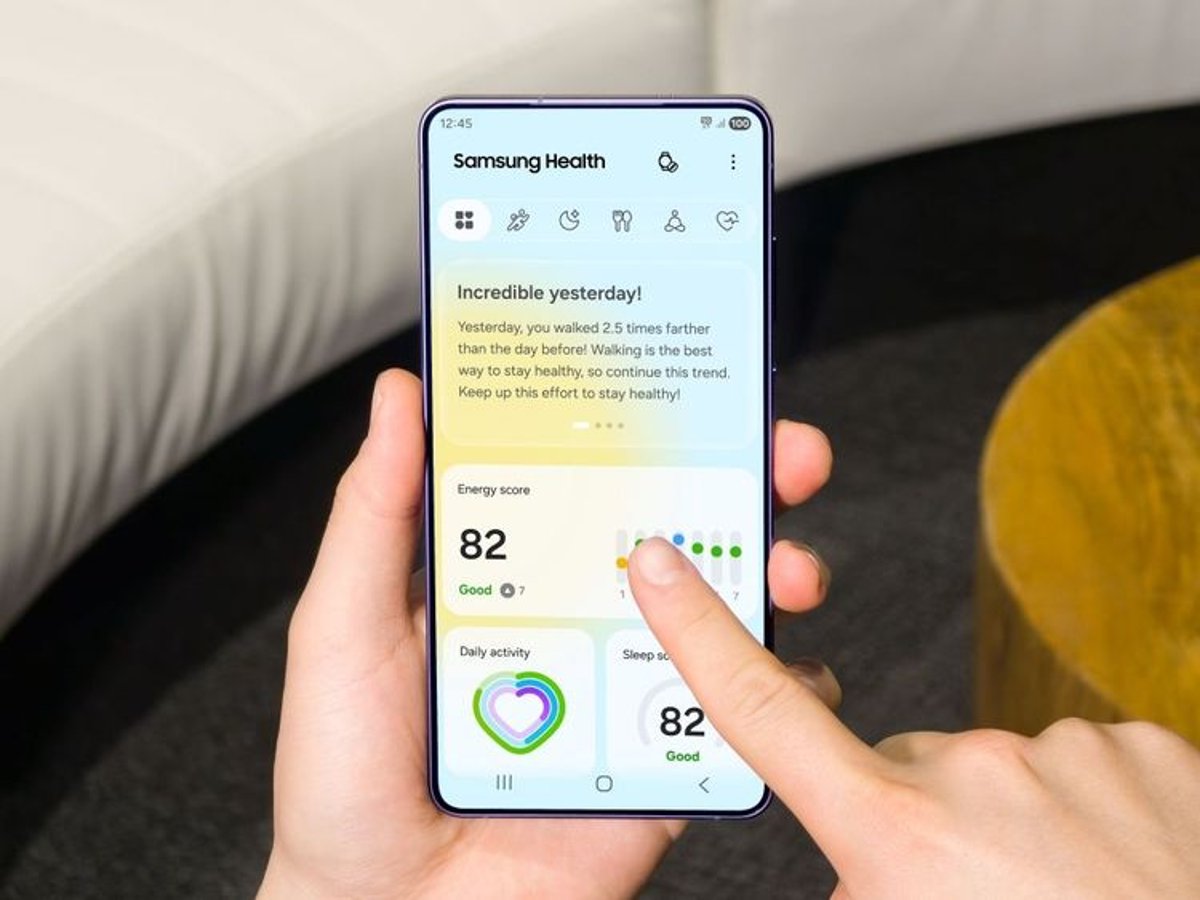
Samsung's redesigned the entire Samsung Health interface around five core pillars: Sleep, Activity, Nutrition, Mindfulness and Vitals. The Home screen now centralizes daily wellness tips alongside the AI-powered Energy Score, removing the guesswork from understanding how different health aspects interconnect.
This push into AI-driven health coaching puts Samsung in direct competition with Apple, which has been steadily adding health features to Apple Watch, and newer players like Oura that built their entire business around actionable health insights. But Samsung's betting its Galaxy ecosystem - seamlessly syncing health data across Galaxy phones and connected devices - gives it an edge in delivering truly personalized guidance.
The update requires Android 10 or above and Samsung Health app v7.0 or higher, with Samsung account login mandatory. The company notes certain features need time to accumulate user data before delivering personalized results. And in the fine print: these features are "for wellness only, not for the diagnosis or treatment of any medical condition."
Still, the move signals where wearable health tech is heading. Passive tracking is table stakes now. The real battle is over who can turn that data into guidance people actually follow. Samsung's making its play with AI that learns your personal baselines and only speaks up when it matters.
Samsung's betting the future of wearable health isn't about collecting more data - it's about making that data useful. By shifting from passive tracking to AI-driven coaching that learns personal baselines and delivers actionable guidance only when it matters, the company's positioning Galaxy Watch as a proactive health partner rather than just another fitness gadget. If the execution matches the vision when these features launch June 8, it could reset expectations for what smartwatches should actually do for our health. The real test will be whether users trust the AI enough to change their behavior based on what it tells them.