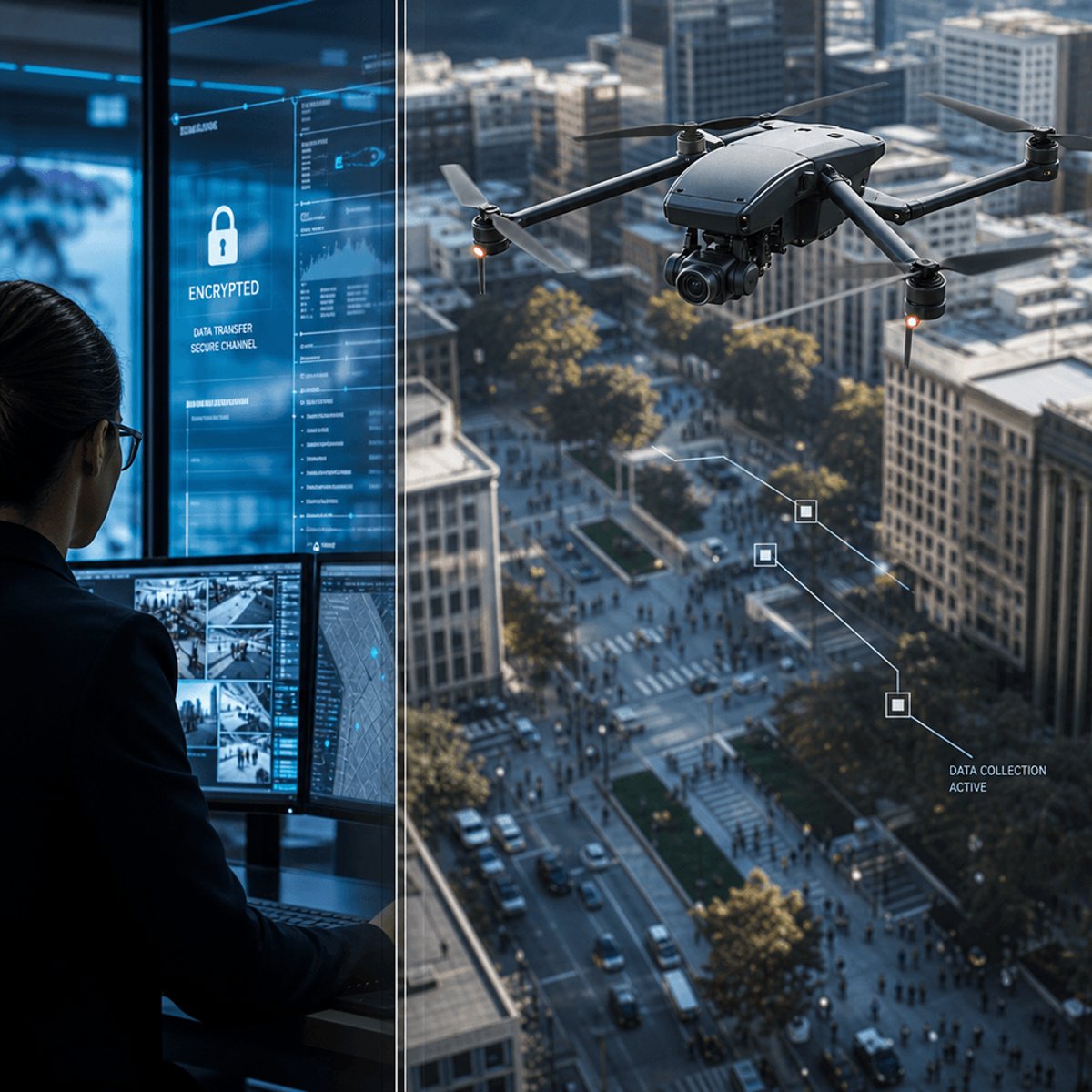
Hours of police drone footage from San Francisco's streets just spilled onto the internet, and it's revealing just how extensively law enforcement monitors the city from above. The leaked videos, captured by drones from California-based Skydio, expose the San Francisco Police Department's aerial surveillance operations and raise urgent questions about data security in an era where cameras are everywhere. It's a stark reminder that the tools meant to keep cities safe can become privacy nightmares when they're not properly secured.
The San Francisco Police Department just had its eye-in-the-sky operations exposed in the most public way possible. Hours of drone surveillance footage captured over the city's streets, parks, and neighborhoods leaked online, giving civilians an unprecedented look at how law enforcement watches from above.
The videos come from drones manufactured by Skydio, the California-based company that's become the go-to provider for US law enforcement after agencies moved away from Chinese-made DJI drones over security concerns. The irony isn't lost on privacy advocates - the supposedly more secure domestic alternative just exposed how broadly police are watching San Francisco residents.
What's in the footage paints a revealing picture. The leaked videos show aerial perspectives of street scenes, crowd monitoring, and surveillance operations that most residents had no idea were happening above them. It's the kind of comprehensive oversight that would've required helicopters and massive budgets just a decade ago, now conducted routinely with $10,000 drones.
Skydio has been riding high on the wave of government contracts, positioning itself as the American answer to Chinese drone dominance. The company's autonomous flight technology and "Made in USA" pitch helped it secure deals with over 400 public safety agencies nationwide. But this leak demonstrates that domestic manufacturing doesn't automatically solve the surveillance state's data security problems.
The San Francisco Police Department hasn't detailed how the footage escaped their systems, but the breach reveals a fundamental tension in modern policing. Departments are rapidly adopting powerful surveillance tools without the cybersecurity infrastructure to protect the sensitive data they collect. Every hour of aerial footage represents hundreds of faces, license plates, and private moments that citizens didn't consent to sharing.
Privacy advocates have been warning about this exact scenario for years. The Electronic Frontier Foundation and ACLU have pushed for strict limitations on police drone use, arguing that the technology enables mass surveillance without meaningful oversight. When San Francisco authorized expanded police drone use in 2023, critics predicted the scope would expand faster than privacy protections. This leak proves they were right.
The competitive landscape around police drones has shifted dramatically since federal agencies began restricting Chinese-made equipment. Skydio emerged as the primary beneficiary, but competitors like Brinc and Teal Drones are also vying for public safety contracts. The industry's projected to hit $1.5 billion in law enforcement sales by 2028, according to market analysts.
But rapid adoption creates vulnerabilities. Police departments are deploying sophisticated aerial surveillance platforms without equivalent investments in data governance, encryption, or access controls. The footage just sits on servers, protected by whatever IT security a municipal budget can afford. Sometimes that's robust. Often, as this leak suggests, it's not.
The timing couldn't be worse for Skydio, which recently closed a $170 million funding round and is eyeing an eventual IPO. The company's valuation rests partly on trust - the belief that its systems are more secure than foreign alternatives. A major police department losing hours of surveillance footage doesn't exactly reinforce that narrative.
What happens next matters tremendously. If San Francisco responds by simply tightening access controls without addressing the broader question of how much aerial surveillance is appropriate, they'll miss the point entirely. The leak didn't create the privacy problem - it just made visible what's been happening quietly for years. Cities across America are deploying drone fleets with minimal public debate about when, where, and why police should watch from above.
The leaked footage also raises chain-of-custody questions that could affect criminal cases. Defense attorneys are already asking whether evidence collected via drone might be compromised if the department can't secure its surveillance data. That's a legal headache SFPD prosecutors definitely didn't need.
This leak is a watershed moment for urban surveillance. It exposes not just a security failure by one police department, but the broader reality that American cities are being watched from above with minimal oversight or public awareness. As Skydio and its competitors sell thousands more drones to police departments nationwide, the question isn't whether this technology will proliferate - it's whether we'll build meaningful privacy protections before everyone's daily movements become permanent police records. San Francisco just showed us what happens when surveillance scales faster than safeguards. Don't expect this to be the last leak.