In a historic upset that signals how AI is redrawing the semiconductor landscape, SK Hynix just beat Samsung Electronics in annual operating profit for the first time ever. The memory chipmaker posted a record 47.2 trillion won ($35.4 billion) in operating profit for 2025, edging past Samsung's 43.6 trillion won—a stunning reversal driven almost entirely by SK Hynix's early bet on high-bandwidth memory chips that power AI data centers. The milestone marks a fundamental shift in South Korea's tech hierarchy and underscores how specialized AI components are creating new winners in the chip wars.
SK Hynix just pulled off what seemed impossible a decade ago—it beat Samsung Electronics in annual operating profit. The two South Korean tech giants released their 2025 earnings this week, and the numbers tell a story of how quickly AI can reshape entire industries. SK Hynix posted record operating profit of 47.2 trillion won for the full year, narrowly surpassing Samsung's 43.6 trillion won, according to their respective earnings reports.
The comparison is striking when you consider Samsung operates across consumer electronics, smartphones, and contract chip manufacturing, while SK Hynix focuses almost entirely on memory chips. Samsung's memory segment alone generated about 24.9 trillion won in operating profit during 2025—meaning SK Hynix's specialized focus on AI-optimized memory nearly doubled that figure. It's a remarkable turnaround for a company that SK Telecom acquired for roughly $3 billion back in 2012, when it was struggling to compete with Samsung's dominance.
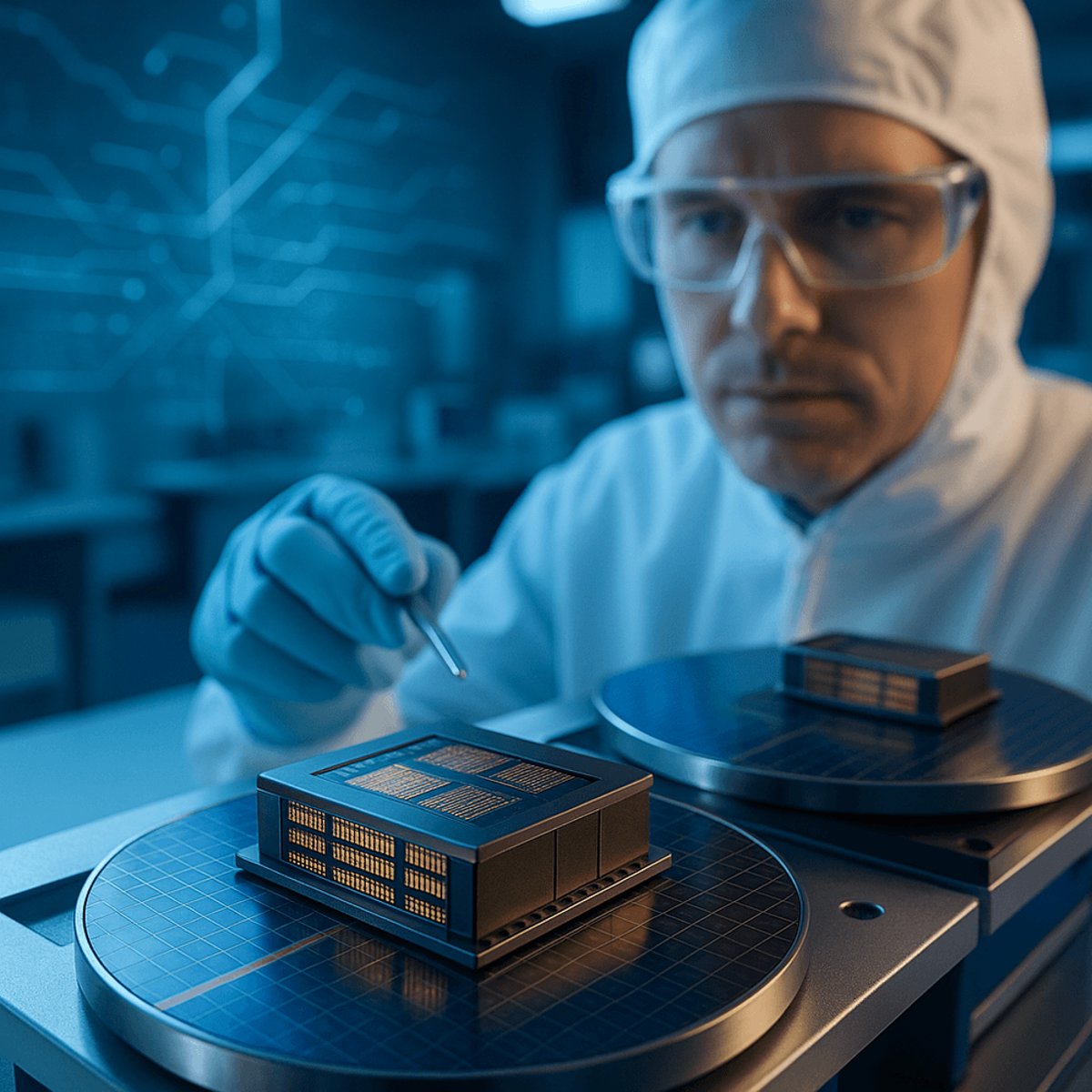
What changed? High-bandwidth memory, or HBM. These specialized chips stack multiple memory layers vertically to deliver the ultra-fast data transfer speeds that AI processors need. Nvidia uses them extensively in its data center GPUs, and SK Hynix locked in early as Nvidia's primary HBM supplier. That strategic positioning paid off massively as generative AI exploded and hyperscalers rushed to build out inference infrastructure.
"SK Hynix is clearly an outstanding 'AI Winner' in Asia," MS Hwang, research director at Counterpoint Research, told CNBC. Hwang pointed to SK Hynix's lead in both quality and supply of HBMs as crucial during the current phase of AI infrastructure buildout. While Samsung actually regained the top spot in overall memory revenue rankings in Q4 2025, SK Hynix's margin advantage in premium HBM products drove profitability to record levels.
But this lead isn't guaranteed to last. Samsung stumbled on HBM quality issues in 2024, delaying its qualification with Nvidia and handing SK Hynix nearly unchallenged access to the most lucrative AI memory contracts. Now Samsung is fighting back hard. The company expanded its HBM sales throughout 2025 and confirmed it's on track to deliver HBM4 products—the sixth-generation technology—this year. Micron is also making moves, though analysts see it trailing the two Korean giants.
"We expect Samsung to show a significant turnaround with HBM4 for Nvidia's new products, moving past last year's quality issues," Ray Wang, an analyst at SemiAnalysis focused on memory and AI supply chains, told CNBC. Wang's team expects Samsung to become far more competitive in HBM4 than it was in previous generations, potentially eating into SK Hynix's market share as Nvidia rolls out its next-gen Rubin platform.
Still, the momentum favors SK Hynix. "The HBM4 race is really between SK Hynix and Samsung as we think the two companies are more competitive than Micron," Wang added. His firm expects SK Hynix to maintain its leadership position even as Samsung closes the gap. That's partly because SK Hynix has been investing aggressively in capacity—the company is moving forward with plans for an advanced chip packaging plant in the U.S., with groundwork expected to begin around Q1 of next year.
The earnings showdown also reveals how narrowly focused strategies can beat diversified conglomerates when a massive platform shift happens. Samsung's sprawl across consumer gadgets and foundry services meant it was hedging bets across multiple semiconductor segments. SK Hynix went all-in on memory, and specifically on the type of memory that AI would need. That singular focus is now paying dividends at a scale that's rewriting the competitive hierarchy in South Korea's tech sector.
For Nvidia, this dynamic is critical. The company needs multiple qualified HBM suppliers to avoid bottlenecks as it scales production of H100, H200, and next-gen Blackwell chips. Having Samsung ramp up HBM4 capacity gives Nvidia negotiating leverage and supply chain resilience, even if SK Hynix remains the preferred partner. It's a classic AI infrastructure story—the picks-and-shovels suppliers are printing money, and the competition to supply those shovels is getting fierce.
What comes next will depend heavily on execution. Samsung has the manufacturing scale and R&D resources to catch up if it can solve the yield and quality issues that plagued its HBM3E rollout. SK Hynix has the incumbent advantage and customer trust, but it can't afford to slow down. Micron is the wildcard—if it can leapfrog on HBM4 or find differentiated AI memory architectures, it could disrupt the duopoly forming between the two Korean giants.
This isn't just about one company beating another in a quarterly snapshot—it's a signal that the AI infrastructure boom is creating new kingmakers in semiconductors. SK Hynix's first-ever annual profit victory over Samsung shows how quickly specialized bets on emerging technology can overturn decades of competitive positioning. As AI workloads continue scaling and next-gen memory becomes the bottleneck, expect this rivalry to intensify. Samsung's HBM4 push could narrow the gap, but SK Hynix has momentum, customer trust, and a decade-long head start on optimizing for exactly this moment. For anyone watching the AI supply chain, the memory chip wars just became the most important storyline outside of GPU production itself.