A startup that's figured out how to extinguish fires using inaudible sound waves just closed a $3.5 million seed round. Sonic Fire Tech has built an acoustic fire suppression system that operates below human hearing range and could revolutionize wildfire defense for homes across fire-prone regions like California.
The idea of fighting fires with sound isn't exactly new - remember those college kids who went viral a decade ago using a booming subwoofer to snuff out flames? Even DARPA was experimenting with the concept back in 2012. But what sets Sonic Fire Tech apart is they've actually made it work at scale, and more importantly, made it silent.
The breakthrough came when CEO and CTO Geoff Bruder, a former NASA engineer specializing in heat and acoustics, teamed up with board chairman Michael Thomas through a LinkedIn connection. "I got a subwoofer and some parts from Home Depot and AutoZone and said, 'Hey, let's see if we can do any better than other people had,'" Bruder told TechCrunch. "We knocked a fire out from seven feet in my driveway."
The real innovation happened when they ditched audible frequencies entirely. "You've basically got to throw a speaker design in the trash and start from scratch," Bruder explained. The problem with previous attempts was simple - any system powerful enough to suppress fires using audible sound would damage human hearing.
Their solution uses infrasound, acoustic energy below 20 Hz that humans can't hear. Instead of speakers, the system employs a massive reciprocating piston - think of a car engine piston, but two feet long. An electric motor drives a crankshaft that pulses this giant piston to generate the fire-suppressing sound waves.
The timing couldn't be better. Wildfires cost the U.S. up to $424 billion annually, and the problem has gotten so bad in California that insurance companies are refusing to renew policies in fire-prone areas. Traditional fire suppression systems rely on water, which can be scarce during the droughts that often coincide with wildfire season.
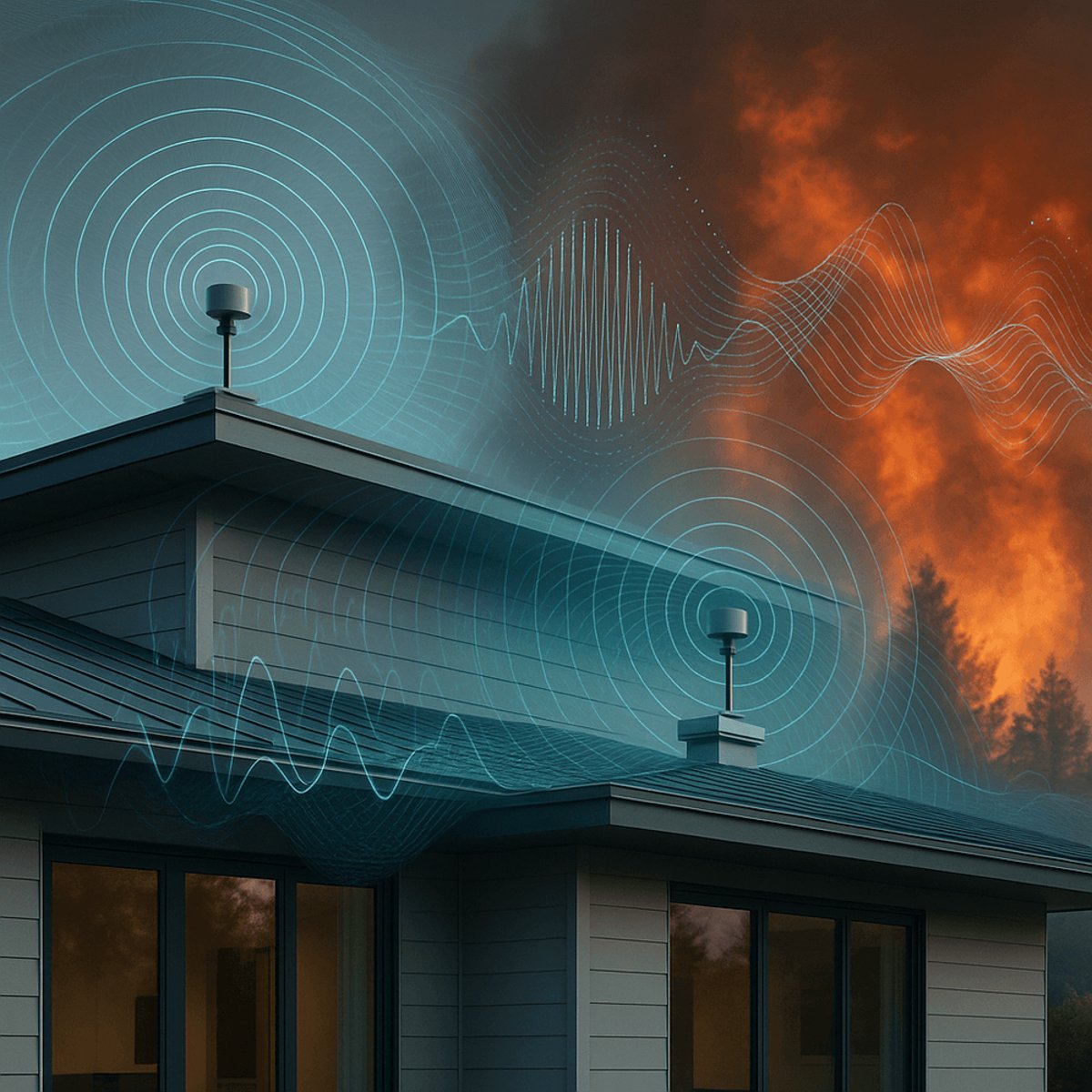
Sonic Fire Tech's current prototype can extinguish flames from 25 feet away, but Bruder says a larger system could work from 330 feet. For home protection, the company routes infrasound through rigid ducts installed on roof ridges and under eaves. Ridge-mounted units fire downward to catch debris fires in gutters, while eaves-mounted units aim at ground level to suppress flames near walls. The whole system activates automatically when sensors detect fire.
The economics look promising too. Installation costs about 2% of a home's value, and the system only draws 500 watts of electricity - less than a hair dryer. Sonic Fire Tech is designing backup battery systems using lead-acid batteries for power outages, which often coincide with wildfire events when utilities shut off power to prevent their equipment from sparking new blazes.
The startup has already caught the attention of major utilities. They're working with PG&E and Southern California Edison on home demonstrations and have signed a letter of intent with a chemical storage facility. The company is also talking with insurance providers about qualifying the technology, which could lead to premium discounts for homeowners.
Bruder sees the home application as just the beginning. "The natural progression is, if we get certified as a sprinkler replacement, then you can just run a pipe into your house and protect your kitchen and everywhere you would need to protect," he said. That would put Sonic Fire Tech in direct competition with traditional sprinkler systems in commercial and residential buildings.
The $3.5 million seed round, led by Khosla Ventures with participation from Third Sphere, gives the company runway to scale beyond prototype demonstrations. Khosla Ventures has a track record of backing climate technology companies, particularly those with novel approaches to major environmental challenges.
While acoustic fire suppression has been a scientific curiosity for over a decade, Sonic Fire Tech appears to have solved the practical challenges that kept it in the lab. With wildfires becoming more frequent and destructive, and traditional water-based systems facing supply constraints, infrasound technology could offer a game-changing alternative. The real test will be whether the system can perform reliably during actual wildfire conditions and gain regulatory approval as a sprinkler replacement.