A former Blue Origin engineer is betting he can democratize the final frontier - literally. Space Beyond just locked in a SpaceX Falcon 9 rideshare slot for October 2027 to send up to 1,000 people's ashes into orbit for as little as $249 per person, a fraction of the thousands competitors charge. Founder Ryan Mitchell, who spent nearly a decade at Jeff Bezos' space company after working on NASA's shuttle program, is using CubeSat tech and rideshare economics to turn what's been a luxury service into something almost anyone can afford.
Space Beyond founder Ryan Mitchell was staring at the stars during a camping trip when the question hit him: what's next? After nearly a decade at Blue Origin and earlier work on NASA's space shuttle program, he'd watched access to space get cheaper by the year, thanks mostly to SpaceX. Those stars didn't seem quite so far away anymore.
The answer came at a family member's ash-spreading ceremony. "When it was over, we were kind of like, 'now what?' The moment was gone," Mitchell told TechCrunch. "How could I do this better?"
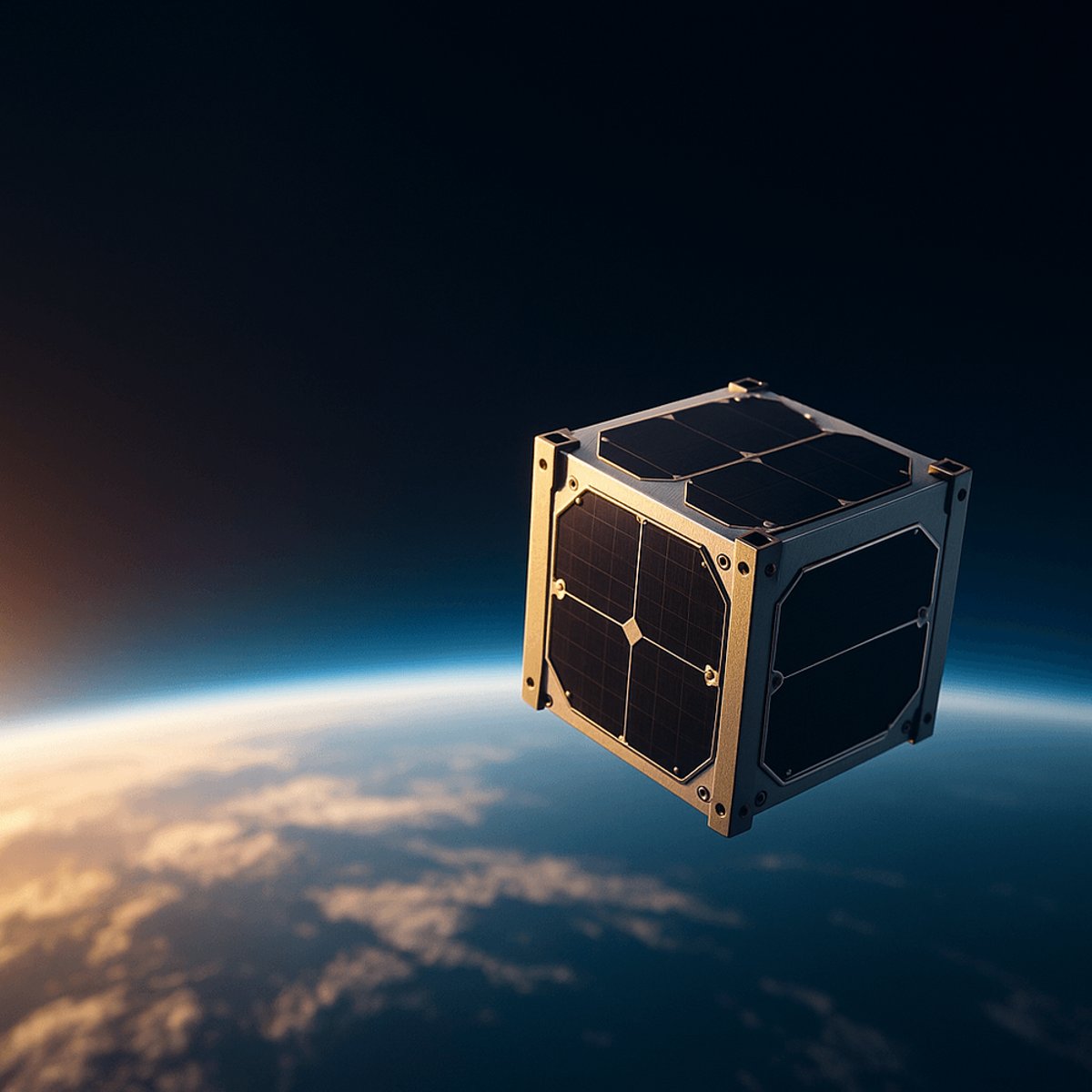
On Thursday, Space Beyond announced it signed a launch services agreement with Arrow Science & Technology to integrate a CubeSat memorial payload onto a SpaceX Falcon 9 rideshare mission in October 2027. The mission will carry up to 1,000 customers' ashes into orbit - one gram each - with pricing starting at just $249.
That's a brutal undercut of the existing space memorial industry. Companies like Celestis have offered similar services since the 1990s, but typically charge thousands of dollars per flight. Mitchell's betting that rideshare economics and a bootstrapped business model can crack open a market that's been stuck in luxury territory for decades.
"I've been told I'm not charging enough for this service," Mitchell said, especially given how the funeral industry operates. "But I'm not looking to take over the world, and I'm not looking to make a billion dollars doing this."
The math works because of how dramatically launch costs have fallen. CubeSats - miniature cube-shaped satellites - can now hitch rides on Falcon 9 missions for a fraction of what a dedicated launch would cost. Space Beyond's payload will share the rocket with other commercial and scientific missions, splitting the bill in a way that wasn't possible even a decade ago.
But there are trade-offs. Customers only get to send about one gram of ashes - enough to make the mission financially viable given weight constraints, but leaving plenty left over for traditional memorials. The CubeSat will also only stay in orbit for about five years before atmospheric drag pulls it down to a fiery re-entry.
Mitchell sees that as a feature, not a bug. The satellite will fly in sun-synchronous orbit at around 550 kilometers altitude, passing over the entire globe throughout its mission. Families can use spacecraft tracking services to know when their loved one is overhead. And that eventual burnup? "A nice symbolic ending," Mitchell said, even if there's no guarantee anyone will spot the fireball.
Space Beyond won't actually spread the ashes in space, either. That would be "almost a nightmare scenario," Mitchell explained - loose particles could create a debris cloud that threatens other spacecraft. The ashes stay sealed inside the CubeSat until the whole thing disintegrates on re-entry.
The startup is completely bootstrapped, which gives Mitchell freedom to price aggressively without worrying about investor returns. It's a deliberate choice in an industry where SpaceX and Blue Origin have raised billions to build reusable rockets, and where even small satellite startups typically chase venture funding.
When Mitchell left Blue Origin last year, he filled "several pages" of a notebook with potential next moves. The list ranged from launch director roles at other space companies to opening a Kava bar. But the memorial concept kept pulling him back every time he ran the engineering calculations.
"I tried to talk myself out of [this idea] for a long time. I thought it would be too expensive or too difficult," he said. But the numbers kept working. "My wife said: 'I could have told you that weeks ago. You can't stop talking about this.'"
The timing makes sense. SpaceX has launched over 200 Falcon 9 missions in the past two years alone, with rideshare missions like Transporter becoming regular fixtures on the manifest. That cadence has opened up orbital access to universities, research labs, and now consumer services that couldn't justify the cost a decade ago.
Space Beyond joins a growing wave of startups trying to commercialize the emotional and symbolic value of space access - everything from zero-gravity wedding proposals to orbital billboards. But memorial services have an established track record, with Celestis having flown remains for Star Trek creator Gene Roddenberry and dozens of others over the past 30 years.
Mitchell's bet is that there's a much bigger market at $249 than at $3,000. Whether enough people share his vision of an affordable final orbit remains to be seen. But with a confirmed launch slot 18 months out, Space Beyond has until October 2027 to find out if a thousand families want to send a piece of their loved ones to the stars.
Space Beyond represents a fascinating collision of falling launch costs, CubeSat miniaturization, and a founder willing to sacrifice margin for mission. Whether Mitchell's $249 price point can sustain a viable business - even a bootstrapped one - depends on hitting that 1,000-customer target for the 2027 flight. But in a space industry increasingly defined by billionaires building rockets and satellite constellations, there's something refreshingly human about using that same infrastructure to give regular people a shot at the stars. If the mission succeeds, it could prove there's a real market for affordable space memorials beyond the luxury tier that's dominated the industry for three decades.