The race to build data centers in orbit just hit a fundamental physics problem. Voyager Technologies CEO Dylan Taylor threw cold water on Elon Musk's ambitious timeline for space-based computing this week, telling CNBC that a two-year deployment would be "aggressive" - and that the industry still hasn't cracked the cooling challenge that could make or break the entire concept. His timing is pointed: Musk just merged SpaceX and xAI in a $1.25 trillion deal partly premised on launching orbital data centers by 2028.
Voyager Technologies just became the voice of caution in the space data center gold rush. CEO Dylan Taylor's blunt assessment - that a two-year timeline for orbital computing facilities would be "aggressive" - lands as a direct counterpoint to the hype surrounding SpaceX and xAI's freshly minted mega-merger.
The problem isn't launch capacity. SpaceX's heavy-lift rockets can haul the hardware to orbit without breaking a sweat. What's missing is far more fundamental: a viable way to keep processors from overheating in the vacuum of space.
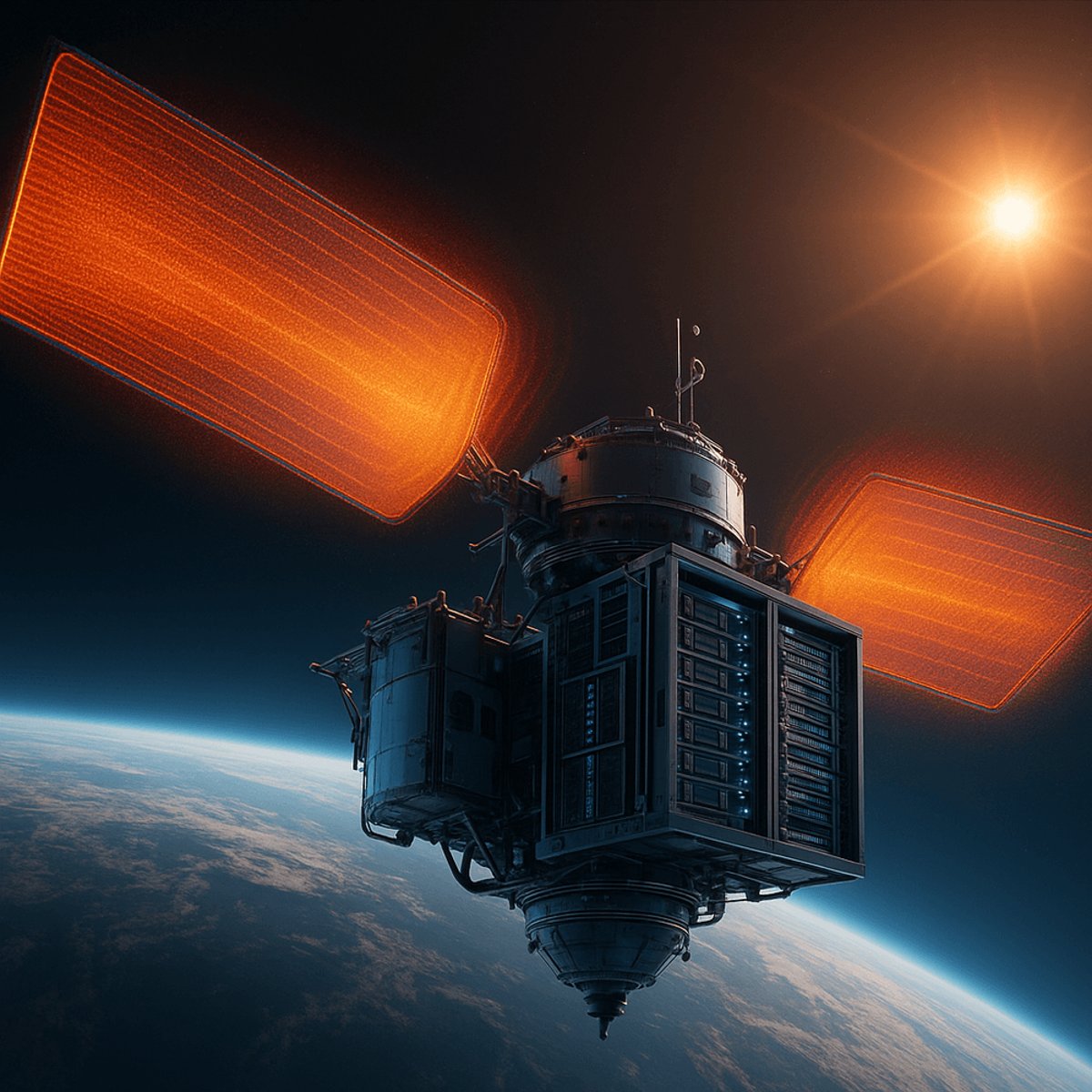
"It's counter intuitive, but it's hard to actually cool things in space because there's no medium to transmit hot to cold," Taylor told CNBC's Morgan Brennan in an interview that aired this morning. "So essentially, all heat dissipation has to happen via radiation, which means you need to have a radiator pointing away from the Sun to do that."
That's not a minor engineering wrinkle - it's a physics constraint that could derail the entire orbital data center vision. On Earth, air and liquid cooling systems whisk heat away from processors. In orbit, there's no air, no water, and no convection. Every joule of thermal energy has to radiate into the void, requiring massive radiator arrays that add weight, cost, and complexity.
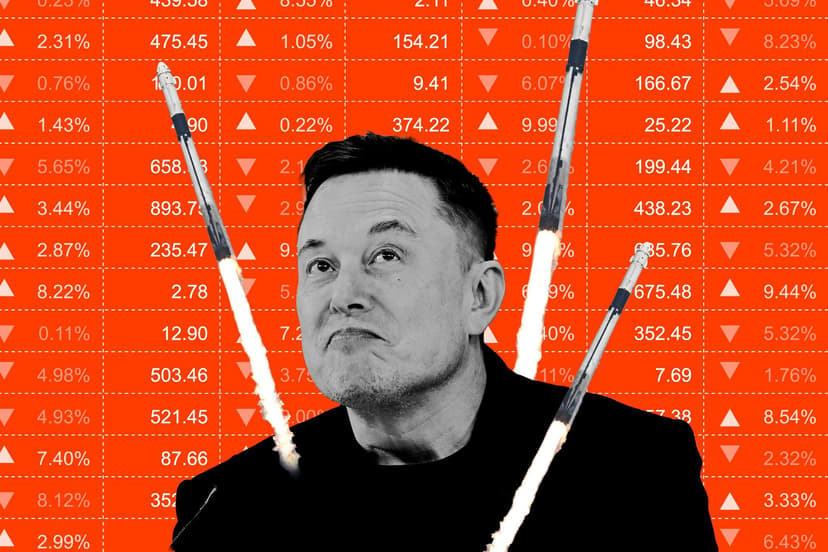
The timing of Taylor's remarks is hardly coincidental. Just days ago, Tesla CEO Elon Musk announced the combination of SpaceX and xAI in what's being called the largest corporate merger in history at $1.25 trillion. Musk has long championed space-based computing infrastructure as the logical evolution of AI development, arguing that orbital facilities could access limitless solar power and avoid terrestrial real estate constraints.
But Taylor's skepticism reflects a broader industry reality: space technology timelines are notoriously optimistic, and fundamental physics problems don't yield to marketing deadlines. Voyager itself has been on the orbital computing journey for years. The company, which went public in June 2025, already operates cloud compute devices on the International Space Station and is developing Starlab, a commercial space station designed to replace the ISS when it retires in 2030.
Voyager is tackling the problem methodically, partnering with Palantir, Airbus, and Mitsubishi on Starlab's 2029 launch. Taylor said the company remains "on track" for that timeline and is betting heavily on laser communication systems to transmit data between orbital facilities and ground stations.
"We're big believers in the technology maturing and our ability to generate data in space and process data in space," Taylor told CNBC, threading the needle between enthusiasm for the long-term vision and realism about near-term challenges.
The space technology sector has seen a wave of investor interest over the past year, fueled partly by President Donald Trump's push to boost defense spending and revamp the country's space program. The prospect of a SpaceX IPO later this year has only intensified the attention.
But the public markets haven't been kind to space companies that made the leap. Voyager's stock has lost more than half its value since its debut, while rocket maker Firefly Aerospace has shed nearly two-thirds in value since its August 2025 public offering. The sector's volatility reflects the gap between ambitious visions and operational realities - exactly the gap Taylor is highlighting.
The cooling problem isn't insurmountable. Engineers have kept satellites and space probes operational for decades using radiative cooling systems. But data centers are a different beast entirely. Modern AI training facilities on Earth consume hundreds of megawatts and generate staggering amounts of heat. Scaling that to orbit while maintaining reliability and cost-effectiveness remains an open question.
Taylor's comments also underscore a competitive dynamic that's just starting to emerge. While Musk's SpaceX-xAI combination dominates headlines, Voyager is positioning itself as a more methodical alternative - less interested in moonshot timelines and more focused on solving the actual engineering problems. The company's existing ISS hardware gives it real-world data on orbital computing challenges, not just projections.
What's clear is that space data centers aren't arriving in two years. The infrastructure, the cooling solutions, and the operational know-how are all still in development. Musk may have the rockets and the capital, but he doesn't have the physics figured out yet - and neither does anyone else.
The space data center race just got a reality check. While Musk's $1.25 trillion bet on orbital computing captures imaginations and headlines, the industry's sober voices are pointing to fundamental engineering challenges that won't be solved on a marketing timeline. Voyager's approach - methodical development, strategic partnerships, and real hardware already in orbit - may prove more prescient than SpaceX's breakneck ambitions. The winner won't be whoever announces first, but whoever actually solves the cooling problem. And right now, nobody has.