Elon Musk just pulled off one of the boldest corporate consolidations in tech history. SpaceX has acquired xAI - which also owns X (formerly Twitter) - combining rocket manufacturing, satellite internet, AI development, and social media under one roof. The merger creates what Musk calls "the most ambitious, vertically-integrated innovation engine on (and off) Earth," with immediate implications for AI infrastructure, space commercialization, and the competitive landscape facing everyone from Amazon to OpenAI.
SpaceX just rewrote the rulebook on corporate strategy. The rocket manufacturer has acquired xAI, Elon Musk's artificial intelligence startup that also owns the social media platform X, in a merger that sent shockwaves through Silicon Valley late Sunday evening.
According to an official announcement posted on SpaceX's website, the acquisition forms what Musk describes as "the most ambitious, vertically-integrated innovation engine on (and off) Earth." The combined entity now controls an unprecedented technology stack: rocket manufacturing and launch services, the Starlink satellite constellation, AI model development, direct-to-mobile communications, and X's real-time information platform with its hundreds of millions of users.
The merger's most audacious element isn't what's happening on Earth - it's what Musk plans to put in orbit. The announcement reveals SpaceX's intention to deploy AI data centers in space, circumventing what Musk frames as an insurmountable terrestrial constraint. "Current advances in AI are dependent on large terrestrial data centers, which require immense amounts of power and cooling," the statement reads. "Global electricity demand for AI simply cannot be met with terrestrial solutions, even in the near term, without imposing hardship on communities and the environment."
It's a direct shot at the hyperscale cloud providers. Amazon, Microsoft, and Google have collectively invested hundreds of billions into ground-based data center infrastructure. Musk is betting they're building in the wrong place entirely. "In the long term, space-based AI is obviously the only way to scale," according to the SpaceX announcement. The logic is stark: harnessing even a millionth of the Sun's energy would require over a million times more power than global civilization currently consumes.
The timing reveals careful choreography. xAI has been rapidly scaling its Grok AI models, competing directly with OpenAI, Anthropic, and Google's AI efforts. But training and running large language models demands exponentially growing computational resources. By folding xAI into SpaceX, Musk gains access to launch capacity, satellite deployment expertise, and a ready-made orbital internet backbone through Starlink - infrastructure competitors can't easily replicate.
X's inclusion in the deal adds another dimension. The platform generates massive real-time data streams that could feed AI training at unprecedented scale. It also provides immediate distribution for whatever AI products emerge from the merged company. The vertical integration is almost absurdly complete: SpaceX builds the rockets, launches the satellites, operates the network, develops the AI, trains it on social media data, and distributes the results back through the same platform.
Wall Street analysts were caught flat-footed. The deal was executed entirely outside public markets since both companies are privately held, avoiding the regulatory scrutiny that would accompany a public company acquisition of this magnitude. SpaceX's most recent valuation stood around $350 billion, while xAI was valued at approximately $50 billion in its last funding round. The combined entity would rival the market caps of established tech giants.
The competitive response is already taking shape. Meta has invested heavily in AI infrastructure for its own models, while Amazon Web Services has been racing to offer AI services atop its cloud platform. But none have SpaceX's launch capabilities or orbital internet infrastructure. Microsoft, through its partnership with OpenAI, suddenly faces a competitor with fundamentally different economics - if space-based computing actually works.
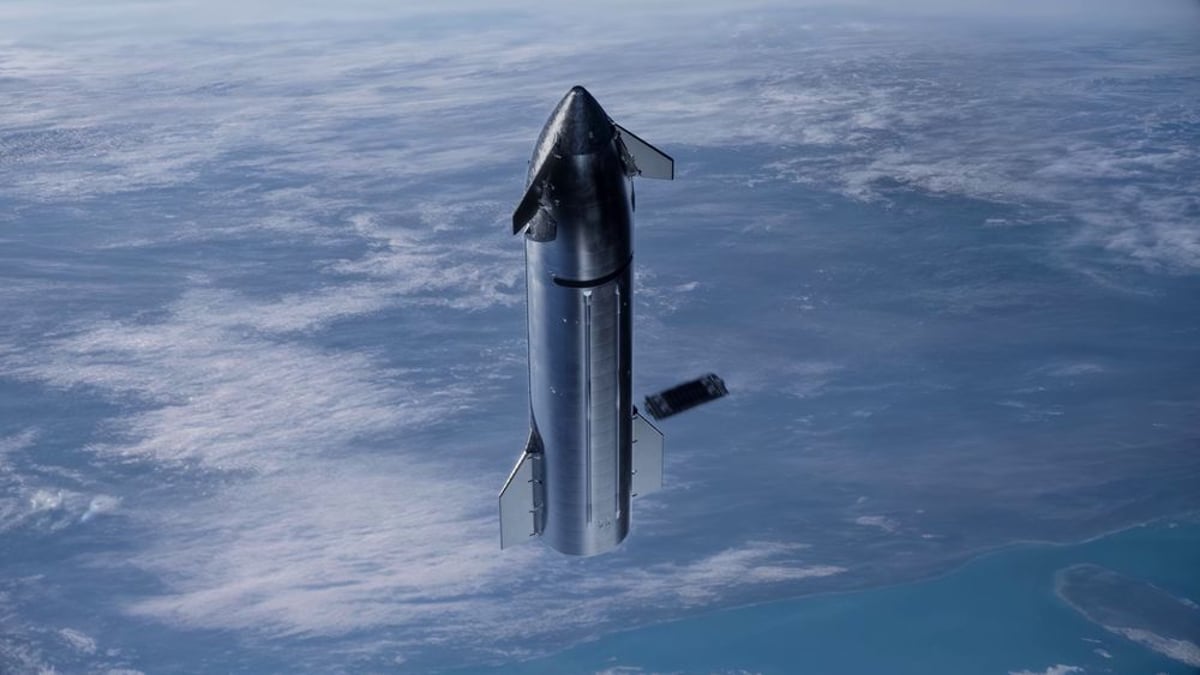
That's the trillion-dollar question. Space-based data centers face enormous technical challenges: radiation hardening, thermal management in vacuum, limited repair capabilities, and the cost of launching hardware into orbit. But SpaceX's Starship program, designed for massive payload capacity and rapid reusability, could theoretically make orbital deployment economically viable. The company has already demonstrated Starship's ability to deploy Starlink satellites at scale.
Musk's statement frames the merger as existential rather than opportunistic. "This marks not just the next chapter, but the next book in SpaceX and xAI's mission: scaling to make a sentient sun to understand the Universe and extend the light of consciousness to the stars." The grandiose language is classic Musk, but the underlying bet is concrete: AI's future runs on orbital infrastructure, and whoever controls that infrastructure controls the industry's trajectory.
The deal also consolidates Musk's business empire in ways that could draw regulatory attention despite the private nature of the transaction. He now directly controls critical infrastructure across multiple sectors - space launch, satellite communications, social media, and AI development. That concentration of power in emerging technologies will almost certainly trigger government scrutiny, particularly around national security implications of privately-controlled space-based computing.
For now, the industry is left parsing what comes next. SpaceX has demonstrated it can execute on seemingly impossible engineering challenges. xAI has shown rapid progress in AI model development. X provides data and distribution at scale. Whether orbital data centers move from concept to reality remains unproven, but Musk has earned the right to be taken seriously when he proposes ambitious technical solutions.
This merger represents a fundamental bet that AI's infrastructure constraints can only be solved by leaving Earth entirely. If Musk is right, traditional cloud providers just watched their competitive advantage evaporate. If he's wrong, it's still the most spectacular vertical integration play in modern tech history - and one that gives the combined SpaceX-xAI entity unique capabilities no competitor can match. Either way, the AI infrastructure race just got exponentially more complex, and every hyperscaler is now racing to figure out their orbital strategy before Musk's head start becomes insurmountable.