In a rare public appearance, SpaceX President and COO Gwynne Shotwell sat down with CNBC to discuss the company's highly anticipated IPO - marking one of the most significant moments in commercial space history. Shotwell, who's spent over two decades as Elon Musk's right hand at SpaceX, framed the public market debut as just "one small step" in what she calls the company's "very futuristic journey." The interview offers a window into leadership thinking at a company that's remained notoriously tight-lipped about its plans.
SpaceX is finally pulling back the curtain. Gwynne Shotwell, the company's president and chief operating officer, broke her characteristic silence in an exclusive conversation with CNBC as the rocket maker prepares for what could be the most watched IPO of the decade.
Shotwell's decision to speak publicly carries weight. While Elon Musk dominates headlines with bold predictions and Twitter storms, Shotwell has spent more than 20 years quietly running SpaceX's day-to-day operations. She joined as employee number seven in 2002 and built the sales organization that turned science fiction into a multibillion-dollar business. When she talks, investors listen.
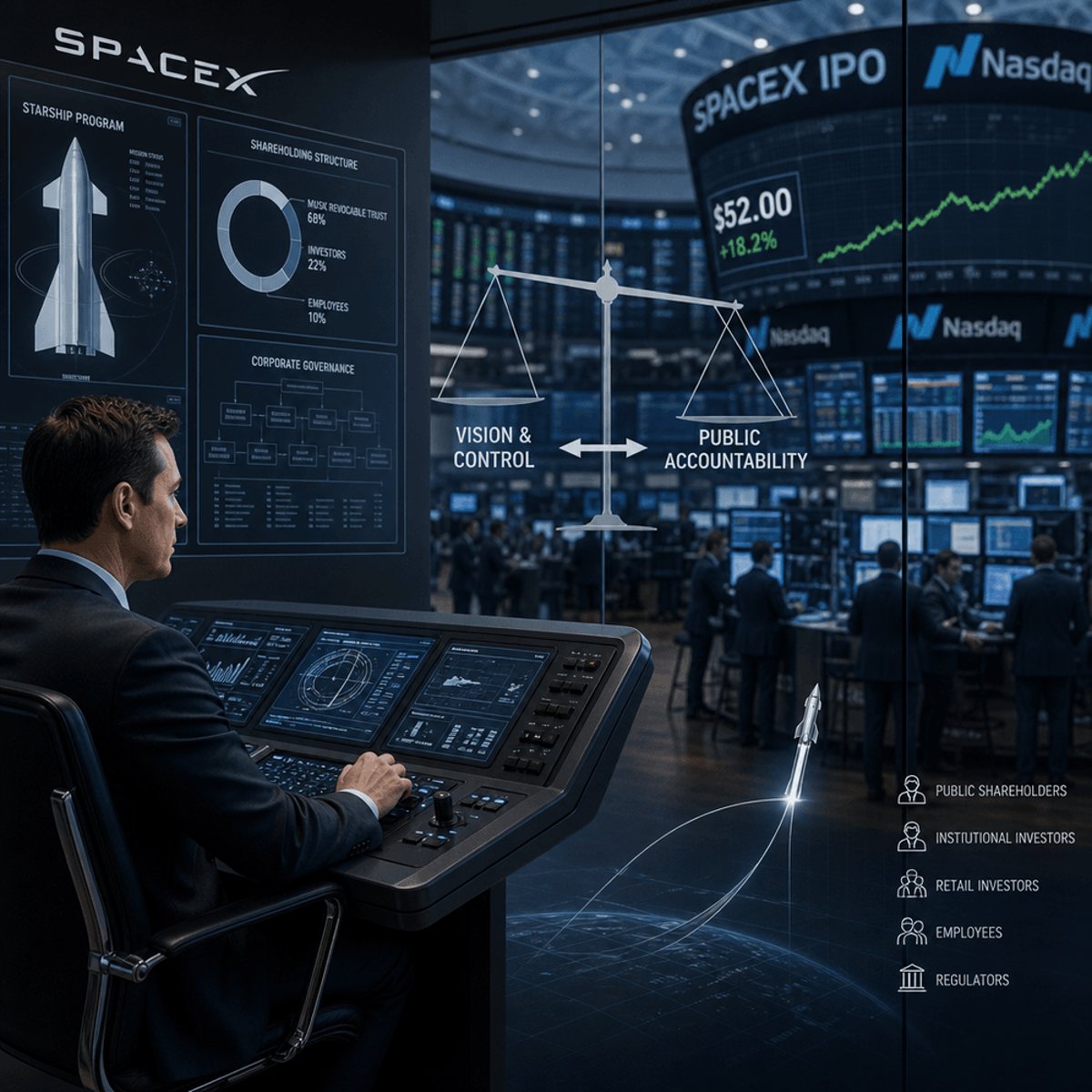
The timing isn't coincidental. SpaceX is navigating the complex transition from private rocket company to public market entity, and Wall Street is hungry for details. The company has operated in relative secrecy for years, revealing financials only to private investors during funding rounds that valued it at over $180 billion in late 2024. Now it's preparing to face quarterly earnings calls, SEC filings, and the scrutiny that comes with being a publicly traded company.
Shotwell's characterization of the IPO as "one small step" in a "very futuristic journey" signals that SpaceX's leadership views going public as a means rather than an end. The phrasing echoes Neil Armstrong while suggesting the company's ambitions extend far beyond satisfying public market investors. SpaceX has consistently framed its mission around making humanity multiplanetary, with Mars colonization as the ultimate goal.
The backdrop makes this moment even more significant. SpaceX dominates the commercial launch market, with its Falcon 9 rocket conducting more orbital launches than all other global providers combined. The company's Starship program is progressing toward full reusability, potentially dropping launch costs by orders of magnitude. And Starlink, its satellite internet constellation, is generating billions in annual revenue while serving millions of customers across the globe.
But going public introduces new pressures. Tesla's experience - another Musk company that went public in 2010 - offers lessons in how public market expectations can clash with ambitious long-term visions. Tesla faced years of skepticism from Wall Street analysts who questioned its burn rate and production targets before eventually becoming the world's most valuable automaker. SpaceX will likely face similar scrutiny around its Mars timeline and Starship development costs.
Industry watchers are parsing every word from SpaceX leadership for clues about the IPO structure. Will the company go the traditional route or opt for a direct listing? How much equity will be offered, and at what valuation? Will there be dual-class shares to preserve Musk's control? Shotwell's interview may provide the first official hints, though SpaceX has historically played these cards close to the vest.
The competitive landscape adds urgency to SpaceX's public market debut. Blue Origin, backed by Jeff Bezos, is ramping up its New Glenn rocket. Rocket Lab went public via SPAC in 2021 and is developing its larger Neutron vehicle. China's commercial space sector is advancing rapidly. Going public could give SpaceX access to capital markets for continued expansion while potentially creating a currency for acquisitions.
Shotwell's operational track record gives the IPO credibility that pure founder vision can't match. She's negotiated NASA contracts, managed rapid production scaling, and navigated regulatory challenges across multiple countries. When SpaceX promises to use IPO proceeds for specific programs, her involvement suggests those commitments carry weight.
The interview comes as the broader IPO market shows signs of life after a prolonged drought. High-profile tech companies have largely avoided public offerings since 2021, waiting for better market conditions. If SpaceX successfully debuts, it could open the floodgates for other venture-backed companies that have been waiting on the sidelines.
What makes Shotwell's perspective particularly valuable is her view from the operational trenches. While Musk sets the vision, Shotwell translates it into business reality. Her description of the company's "futuristic journey" suggests SpaceX sees the IPO as unlocking resources for next-phase development rather than a liquidity event for early investors. That framing will matter enormously as the company pitches itself to institutional investors in the coming weeks.
Shotwell's emergence from the operational shadows to discuss SpaceX's IPO signals how seriously the company is taking this transition. Her framing of the public offering as one step in a longer journey attempts to set expectations that SpaceX will continue operating with the long-term focus that defined its private years, even as it answers to public market investors. Whether Wall Street will grant SpaceX the patience it granted Tesla - and whether the company can maintain its execution edge under quarterly scrutiny - will define the next chapter of commercial space. For now, investors and space enthusiasts alike are hanging on every word from one of the industry's most influential but least-heard voices.