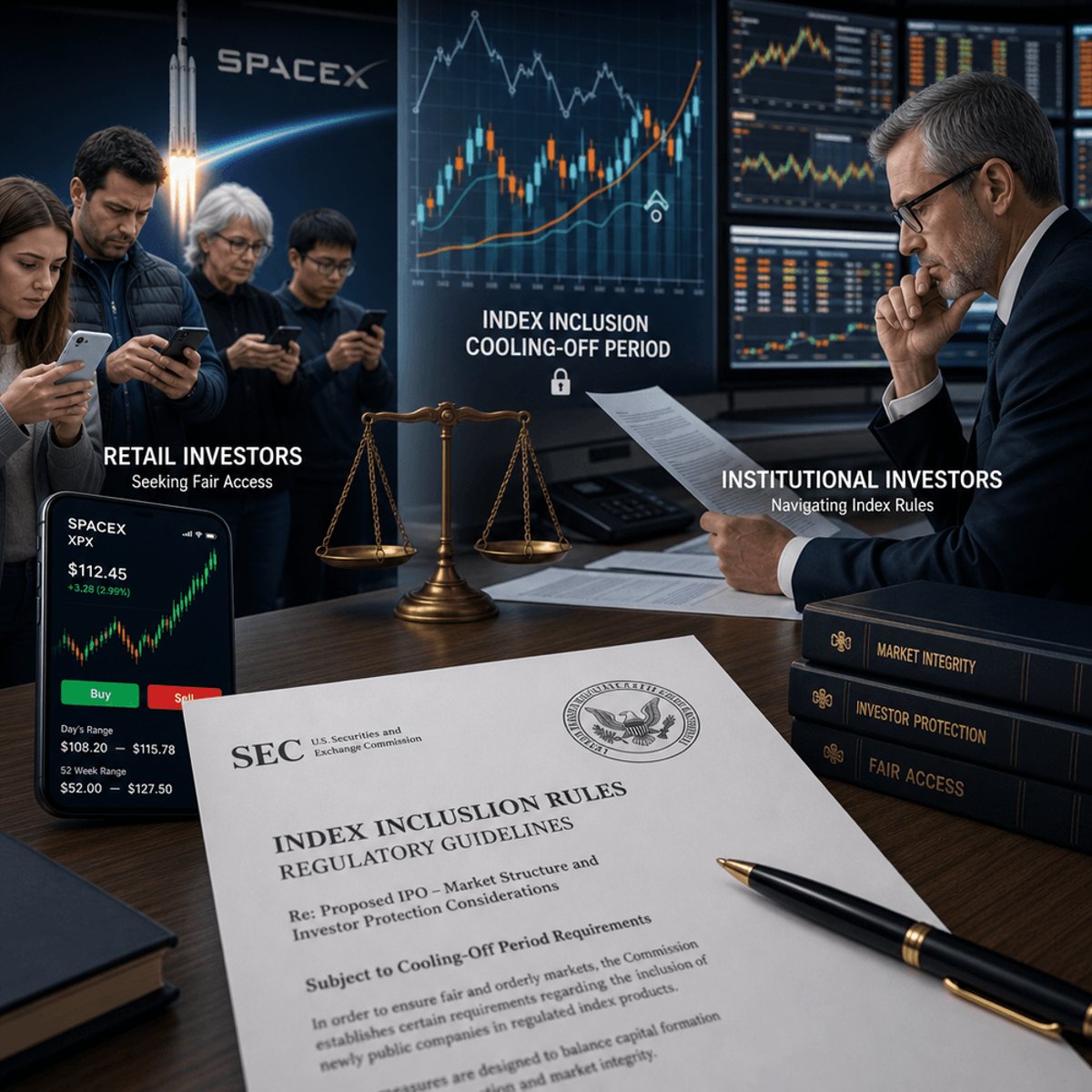
Senator Elizabeth Warren is demanding answers from major stock indexes about rule changes and retail investor protections surrounding SpaceX's highly anticipated IPO, escalating regulatory scrutiny just days before the company's historic public debut. In a letter obtained exclusively by CNBC, the Massachusetts Democrat is pressing index providers on changes to waiting periods and safeguards designed to protect everyday investors from getting caught in post-IPO volatility. The move signals growing Washington concern that retail investors could face outsized risks as one of the most hyped tech offerings in years prepares to hit public markets.
Senator Elizabeth Warren just threw a wrench into SpaceX's IPO machinery. The Massachusetts Democrat fired off a letter to major stock exchanges demanding explanations for recent changes to index provider waiting periods and questioning whether retail investors have adequate protections as Elon Musk's space venture prepares for its public market debut.
The letter, obtained first by CNBC, marks an aggressive regulatory push from one of Wall Street's most vocal critics. Warren's targeting index inclusion rules - the typically arcane protocols that determine when newly public companies get added to benchmark indexes like the S&P 500. Those rules matter because index inclusion triggers massive buying from passive funds that track those benchmarks, often creating artificial demand that can inflate stock prices.
The timing is no accident. SpaceX's IPO has been generating unprecedented retail investor interest, with social media buzz and trading app data showing millions of everyday investors planning to jump in. But Warren's letter suggests she's worried those retail players could get burned if SpaceX gets fast-tracked into major indexes without the traditional seasoning period that gives markets time to find proper price discovery.
Historically, companies had to wait months or even years before index providers like S&P Dow Jones Indices would consider them for inclusion. That waiting period served as a cooling-off window, letting initial IPO volatility settle and giving investors clearer signals about a company's true market value. But recent years have seen those timelines compress dramatically, with some high-profile tech companies landing index spots within weeks of going public.
Warren's questioning whether those accelerated timelines benefit institutional players at the expense of retail investors. When a company gets added to a major index quickly, institutional investors who got IPO allocations can see immediate liquidity and price pops as index funds pile in. Retail investors who buy on the open market often end up holding the bag when that artificial demand fades.
The SpaceX situation amplifies these concerns because of the company's unprecedented valuation and retail following. The space venture has been valued at over $200 billion in private markets, making it one of the most valuable private companies ever to attempt a public listing. That combination of sky-high valuation and massive retail interest creates exactly the scenario Warren has warned about - concentrated risk landing on everyday investors who may not fully understand the dynamics at play.
Index providers have defended recent rule changes as necessary adaptations to modern market structures. They argue that large, established private companies like SpaceX aren't comparable to traditional IPO candidates because they've already achieved operational scale and financial maturity. Waiting months for index inclusion, they contend, creates artificial constraints that don't reflect economic reality.
But Warren's letter suggests she's not buying that argument. By seeking detailed explanations of rule changes and retail protection mechanisms, she's essentially putting exchanges on notice that the SpaceX IPO will face heightened scrutiny. That scrutiny could translate into pressure on the Securities and Exchange Commission to impose additional disclosure requirements or cooling-off periods.
The regulatory wild card adds another layer of uncertainty to what was already shaping up as one of the most complex IPO processes in recent memory. SpaceX has been navigating questions about its government contracts, Musk's other business entanglements, and debates over appropriate valuation methodologies. Now it faces the prospect of Washington weighing in on the mechanics of its market debut.
For retail investors watching the SpaceX situation unfold, Warren's intervention serves as both warning and reminder. The Senator's track record shows she doesn't send letters like this casually - her inquiries often precede broader regulatory action or public hearings that can reshape market practices. Anyone planning to jump into SpaceX shares should understand they're not just making a bet on rockets and satellites, but on how regulators will handle the intersection of retail investing and mega-cap tech IPOs.
Warren's letter transforms SpaceX's IPO from a pure market event into a regulatory flashpoint. Her questions about index inclusion rules and retail protections signal that Washington is paying close attention to how one of the most hyped public debuts in years will treat everyday investors. Whether her scrutiny leads to concrete changes or just symbolic pressure remains to be seen, but it's clear that SpaceX's path to public markets just got more complicated. Investors should watch for responses from the exchanges and any follow-up action from the SEC - those signals will matter as much as the IPO pricing itself.