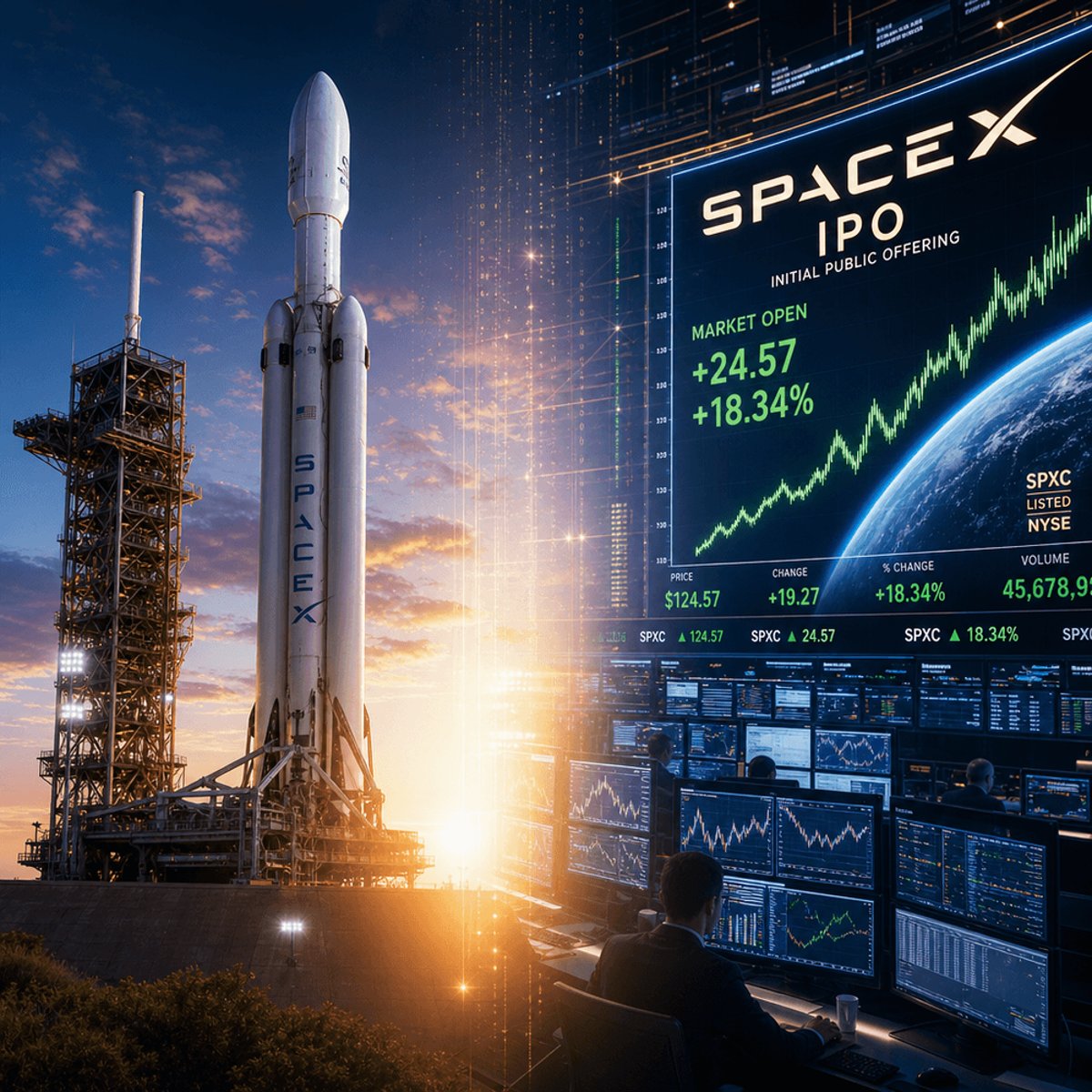
SpaceX just made history. The rocket company officially priced its initial public offering at $135 per share, cementing what's set to become the largest IPO in market history. After years of speculation about when Elon Musk's space venture would go public, the moment has arrived - and the numbers are staggering. The pricing signals massive investor appetite for space tech and could reshape how Wall Street values the entire sector.
SpaceX has officially set its IPO price at $135 per share, launching what will be the largest initial public offering in history. The announcement marks a watershed moment not just for the rocket company, but for the entire space technology sector that's been waiting for this validation.
The pricing decision comes after intense market speculation and represents a massive bet by institutional investors on the future of commercial space. SpaceX has been the crown jewel of private space companies for years, with secondary market shares trading at increasingly eye-watering valuations. Now, public market investors will finally get their chance.
This isn't just another tech IPO - it's a fundamental shift in how space businesses access capital. For context, the previous IPO record holder pales in comparison to the sheer scale of what SpaceX is bringing to market. The company's Starship program, Starlink satellite internet constellation, and NASA contracts have created a vertically integrated space powerhouse unlike anything Wall Street has seen before.
Elon Musk's space venture has consistently pushed boundaries, and this IPO continues that pattern. The $135 price point suggests underwriters saw enormous demand during the roadshow. Institutional investors have been clamoring for exposure to space tech, and SpaceX represents the most direct play available. The company's track record of launching rockets, landing boosters, and delivering payloads for both commercial and government clients has built confidence that translated into aggressive bidding.
The timing is particularly notable given broader market conditions. While tech IPOs have seen mixed results in recent quarters, SpaceX managed to command premium pricing. That speaks volumes about investor confidence in the space economy's trajectory. The company's Starlink division alone has transformed from ambitious project to revenue-generating machine, with millions of subscribers globally paying for satellite internet access.
Compare this to other space companies that have gone public through SPACs or traditional offerings - many have struggled post-debut as reality set in about the capital intensity and technical challenges of aerospace. SpaceX enters public markets with proven technology, paying customers, and a launch cadence that competitors can't match. The Falcon 9 rocket has become the workhorse of the industry, while Starship promises to revolutionize heavy lift capabilities.
The ripple effects will be massive. Private space companies from Blue Origin to Rocket Lab will be watching closely to see how public markets value SpaceX. If the stock performs well post-IPO, expect a flood of space tech companies to accelerate their own public market plans. Venture capitalists who've poured billions into aerospace startups will be particularly interested in whether SpaceX can maintain its valuation or see the typical post-IPO selloff.
For retail investors, this represents unprecedented access to a company that's defined the commercial space era. Previously, only accredited investors could buy shares through secondary markets at inflated prices and limited availability. Now anyone with a brokerage account will be able to own a piece of the company sending astronauts to the ISS and building the infrastructure for Mars missions.
The $135 price point also raises questions about allocation. With demand expected to far exceed supply, institutional investors likely received the lion's share of initial allocations. Retail investors hoping to get in at the IPO price may find themselves shut out, forced to wait for trading to begin and potentially pay a significant premium if the stock pops on opening day.
What happens when trading actually starts will determine whether this IPO is remembered as a triumph or cautionary tale. The largest offerings in history have had mixed results - some soared, others stumbled. SpaceX has advantages those companies didn't, including genuine technological moats and revenue streams that work today, not in some hypothetical future. But it also faces questions about capital allocation, Musk's divided attention across multiple companies, and whether public market scrutiny will slow its famously aggressive development pace.
Industry watchers are already debating what this means for space policy and commercial partnerships. Will NASA contracts face more scrutiny now that taxpayer dollars flow to a publicly traded company with quarterly earnings pressure? How will SpaceX balance the need for transparency with its history of keeping capabilities and plans relatively close to the vest? These questions will play out in real-time as the company navigates its new reality as a public entity.
The $135 IPO pricing represents more than just SpaceX accessing public markets - it's validation that commercial space has arrived as a legitimate investment sector. Whether the stock soars or stumbles in early trading, this moment will be studied for years as the inflection point when space technology moved from speculative venture bets to mainstream portfolio holdings. For investors, the question now shifts from whether they can get shares to whether the largest IPO ever can live up to stratospheric expectations. The space economy just got real for Wall Street, and every aerospace company, government space agency, and startup founder is watching to see what happens next.