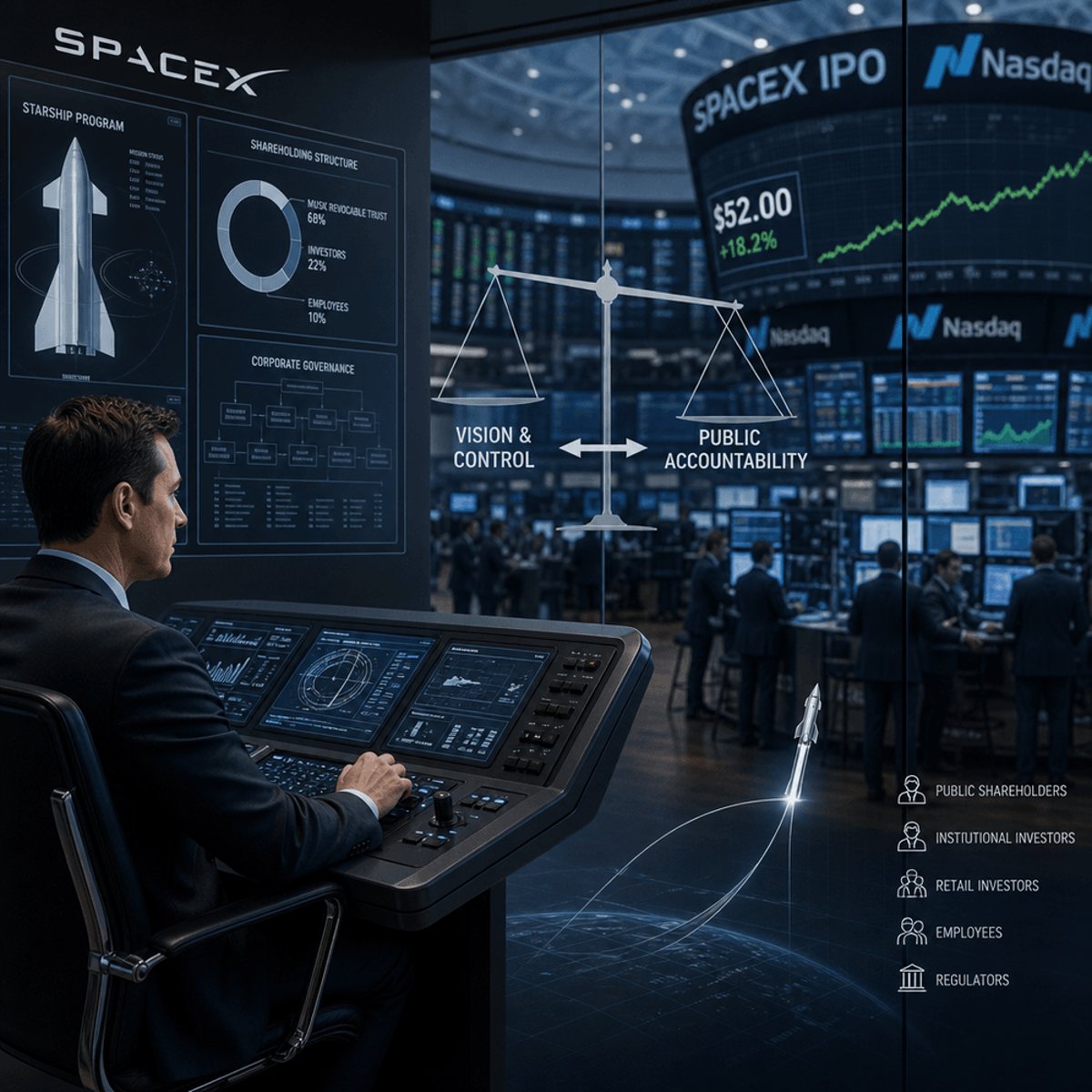
SpaceX made its long-awaited public debut on the Nasdaq this morning, but the celebration is shadowed by mounting questions about Elon Musk's unprecedented control over the rocket maker. The IPO brings a governance structure that gives Musk near-absolute authority - a setup that's defined the company since day one but now faces the harsh spotlight of public market scrutiny. Institutional investors and ESG funds are already raising red flags about what some are calling an 'extreme' ownership model that could set a troubling precedent for tech giants going public.
SpaceX is now a public company, but don't expect Elon Musk to cede much control. The rocket manufacturer's Nasdaq debut this morning brings with it a governance structure that keeps the CEO's grip on power virtually unchanged from its private days - and that's exactly what has critics sounding alarms.
The company's IPO prospectus reveals a dual-class share structure that gives Musk supervoting rights, allowing him to control major decisions even while owning a minority of total equity. It's the kind of setup that's become increasingly common in tech IPOs, but SpaceX's version takes it to another level. Public shareholders will essentially be along for the ride, with limited say in how the company operates or who leads it.
Wired reports that this near-absolute control has been SpaceX's operating model from the start. Musk has run the company with an iron fist, making bold bets on reusable rockets and Starship development that traditional aerospace companies wouldn't dare attempt. That aggressive approach has paid off spectacularly - SpaceX now dominates the commercial launch market and holds crucial NASA contracts.
But what worked in the private markets is now facing a very different reception. Institutional investors, particularly ESG-focused funds, are questioning whether such concentrated power is appropriate for a publicly traded company. The concerns aren't just theoretical. Musk's simultaneous leadership of Tesla, X (formerly Twitter), and several other ventures has already raised questions about divided attention and potential conflicts of interest.
Governance experts point to Tesla as a cautionary tale. That company's board has faced repeated criticism and shareholder lawsuits over its perceived inability to check Musk's impulses. The 2018 SEC settlement over his "funding secured" tweet cost both Musk and Tesla $20 million and forced changes to the company's oversight procedures. Yet SpaceX's public structure gives shareholders even less leverage.
The timing of the IPO adds another layer of complexity. SpaceX goes public at a moment when Musk's public profile has never been more polarizing. His acquisition and management of X sparked advertiser boycotts and content moderation controversies. His political statements and social media behavior have alienated some customer segments while energizing others. For a company that relies heavily on government contracts and public perception, that's not an insignificant risk.
Investment analysts are split on whether the governance concerns will actually impact SpaceX's stock performance. Bulls argue that Musk's vision and execution are exactly what made SpaceX valuable in the first place - why would investors want to dilute that now? The company's track record speaks for itself: successful Crew Dragon missions, a revolutionary reusable rocket program, and a Starlink satellite constellation that's reshaping global internet access.
Bears counter that public companies require public accountability. They point to studies showing that companies with entrenched management and weak shareholder rights tend to underperform over time. The concern isn't that Musk will suddenly become incompetent - it's that without proper checks and balances, even brilliant leaders can make costly mistakes that shareholders have no power to prevent.
The SpaceX IPO could set a crucial precedent for how founder-controlled companies navigate the transition to public markets. If investors eagerly snap up shares despite the governance concerns, it signals that public markets are willing to accept almost any control structure if the underlying business is compelling enough. If the stock struggles, it might force the next generation of tech founders to consider more balanced governance models.
Early trading will offer the first clues about investor sentiment. But the real test will come over months and years, as SpaceX faces the quarterly earnings pressure, regulatory scrutiny, and shareholder activism that come with being a public company. Musk has always operated on his own terms - now he'll find out if public market investors are willing to accept those terms or demand something different.
SpaceX's public debut isn't just another tech IPO - it's a referendum on how much control visionary founders should wield once they tap public capital. Musk's near-absolute authority has delivered extraordinary results in SpaceX's private chapter, but public markets operate under different rules and expectations. Whether investors prioritize the governance concerns or bet that Musk's track record justifies the concentration of power will shape not just SpaceX's future, but the template for how the next generation of transformative companies approach going public. The rocket maker's stock performance in coming months will tell us whether public markets are willing to accept extreme ownership models - or whether they'll demand a new balance between founder vision and shareholder protection.