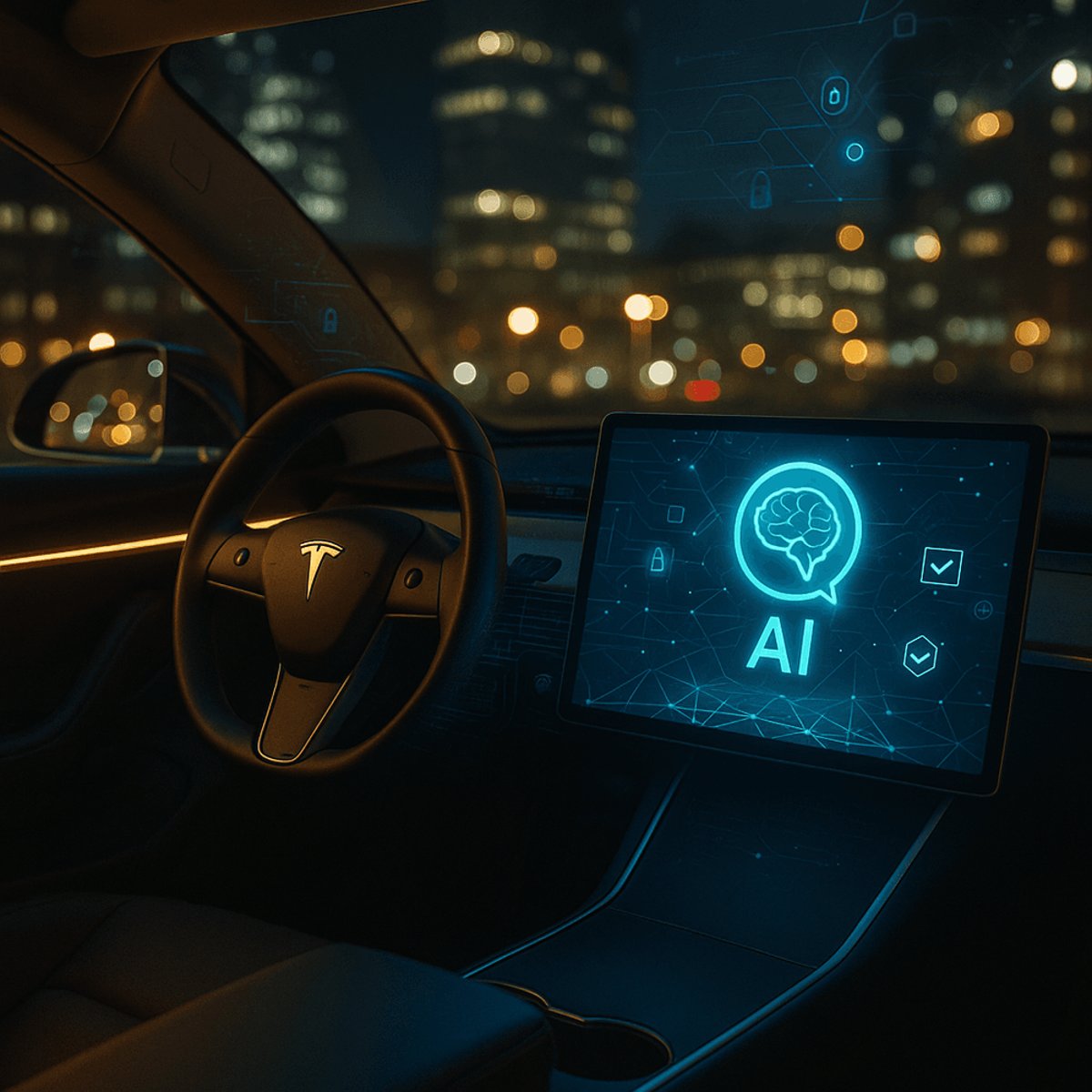
Tesla is rolling out the Grok AI chatbot to its electric vehicles across the UK and Europe, marking a significant geographic expansion for Elon Musk's controversial artificial intelligence assistant. The move comes as xAI faces mounting regulatory scrutiny on both sides of the Atlantic, with questions swirling around data privacy and AI safety standards. For Tesla owners in these markets, it means voice-activated AI assistance is about to become a standard feature in their cars.
Tesla is pushing Elon Musk's xAI Grok chatbot into its electric vehicles across the UK and European markets, a bold expansion that arrives amid intensifying regulatory pressure on the AI assistant. The deployment represents Tesla's latest bet on in-car AI experiences, even as questions mount about Grok's compliance with European data protection standards.
The rollout to European markets follows Grok's initial integration into US-based Tesla vehicles earlier this year. But the timing is anything but straightforward. xAI has been facing what sources describe as "embattled" regulatory conditions, with European data protection authorities reportedly examining how the chatbot handles driver conversations and personal information. Under GDPR requirements, AI systems operating in the EU must meet strict data localization and transparency standards - hurdles that have tripped up other US tech giants.
For Tesla owners in London, Berlin, and Paris, Grok will function as a voice-activated assistant capable of answering questions, controlling vehicle settings, and potentially accessing real-time information through Tesla's connected vehicle platform. The feature builds on the automaker's existing voice command system, but adds the conversational capabilities of a large language model trained on vast amounts of internet data.
The European expansion puts Tesla in direct competition with traditional automakers who've been integrating AI assistants from established providers. Mercedes-Benz recently partnered with Microsoft to bring ChatGPT into its vehicles, while BMW has been testing Amazon Alexa integration for years. What sets Grok apart is its connection to Musk's broader AI ambitions and its reputation for less filtered responses compared to competitors.
But that same reputation has regulators concerned. Grok's training methodology and content moderation approach have drawn criticism from AI safety advocates who question whether it meets European standards for responsible AI deployment. The UK's newly formed AI Safety Institute has been reviewing various chatbot implementations, though it hasn't publicly commented on Grok specifically.
The technical infrastructure behind the rollout remains unclear. European data regulations typically require that personal information stays within EU borders, which would necessitate local data centers or processing arrangements. Tesla hasn't disclosed whether it's running Grok on European servers or routing data back to US-based xAI infrastructure - a detail that could prove crucial for regulatory approval.
Industry analysts see the move as characteristic Musk strategy: deploy fast, address concerns later. "Tesla is betting that getting Grok into European cars now establishes user habits before regulators can impose restrictions," notes one automotive AI consultant familiar with the deployment. "It's the same playbook we saw with Autopilot features."
The expansion also highlights the increasingly intertwined nature of Musk's business empire. xAI, valued at $50 billion in its latest funding round, has positioned Grok as a differentiator for Tesla vehicles against rivals. But that integration creates potential conflicts of interest and regulatory complications, especially in Europe where antitrust authorities scrutinize bundling practices.
For European Tesla owners, the practical implications are immediate. Software updates rolling out this week will enable Grok functionality on Model 3, Model Y, Model S, and Model X vehicles. The feature requires an active internet connection and will initially support English, with additional European languages planned for later updates.
What remains to be seen is whether regulators will allow Grok to operate freely or impose restrictions. The European Commission has been drafting AI Act implementation guidelines that could apply to in-vehicle assistants, potentially requiring safety certifications or content filtering that xAI may find restrictive.
Tesla's push to bring Grok AI to European vehicles sets up a fascinating collision between Silicon Valley's move-fast ethos and Europe's precautionary approach to AI regulation. European drivers are getting access to cutting-edge conversational AI in their cars, but the real test comes in the months ahead as regulators examine whether Grok meets the continent's strict data protection and AI safety standards. For Musk, it's another high-stakes bet that his AI assistant can navigate both technical and regulatory challenges - a gamble that could reshape how automakers think about in-car intelligence or become a cautionary tale about premature deployment.