Peter Thiel's Founders Fund just made one of the biggest AgTech bets in venture history, pouring $220 million into Halter, a New Zealand startup that's replacing traditional fences with solar-powered smart collars for cattle. The massive investment signals a major shift in how Silicon Valley's elite investors view agricultural technology - not as a niche play, but as a critical piece of the climate and automation puzzle. For an industry that's seen modest funding rounds, this changes everything.
Founders Fund doesn't typically bet on cows. The firm that backed Facebook, SpaceX, and Palantir has built its reputation on moonshot technology and contrarian thinking. But the $220 million investment in Halter represents something different - a conviction that the future of agriculture looks more like a tech infrastructure play than traditional farming.
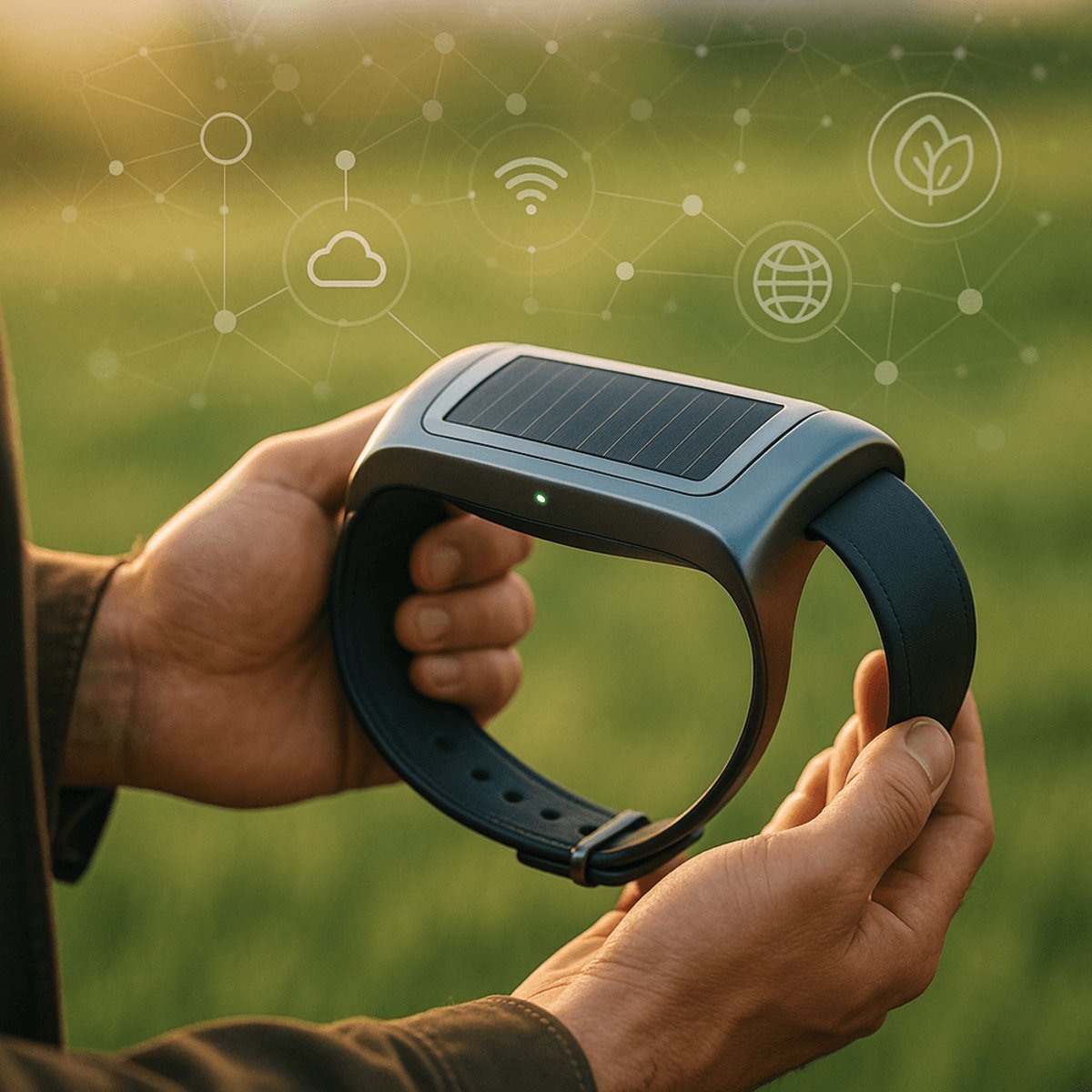
Halter builds solar-powered collars that farmers strap onto cattle. The devices use GPS positioning, accelerometers, and audio feedback to guide cows across pastures without physical fences. When a cow approaches a virtual boundary, the collar delivers a gentle audio cue - similar to how invisible dog fences work, but with a focus on positive reinforcement rather than shock correction. The system connects to a mobile app that lets farmers move entire herds with a few taps.
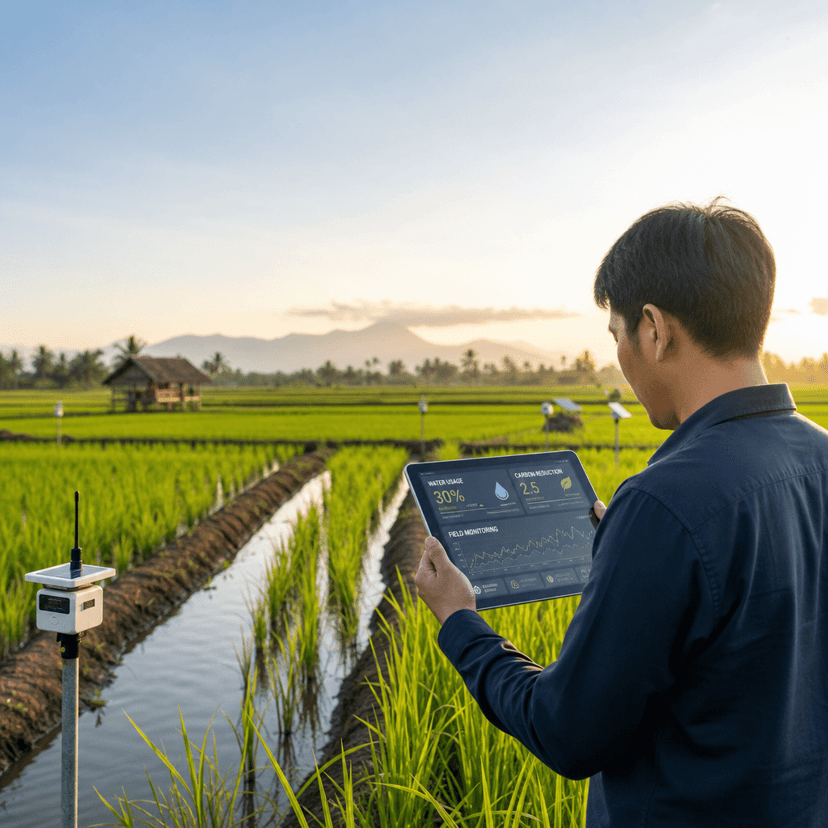
The technology tackles real pain points. Traditional fencing costs farmers thousands of dollars per mile to install and maintain. Rotational grazing - a practice that improves soil health and carbon sequestration - requires constant fence relocation. Halter's collars eliminate both problems while generating data on animal health, grazing patterns, and pasture utilization that farmers have never had access to before.
But the $220 million question is why Founders Fund is betting this big, this early. AgTech startups have historically struggled to achieve venture-scale returns. Farmers operate on tight margins, sales cycles stretch for years, and hardware carries inventory risk that software investors typically avoid. The sector saw $5.1 billion in global funding last year, but mega-rounds remain rare.
The answer appears to lie in Founders Fund's thesis that climate technology and industrial automation are converging. Livestock accounts for roughly 14.5% of global greenhouse gas emissions according to UN estimates. Better grazing management can turn pastures into carbon sinks while improving animal welfare and productivity. That's the kind of scalable impact that climate-focused LPs are hunting for.
Halter also fits the firm's pattern of backing companies building real-world infrastructure rather than pure software plays. The collars require sophisticated power management - they run entirely on solar charging and need to function in remote areas without connectivity. The startup has developed proprietary mesh networking technology that lets collars communicate with each other when cellular coverage drops out.
The competitive landscape is relatively sparse. A handful of companies make livestock monitoring devices, but most focus on health tracking rather than movement control. Halter's virtual fencing technology has limited direct competitors, giving the company room to establish category leadership before incumbents react.
Timing matters too. The agriculture industry is facing a labor crisis as farm workers age out and younger generations move to cities. Automation isn't just a nice-to-have anymore - it's becoming existential for farms trying to maintain operations. Halter's pitch is that their technology lets one person manage grazing operations that previously required multiple farmhands checking fences and moving cattle daily.
The capital will likely fund expansion beyond Halter's home market in New Zealand and Australia. North American and European dairy operations represent massive untapped opportunities, though regulatory requirements around animal welfare technology vary significantly by region. The company will also need to prove the unit economics work at scale - hardware margins are unforgiving, and the collars need to last for years to justify their cost.
For the broader AgTech ecosystem, Founders Fund's involvement sends a signal. When one of Silicon Valley's most influential firms writes a check this size, other investors pay attention. It legitimizes agricultural technology as a sector worthy of growth-stage capital, not just grant funding and impact investors.
The investment also highlights a shift in how venture capital thinks about hardware. For years, the conventional wisdom was that hardware is hard - expensive to build, difficult to scale, and prone to supply chain disasters. But companies like Tesla and SpaceX proved that vertical integration and software-enabled hardware can generate venture returns. Halter is betting on the same playbook, just applied to livestock instead of rockets.
The real test for Halter isn't whether the technology works - the company already has paying customers across thousands of farms. It's whether agricultural hardware can achieve the kind of exponential growth that venture investors expect. Founders Fund is betting that as climate pressure intensifies and labor shortages worsen, farmers will embrace automation at a pace that mirrors what happened in manufacturing and logistics. If they're right, this $220 million bet could look modest in hindsight. If traditional agriculture proves more resistant to change than Silicon Valley expects, it'll become a cautionary tale about applying tech-industry assumptions to centuries-old industries. Either way, the deal marks a turning point in how serious money views the future of farming.