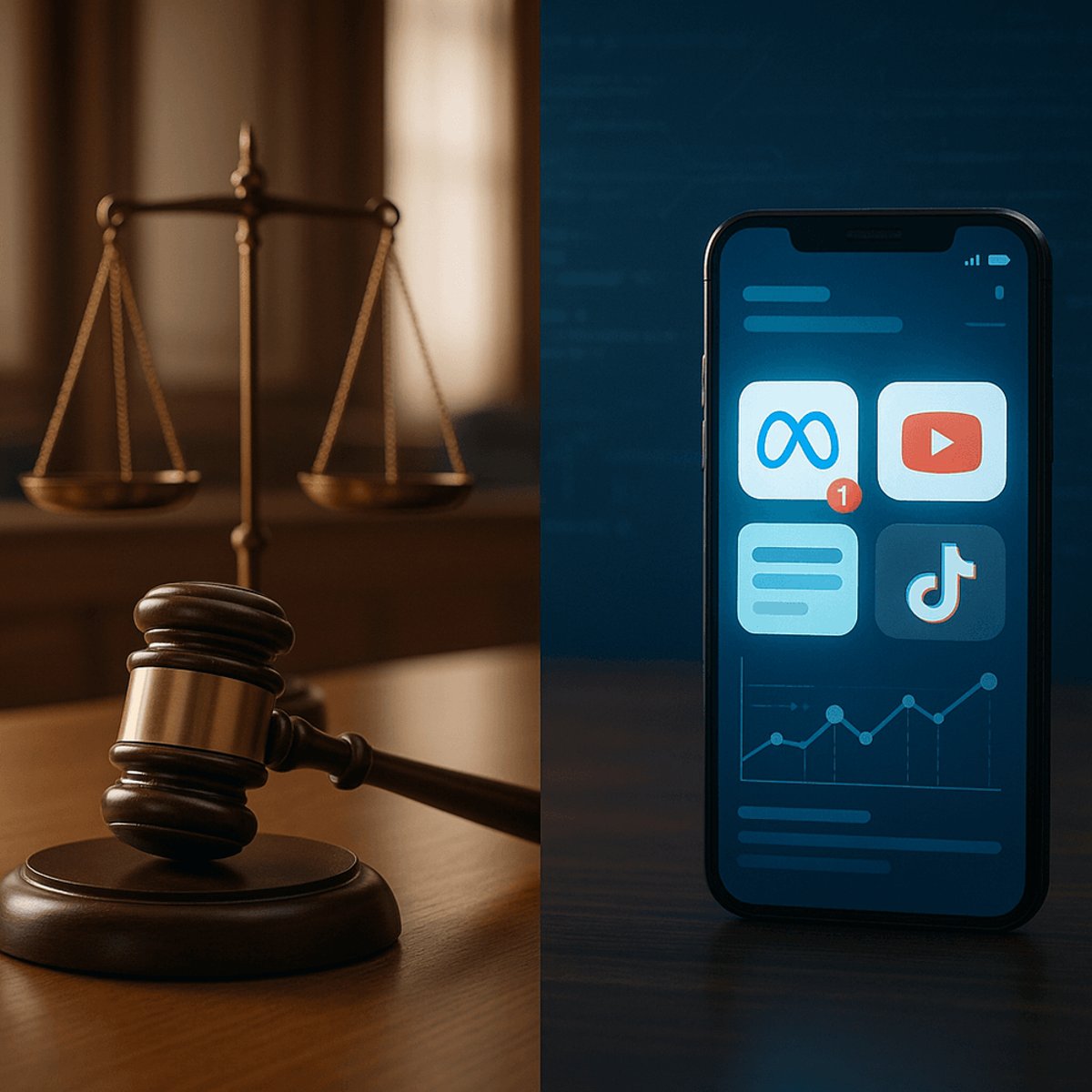
TikTok just pulled out of what could become the tech industry's defining legal moment. The ByteDance-owned platform settled with plaintiffs hours before a landmark addiction trial kicks off in Los Angeles Superior Court, leaving Meta and YouTube to face allegations that their platforms were deliberately designed to hook teens. The move comes as the industry braces for a wave of tobacco-style litigation that could reshape how social media companies build their products.
TikTok made a quiet exit from what was shaping up to be the social media industry's biggest courtroom showdown. The company agreed to settle with plaintiffs just as a high-profile addiction trial was set to begin Tuesday in Los Angeles Superior Court, according to court filings reported by CNBC.
The trial will move forward as scheduled, but now the spotlight falls entirely on Meta and Alphabet's YouTube. Both companies face allegations that they knowingly designed their platforms to create addictive behaviors in teenagers and young adults, causing lasting harm to their mental health.
"This is a good resolution, and we are pleased with the settlement," Mark Lanier, an attorney representing the plaintiff, said in a statement to CNBC. "Our focus has now turned to Meta and YouTube for this trial."
TikTok isn't completely off the hook. The company remains a defendant in other personal injury cases working their way through the courts, and a separate federal trial later this year will pit TikTok against the same accusations alongside Meta, YouTube, and Snap.
Speaking of Snap, the Snapchat parent company reached its own settlement last week and bowed out of the Los Angeles trial. The dual settlements suggest the platforms may be trying to limit their exposure before damaging internal documents or testimony become public.
This case represents the first wave of what legal experts are calling a tobacco moment for social media. The lawsuits draw direct parallels to the 1990s litigation that exposed how cigarette manufacturers deliberately engineered their products to be addictive. But there's a critical difference in strategy here.
Plaintiffs are zeroing in on product design rather than content to navigate around Section 230 of the Communications Decency Act, the legal shield that has protected tech platforms from liability for user-generated content for nearly three decades. By arguing that the apps themselves are the problem—the infinite scroll, the algorithmic recommendations, the notification systems—lawyers believe they can punch through that defense.
The legal pressure is mounting from multiple directions. Next week, another major trial begins in Santa Fe, New Mexico, where the state's Attorney General alleges that Meta failed to protect children from online predators on Facebook and Instagram. According to court documents, Meta estimated 100,000 kids per day experienced sexual harassment on its platforms.
Later in 2026, the Northern District of California will host an even bigger showdown involving TikTok, Meta, YouTube, and Snap in a consolidated federal case. That trial will test whether the companies can successfully argue their products weren't designed to exploit teenage psychology.
The timing of TikTok's settlement is particularly notable given the platform's current operational chaos. Since becoming an independent U.S. joint venture to satisfy national security requirements—with Chinese parent company ByteDance retaining just 19.9% ownership—the app has been plagued by glitches and errors. The company blamed the issues on a data center power outage, but users have complained about service disruptions and alleged political censorship.
For Meta and YouTube, there's no settlement option on the table right now. Both companies have consistently argued their platforms include robust parental controls and safety features, and that they've invested billions in trust and safety initiatives. But plaintiffs argue those measures are window dressing that doesn't address the fundamental design choices that make the apps so sticky for young users.
The cases hinge on internal company documents and testimony that could reveal how much executives knew about their products' effects on developing brains. Similar evidence proved devastating in tobacco litigation, where leaked memos showed industry leaders knew about health risks while publicly denying them.
Industry watchers see 2026 as the year that determines whether social media companies will face the same regulatory reckoning as tobacco, opioids, and other industries accused of prioritizing profits over public health. The outcomes could force platforms to redesign core features, face massive financial penalties, or submit to new regulatory oversight.
For now, TikTok has chosen to cut its losses in Los Angeles and focus on its mountain of other legal and operational challenges. Meta and YouTube will stand trial starting Tuesday, with the tech world watching to see if the Big Tobacco comparisons hold up in court.
The Los Angeles trial starting Tuesday could set the template for how courts handle allegations that social media platforms deliberately exploit teenage psychology. With TikTok and Snap settling out, Meta and YouTube now face the full weight of scrutiny over their product design choices. If plaintiffs succeed in proving these companies engineered addiction into their apps, it won't just mean financial penalties—it could force a fundamental reimagining of how social media works. The industry's Big Tobacco moment has arrived, and this week we'll start to see whether the comparison sticks.