Amazon is pulling the plug on its Amazon Fresh and Amazon Go physical stores, marking a major retreat from the retail experimentation that defined its grocery ambitions for the past decade. The e-commerce giant announced it will shutter its experimental brick-and-mortar locations while doubling down on Whole Foods Market with plans to open over 100 new stores in the coming years. The pivot underscores a hard lesson: even Amazon can't crack every market on the first try.
Amazon just admitted what industry watchers have suspected for years - its cashierless Amazon Go convenience stores and Amazon Fresh supermarkets haven't cracked the code on profitable physical retail. The company announced it's closing both formats after what it diplomatically called "a careful evaluation," acknowledging they "haven't yet created a truly distinctive customer experience with the right economic model needed for large-scale expansion."
The news, buried in an otherwise upbeat announcement about grocery expansion plans, represents a significant strategic retreat. Amazon launched its first Go store in Seattle back in 2018, promising a futuristic shopping experience where customers could grab items and walk out without stopping at a checkout. Fresh stores followed as larger-format experiments combining traditional grocery layouts with tech-enabled features. Neither format achieved the scale Amazon hoped for.
But Amazon isn't abandoning groceries - far from it. The company says it's now one of the top three grocers in the U.S., pulling in over $150 billion in gross sales annually with more than 150 million customers buying groceries each year. That momentum comes almost entirely from online delivery, which is where Amazon's now placing its bets.
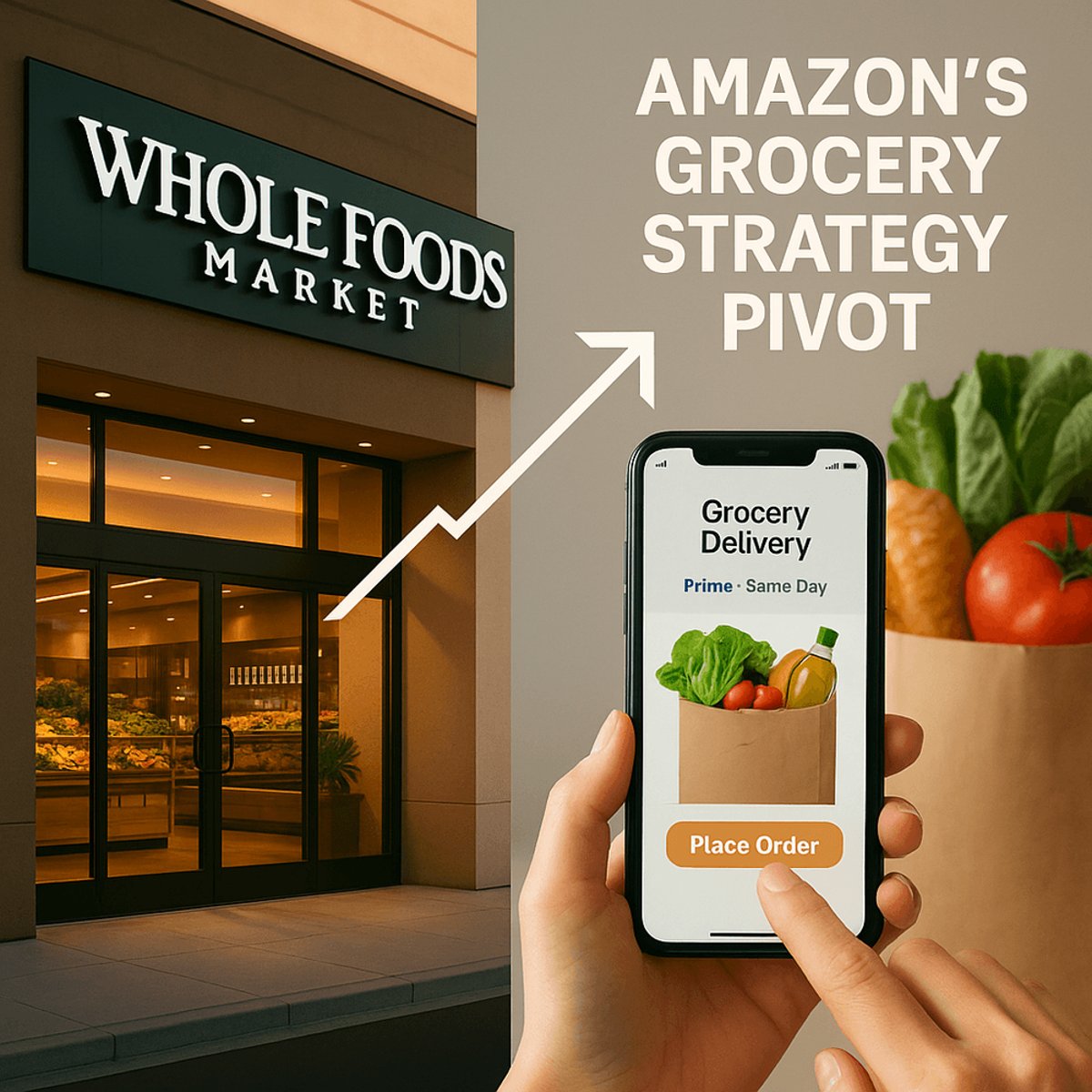
The real winner in this reshuffling is Whole Foods Market, which Amazon acquired for $13.7 billion back in 2017. The upscale grocer has seen 40% sales growth since the acquisition and now operates more than 550 locations. Amazon's planning to accelerate that expansion dramatically, opening over 100 new Whole Foods stores "over the next few years" - the most aggressive expansion plan since the acquisition.
"Customers are increasingly choosing Whole Foods Market for both everyday shopping and special occasions, as demonstrated by record-breaking customer traffic and year-over-year comparable store growth that is outpacing the broader industry," Amazon stated in the announcement. The company's also rolling out a smaller format called Whole Foods Market Daily Shop - think grab-and-go meals, coffee, and essentials - which currently operates in five locations with five more planned by end of 2026.
The shift reflects what's actually working for Amazon in groceries: fast online delivery paired with a trusted premium brand. The company introduced perishables into its Same-Day Delivery service in 2025, and the numbers tell the story. Perishable grocery sales through Same-Day delivery grew 40x since January 2025, with fresh groceries now making up nine of the top ten most-ordered items in areas where the service is available.
Amazon's even testing Amazon Now, an ultra-fast delivery service bringing essentials to doorsteps in about 30 minutes - essentially turning Amazon into a tech-enabled convenience store without the physical footprint headaches. The service is live in several cities and expanding.
So what went wrong with Fresh and Go? Amazon's not offering much detail, but retail analysts have long pointed to the economics. Go stores required extensive camera systems and sensors to enable the cashierless experience, driving up buildout costs. Fresh stores struggled to differentiate themselves in a brutally competitive grocery market where Walmart, Kroger, and regional players already had scale and customer loyalty.
The closures will affect hundreds of employees, though Amazon says it's "working whenever possible to help them find roles elsewhere in Amazon, including across our vast operations network." The company operates one of the world's largest logistics networks with constant hiring needs, which should ease some transitions.
But Amazon's declaring the experiments weren't total losses. The Just Walk Out technology developed for Go stores now operates in over 360 third-party locations across five countries. Stadiums, airports, and hospitals use the system to speed up concessions and cafeteria lines. Amazon's even deploying it internally - more than 40 North American fulfillment centers now use Just Walk Out in employee breakrooms, with "many more planned for 2026."
"The customer impact has been transformative, from reducing cafeteria wait times from 25 to just 3 minutes at BayCare's St. Joseph's Hospital, to enabling sports fans at Scotiabank Arena to grab concessions in 30 seconds," Amazon noted, positioning the technology as a licensing success even as the stores that birthed it shutter.
Amazon's also hinting at future retail concepts. The company mentioned it's "exploring a new supercenter physical retail concept" that would combine fresh groceries, household essentials, and general merchandise - essentially a Walmart-style format with Amazon's tech and operational advantages. Don't expect those anytime soon, though. The cautious language suggests Amazon learned its lesson about rushing physical retail expansion.
The move arrives as traditional grocers are finally getting their online and delivery acts together. Walmart and Target both offer same-day delivery in most markets, while Instacart partnerships give even small regional chains digital reach. Amazon's advantage in logistics and Prime membership still matters, but it's not the insurmountable moat it once appeared.
For Whole Foods, the bet makes sense. The brand carries cachet Amazon's own grocery labels never achieved, and the stores serve as fulfillment hubs for online orders - creating synergies between physical and digital that standalone Fresh stores couldn't match. Opening 100+ new locations will significantly expand Whole Foods' footprint beyond its traditional coastal strongholds into mid-market cities where demand exists but competition is less fierce.
The grocery wars are far from over. Amazon's still investing billions in the category, just shifting where those dollars go. Physical retail is hard - even for a company that revolutionized online shopping. Sometimes the smartest move is admitting what's not working and doubling down on what is.
Amazon's decision to close Fresh and Go stores while expanding Whole Foods reveals a pragmatic calculation - own the delivery experience and the premium brand, skip the middle ground. The company's $150 billion grocery business proves customers want Amazon's speed and selection, just not necessarily in standalone physical stores. As traditional retailers shore up their digital capabilities and Whole Foods gets 100+ new locations, the grocery wars are entering a new phase where the winners will be those who nail the intersection of digital convenience and trusted brands. Amazon's betting it can do both, just not with stores bearing its own name.