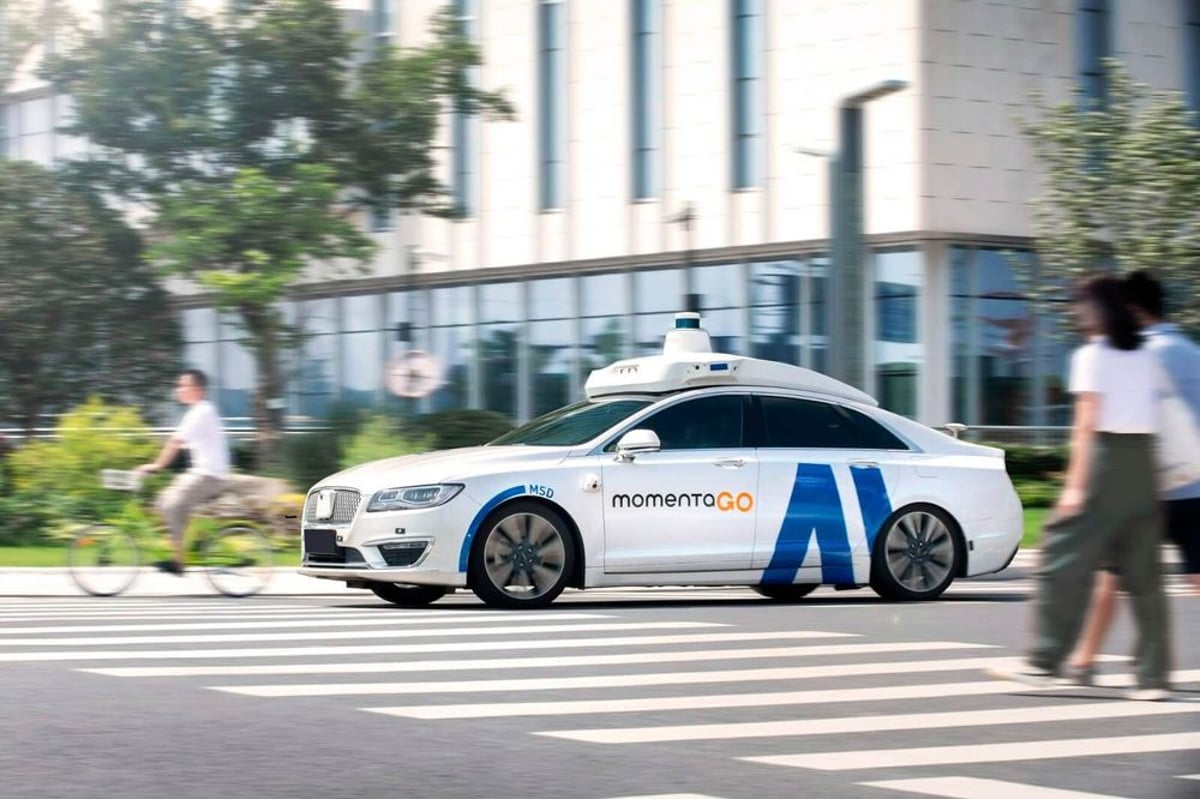
Uber just delivered Europe's biggest autonomous vehicle breakthrough yet. The ridehailing giant announced it will test Level 4 robotaxis in Munich starting 2026 through a partnership with Chinese AI company Momenta, marking a crucial step in Europe's race to catch up with US and Chinese driverless technology deployment.
Uber just shifted the autonomous vehicle landscape in Europe with a single announcement. The company revealed it will partner with Shanghai-based Momenta to test Level 4 robotaxis in Munich starting 2026, bringing fully driverless vehicles to a continent that's been watching from the sidelines as the US and China race ahead in commercial deployments.
The timing couldn't be more strategic. While Waymo operates thousands of robotaxis across Phoenix, San Francisco, and Los Angeles, and Chinese companies like Baidu run commercial services in Beijing and Wuhan, Europe has remained largely a testing ground rather than a deployment destination. Munich represents Uber's bet that European regulatory frameworks are finally ready for the real thing.
Momenta brings serious credentials to this partnership. The Shanghai-based company has secured funding from automotive heavyweights including GM, Toyota, Mercedes-Benz, and Bosch, along with China's state-owned SAIC Motor. According to Reuters reporting, the company already supplies driver assistance software to Mercedes and BMW production vehicles, giving it deep integration with European automotive supply chains.
The Level 4 designation is crucial here. Unlike Level 2 or 3 systems that require human oversight, Level 4 vehicles operate completely autonomously within defined geographic areas. That means no safety drivers, no remote monitoring requirements, and full commercial operation capability. It's the same classification that Tesla has been promising for years with Full Self-Driving but has yet to achieve at commercial scale.
Uber initially announced the Momenta partnership earlier this year, but those vehicles were expected to launch with safety monitors behind the wheel. The Munich deployment represents an acceleration of that timeline and a confidence vote in Momenta's technology maturity. According to company statements, successful Munich operations could expand to additional European cities, potentially giving Uber a continent-wide autonomous network.
The competitive landscape is heating up rapidly. Baidu and Lyft announced plans to deploy driverless taxis across the UK and Germany in 2026 through their own partnership. Meanwhile, Volkswagen has been quietly testing autonomous vehicles in Germany and recently committed to launching its own robotaxi service with Uber in Los Angeles by 2026.
This convergence of multiple robotaxi partnerships targeting Germany suggests something deeper is happening. European regulators appear to be creating the regulatory certainty that autonomous vehicle companies need for commercial deployment. Germany's federal transport ministry has been particularly aggressive in updating autonomous driving regulations, creating pathways for Level 4 operations that didn't exist even two years ago.
For Uber, the Momenta partnership represents a crucial hedge against being left behind in the autonomous transition. While competitors like Waymo build their own technology and Tesla promises direct-to-consumer sales, Uber is betting on becoming the platform that connects multiple autonomous vehicle providers with riders. The strategy worked for traditional ridehailing, but autonomous vehicles present different technical and regulatory challenges.
Munich's 2026 robotaxi launch represents more than just another pilot program - it's Europe's declaration that it won't be left behind in the autonomous revolution. With multiple Chinese and American companies converging on German cities, the real test isn't just whether the technology works, but whether European consumers will embrace driverless rides at the scale needed to make these services profitable. Uber's platform strategy could prove prescient if regulatory complexity favors partnerships over single-company deployments.