Uber just made a calculated bet that the robotaxi wars won't be won by building cars, but by feeding them data. The ride-hail giant is launching AV Labs, a new division that'll send sensor-laden vehicles into 600 cities to collect real-world driving scenarios for partners like Waymo, Waabi, and Lucid Motors. It's a strategic pivot from the company that killed its own self-driving program after a fatal 2018 crash, now positioning itself as the data broker autonomous vehicle companies desperately need to solve edge cases their limited fleets can't capture.
Uber isn't building robotaxis again. But it's about to become the most important partner every autonomous vehicle company needs.
The ride-hail platform just launched Uber AV Labs, a division dedicated to collecting real-world driving data for its growing roster of more than 20 autonomous vehicle partners. It's a sharp turn from the company that shuttered its own self-driving program in 2020 after selling the division to Aurora following a pedestrian fatality in 2018. Now, Uber's betting it can accelerate the entire robotaxi industry by solving the one problem every AV company faces: you can't train on scenarios you've never seen.
"Our goal, primarily, is to democratize this data," Uber CTO Praveen Neppalli Naga told TechCrunch in an exclusive interview. "The value of this data and having partners' AV tech advancing is far bigger than the money we can make from this."
The announcement comes as autonomous vehicle development hits a critical inflection point. Self-driving systems are shifting away from rules-based programming toward reinforcement learning models that need massive volumes of real-world data to handle unexpected situations. And right now, even the most established players don't have enough of it.
Take Waymo. Despite a decade of testing and commercial operation, the Google sibling's robotaxis were recently caught illegally passing stopped school buses, triggering a federal safety probe. It's exactly the kind of edge case that reveals the physical limits of data collection - you can only learn from scenarios your fleet actually encounters.
"The autonomous vehicle companies that want this data the most are the ones that have already been collecting a lot of it themselves," Uber told TechCrunch. Like the frontier AI labs racing to train ever-larger models, AV companies have realized that solving extreme edge cases is fundamentally a volume game. But fleet size creates a hard ceiling on how much data any single company can gather.
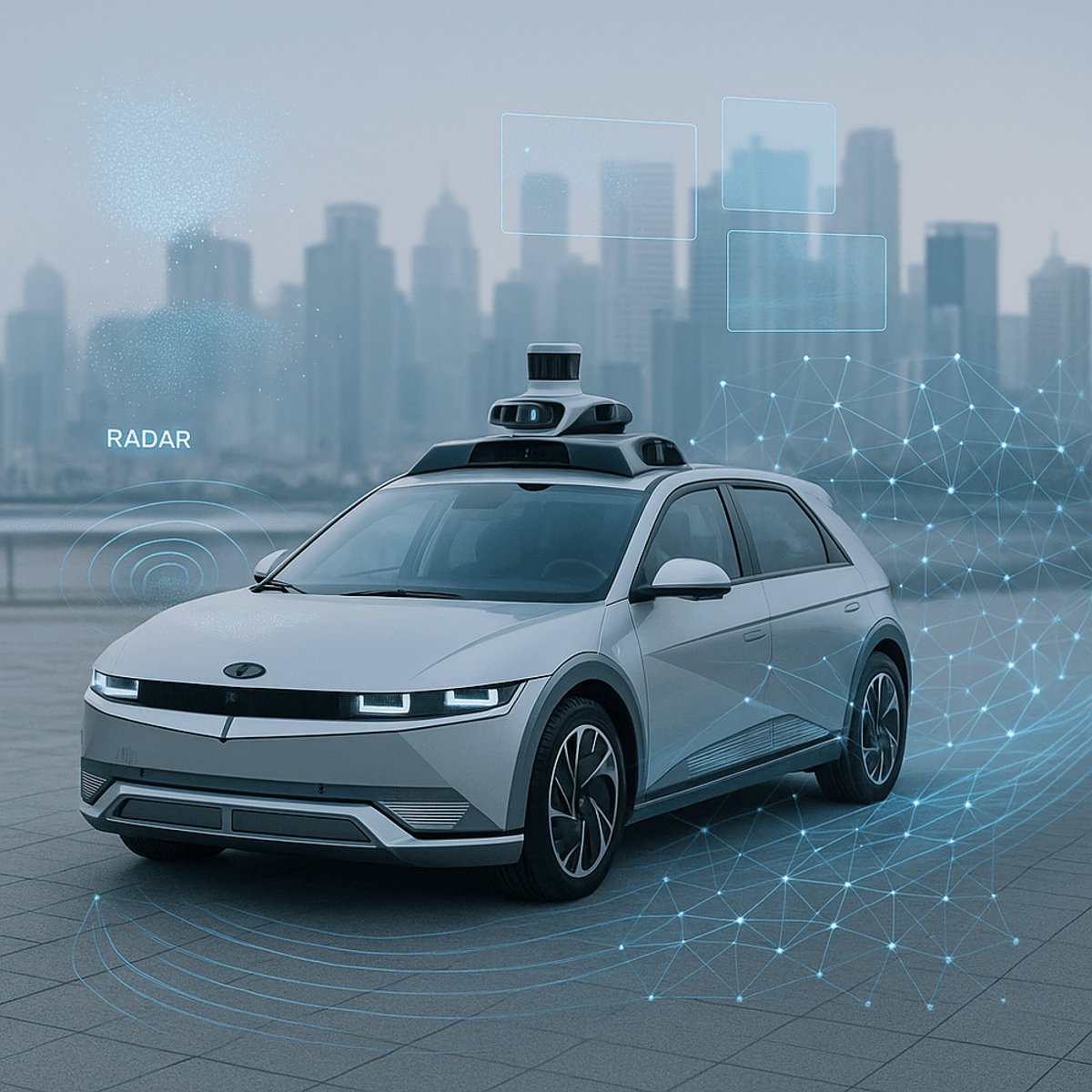
That's where Uber sees its opening. With operations spanning 600 cities globally and millions of rides completed daily, the company has unmatched reach into diverse urban environments. AV Labs will deploy sensor-equipped vehicles - starting with a single Hyundai Ioniq 5 outfitted with lidars, radars, and cameras - to collect driving data in markets partners can't easily access themselves.
"We have 600 cities that we can pick and choose from. If the partner tells us a particular city they're interested in, we can just deploy our cars," VP of Engineering Danny Guo explained to TechCrunch.
The operation is deliberately scrappy. Guo admitted his team was "literally screwing on sensors" to the prototype vehicle. "We don't know if the sensor kit will fall off, but that's the scrappiness we have," he said with a laugh. But Uber expects rapid growth - the division aims to scale to a few hundred employees within a year.
Partners won't get raw sensor feeds. Instead, Uber will process the data into what Naga calls a "semantic understanding" layer - structured information about road conditions, traffic patterns, and driver decisions that AV software can directly use for path planning and decision-making. Think of it as the difference between handing someone a library of unorganized footage versus annotated driving scenarios with context.
The real innovation comes in how Uber plans to identify gaps in partner systems. AV Labs will run partner software in "shadow mode" on its data collection vehicles, comparing what the AI would do against what the human driver actually does. Every divergence gets flagged and sent back to the partner.
"This will not only help discover shortcomings in the driving software, but also help train the models to drive more like a human and less like a robot," Guo told TechCrunch.
It's essentially the Tesla playbook, minus the scale. Tesla has spent years collecting data from millions of customer vehicles to train its Full Self-Driving system. Uber can't match those numbers, but it doesn't need to - targeted collection in specific markets where partners are launching or struggling offers more immediate value than random global coverage.
And unlike Tesla, Uber isn't keeping the data for itself. No contracts are signed yet with partners like Waymo, Waabi, or Lucid Motors, but Uber says it won't charge for access in the near term. The calculation is strategic: accelerating the AV ecosystem helps Uber's core business by bringing more autonomous rides onto its platform faster.
"Because if we don't do this, we really don't believe anybody else can," Guo said. "So as someone who can potentially unlock the whole industry and accelerate the whole ecosystem, we believe we have to take on this responsibility right now."
The move also positions Uber as critical infrastructure for the autonomous vehicle industry, similar to how cloud providers became essential to AI development. By owning the data layer, Uber ensures it remains relevant even if it never builds another self-driving car.
Naga hinted at an even more ambitious future: leveraging Uber's entire fleet of human-driven ride-hail vehicles for data collection. With the right sensor partnerships and driver incentives, Uber could turn every trip into a training opportunity, creating a data moat no single AV company could replicate.
"From our conversations with our partners, they're just saying: 'give us anything that will be helpful.' Because the amount of data Uber can collect just outweighs everything that they can possibly do with their own data collection," Guo said.
For now, AV Labs remains a bet - one sensor-laden Hyundai against the robotaxi industry's toughest problem. But if Uber's right that edge cases are a volume game, it just dealt itself the best hand at the table.
Uber's pivot from building autonomous vehicles to becoming the data backbone for the entire robotaxi industry is a masterclass in strategic repositioning. By offering free access to real-world driving scenarios across 600 cities, the company sidesteps the capital-intensive work of AV development while making itself indispensable to every partner racing to solve edge cases. If the bet pays off, Uber won't just host robotaxis on its platform - it'll own the data infrastructure that makes them possible. The question isn't whether AV companies need this data, it's whether Uber can scale fast enough to capture scenarios before partners solve them independently. One Hyundai with some hastily mounted sensors is a humble start, but the roadmap to turning millions of daily rides into training data could reshape who wins the autonomous future.