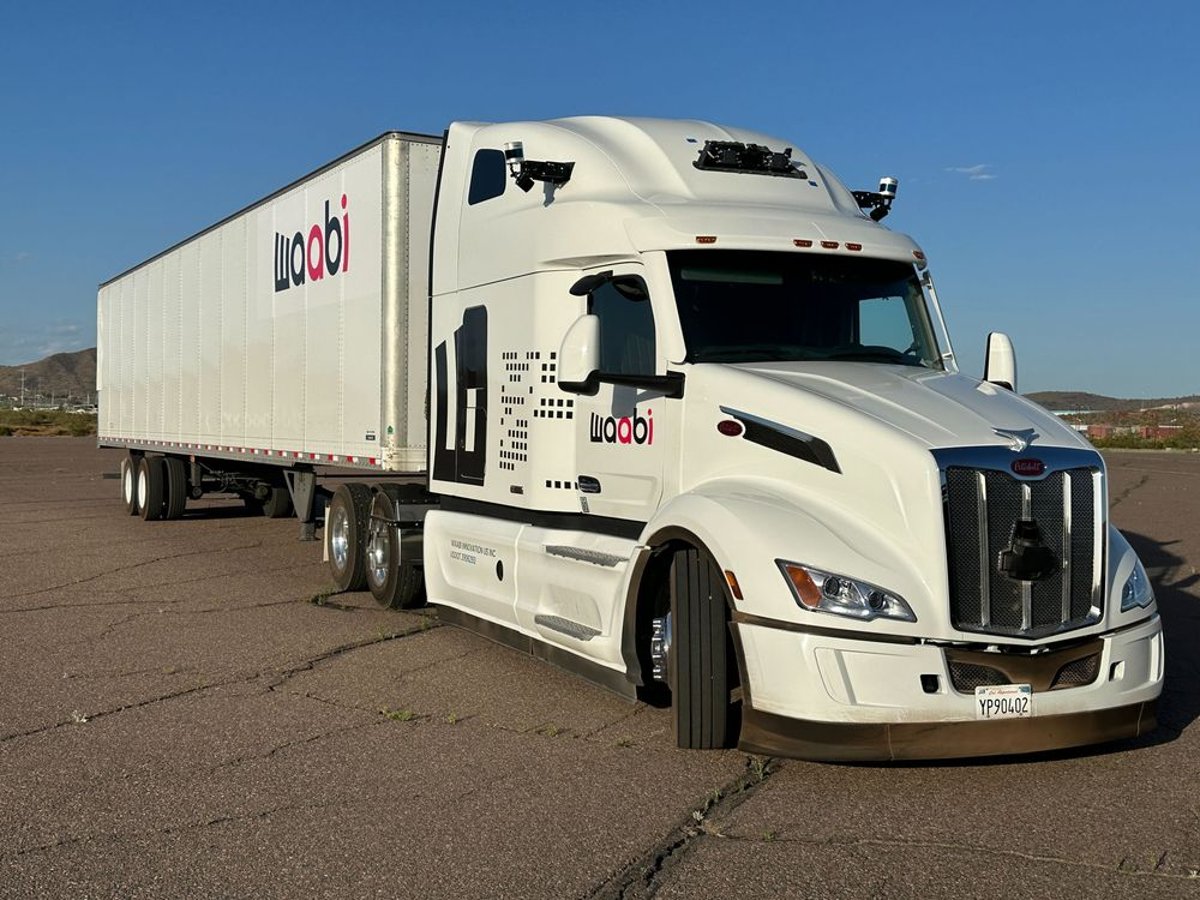
Waabi, the Toronto-based autonomous trucking startup founded by former Uber exec Raquel Urtasun, is making a major strategic pivot. The company just closed a $1 billion funding round and announced a partnership with Uber to deploy at least 25,000 robotaxis on the ridehail platform. It's a striking shift for a startup that's yet to launch commercial self-driving trucks, but it signals where investor excitement—and capital—is flowing in the autonomous vehicle race.
Waabi just made one of the boldest bets in the autonomous vehicle space. The Toronto-based startup, which has spent the past four years developing self-driving trucks, announced it's expanding into robotaxis with a massive partnership alongside Uber. And it's got the funding to back it up—$1 billion in fresh capital, including a $750 million Series C round led by Khosla Ventures and G2 Venture Partners, plus additional investment from Uber tied specifically to the robotaxi push.
The centerpiece of the announcement is the commitment to deploy at least 25,000 robotaxis powered by Waabi's technology on Uber's platform. Founder and CEO Raquel Urtasun, who served as chief scientist at Uber's now-defunct Advanced Technologies Group before launching Waabi in 2021, emphasized in an interview with The Verge that 25,000 is "a floor rather than a ceiling." She called it a "massive, massive partnership" that "brings the next level of scale to the robotaxi market."
It's an audacious claim from a company that hasn't yet validated its self-driving trucks for commercial operation, let alone put a single robotaxi on the road. But Urtasun argues that Waabi's "AI-centric approach" to autonomous driving—what she calls "physical AI"—translates seamlessly from trucking to passenger vehicles. The logic is straightforward: trucks already navigate to specific loading and unloading locations, similar to passenger pickups and drop-offs. Many of the operational behaviors, she says, are already baked into Waabi's existing system.
The pivot comes at a revealing moment for the autonomous vehicle industry. Self-driving trucks were once expected to hit the market before robotaxis, given that highways are far less complex than urban streets. But that thesis has been tested hard by reality. Autonomous trucking startups have faced significant technical and regulatory hurdles that have pushed timelines further into the future. Embark Trucks, TuSimple, and Locomation have all shut down. Even Waymo cut its autonomous trucking plans and laid off staff in 2023.
But Urtasun pushes back on the narrative that trucking is proving too difficult. She insists Waabi's trucking platform is "already highly capable" and that the company made a deliberate choice not to rush driverless operations onto public roads until the technology was fully validated. Unlike competitors that retrofitted existing trucks, Waabi opted to wait for a purpose-built platform in partnership with Volvo.
Still, the timing of this robotaxi announcement isn't coincidental. Investor enthusiasm for autonomous ridehail has surged thanks to Waymo's expanding operations and growing ridership in cities like San Francisco, Phoenix, and Los Angeles. That momentum is pulling capital and attention toward robotaxis, and Waabi—despite its trucking roots—wants in on the action. Waabi isn't the first AV operator to pivot or expand into robotaxis, and it won't be the last.
The partnership with Uber makes strategic sense on multiple levels. Urtasun has insider knowledge of what Uber expects from AV partners, having spent years leading autonomous vehicle research at the company. Uber, meanwhile, has inked deals with more than a dozen autonomous vehicle operators globally as it positions itself as the distribution platform for driverless rides. The ridehail giant abandoned its own self-driving car ambitions after a disastrous run that included allegations of trade secret theft, patent infringement, and a 2018 crash in Arizona that killed a pedestrian.
What remains unclear is who will own and manage the robotaxi fleet. Urtasun declined to share those details but stressed that Waabi sees itself primarily as a technology provider rather than a fleet owner or operator. That suggests Uber or other partners will likely handle fleet management, vehicle maintenance, and customer-facing operations—leaving Waabi to focus on the software stack that powers autonomous driving.
Urtasun also acknowledged that robotaxis introduce new challenges beyond those in trucking, including the risks of carrying passengers and heightened liability concerns. She didn't specify timelines for deployment, target markets, or which vehicle platform Waabi will use for its robotaxis. Those are critical details that will determine whether this partnership becomes a scalable business or hits the same roadblocks that have plagued other AV startups.
The $1 billion in funding gives Waabi significant runway to execute on both its trucking and robotaxi ambitions. But the hard part is just beginning. Once those robotaxis hit city streets, they'll face the full complexity of urban driving—unpredictable pedestrians, cyclists, construction zones, and edge cases that even the most sophisticated AI struggles to handle. Waabi has bet big that its "physical AI" can handle the challenge. Investors clearly believe it can. Now comes the part where they have to prove it.
Waabi's billion-dollar bet on robotaxis represents both the promise and the peril facing autonomous vehicle startups today. The company is pivoting before it's even proven its core trucking business can work at scale, banking on the idea that its AI platform is versatile enough to tackle an entirely different use case. With Uber's distribution power and a war chest of fresh capital, Waabi has the resources to make a serious run at the robotaxi market. But the road ahead is littered with failed AV companies that underestimated the complexity of real-world deployment. The next 18 months will reveal whether Waabi's AI-first approach can deliver on its ambitious promises or whether this pivot becomes another cautionary tale in the autonomous vehicle saga.