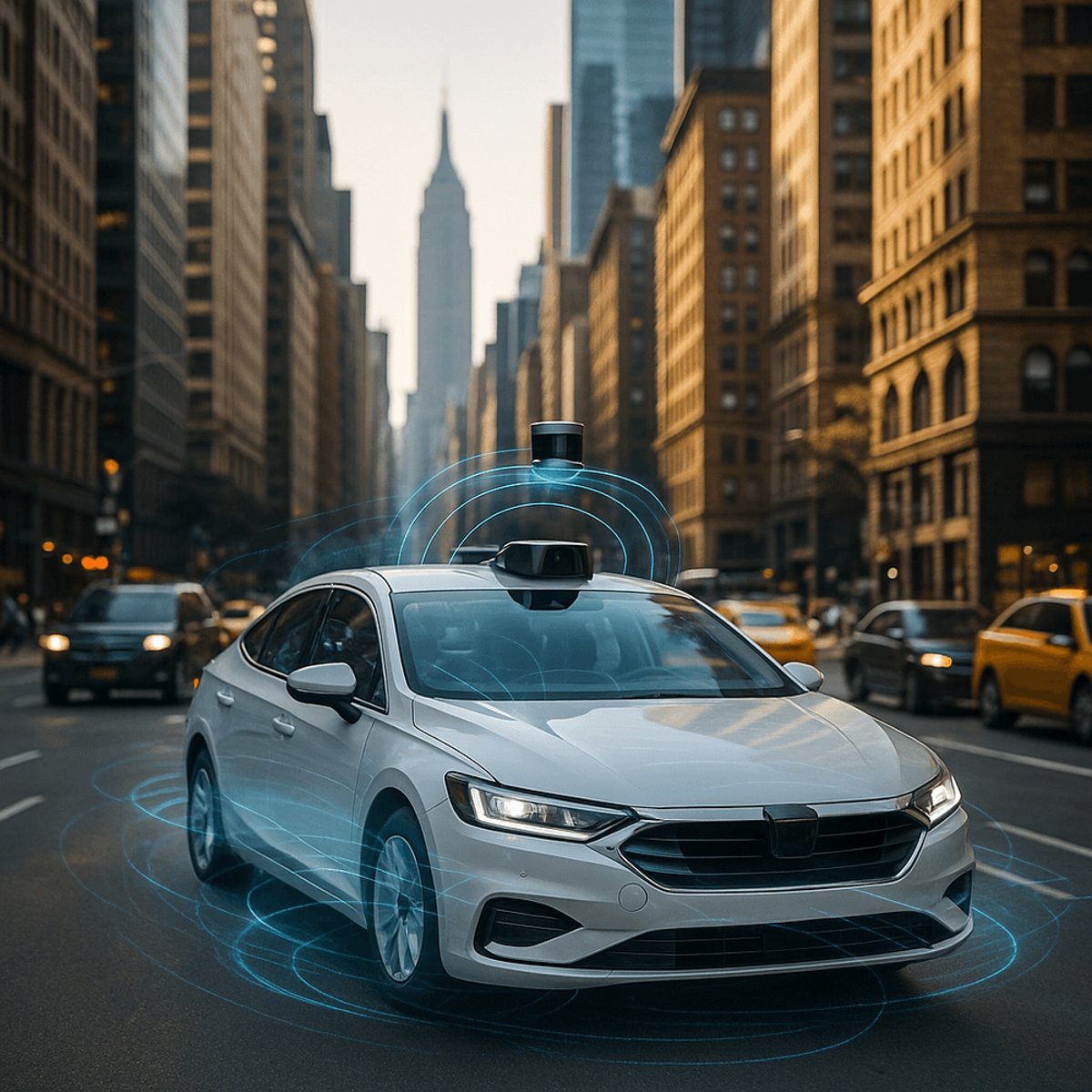
Waymo just broke through New York City's regulatory fortress. The Alphabet subsidiary secured the city's first-ever permit to test autonomous vehicles on Manhattan and Brooklyn streets, marking a watershed moment for self-driving technology in America's most challenging urban environment. This isn't just another expansion—it's validation that robotaxis can handle the ultimate stress test.
The robotaxi revolution just conquered its biggest regulatory hurdle. Waymo received New York City's inaugural autonomous vehicle testing permit Friday, clearing the company to deploy eight self-driving cars across Manhattan and Downtown Brooklyn—a milestone that's been years in the making and could reshape urban mobility forever.
"We're a tech-friendly administration and we're always looking for innovative ways to safely move our city forward," Mayor Eric Adams told reporters. The admission signals a dramatic shift from the city's historically cautious stance on autonomous vehicles.
The Alphabet subsidiary will operate under strict state regulations requiring human safety drivers behind the wheel through late September, with potential program extensions based on performance. But make no mistake—this is the opening move in what could become the world's most scrutinized robotaxi deployment.
Waymo's timing couldn't be more strategic. The company has been building toward this moment since May, when CEO Tekedra Mawakana announced the service had surpassed 10 million robotaxi trips globally. Those numbers represent real-world validation that autonomous technology can handle complex urban scenarios—exactly what NYC regulators needed to see.
The regulatory breakthrough comes just two months after Waymo filed initial testing permits, accelerating a timeline that industry observers expected would take years. NYC's Department of Transportation implemented its autonomous vehicle framework last year, creating the regulatory pathway Waymo just successfully navigated.
This isn't Waymo's first New York rodeo. The company conducted manual driving and data collection in select city areas back in 2021, building the foundational mapping and behavioral data that likely convinced regulators the technology was ready for supervised testing.
The competitive implications are staggering. While Tesla battles federal investigations over its Full Self-Driving technology and Cruise rebuilds after regulatory setbacks, Waymo continues expanding methodically across major markets. The company launched in Austin this year and expanded San Francisco operations in March, with planned deployments in Atlanta, Miami, Washington D.C., and Philadelphia creating a Northeast corridor strategy.
Under the permit terms, Waymo must provide regular data reports to DOT and coordinate closely with law enforcement and emergency services—requirements that could become the template for autonomous vehicle regulation nationwide. The company's performance in NYC will likely influence regulatory decisions in other major metropolitan areas still evaluating robotaxi programs.
The eight-vehicle fleet might seem modest, but it represents something far bigger: proof that America's most complex traffic environment is ready to test the future of transportation. If Waymo's technology can navigate Manhattan's gridlock and Brooklyn's diverse neighborhoods safely, the path to widespread autonomous vehicle adoption becomes significantly clearer.
Waymo's NYC permit breakthrough represents more than regulatory progress—it's the clearest signal yet that autonomous vehicles are transitioning from experimental technology to urban reality. With New York's notoriously challenging streets serving as the ultimate proving ground, successful testing could accelerate robotaxi adoption nationwide and validate the massive investments flowing into autonomous vehicle development. The next few months will determine whether America's transportation future begins in the city that never sleeps.